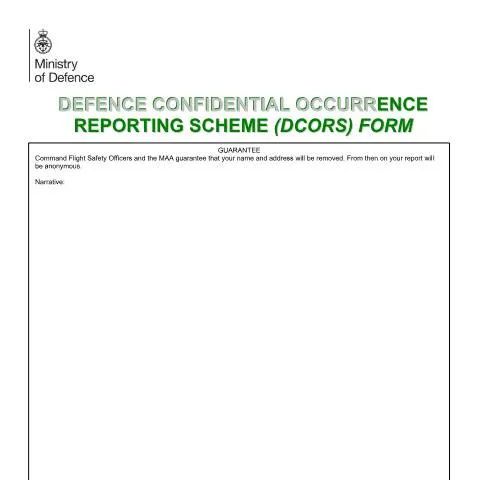
The Context and Necessity of the DCORS Form
In the intricate world of military aviation, safety is paramount. The Defence Confidential Occurrence Reporting Scheme (DCORS) form serves a critical function in upholding this safety. This document allows personnel to report incidents or anomalies that could jeopardize not only operational safety but also the well-being of service members. The significance of this form is underscored by the fact that it provides a confidential channel for reporting occurrences that might otherwise go unnoted due to fear of repercussions.
Historically, the military has relied on open reporting mechanisms to address safety crises. However, the potential stigma attached to reporting errors can deter individuals from coming forward. The DCORS form, administered by the Military Aviation Authority (MAA), addresses this issue by ensuring anonymity. It is a vital component in the broader system of military safety management, enabling the collection of data necessary for identifying trends and preventing future incidents.
Who Should Complete the DCORS Form?
The DCORS form is intended for use by a range of personnel across the Ministry of Defence, including:
- Royal Navy (RN) personnel
- Army personnel
- Royal Air Force (RAF) personnel
- MOD civilians and all MOD contracted civilian personnel
- Joint Air Command (JAC) staff
Each category of personnel may approach the completion of the DCORS form slightly differently, depending on their specific roles and experiences within military aviation. For instance, a ground crew member may focus on equipment failures, while aircrew might report on flight-related incidents. Understanding the nuances involved in these different situations is crucial for accurate reporting.
Special Cases: Reporting from Different Perspectives
Factors influencing the reporting process can vary significantly based on individual roles:
- Foreign Personnel: Those not from the UK may require guidance on the form’s specific terminology or procedures, particularly if English is not their first language.
- Minors: Underage personnel engaged in military training may have different reporting protocols, potentially requiring parental or guardian oversight.
- Emergency Situations: In urgent scenarios, reporting may need to occur swiftly, necessitating a simplified approach to filling out the form.
The Framework of Regulation Behind DCORS
The origins of the DCORS form are deeply rooted in regulatory measures upholding aviation safety standards. The MAA operates within a framework designed to mitigate risks associated with military aviation. This includes adherence to protocols laid out by international aviation standards, making the DCORS form a crucial part of the compliance landscape.
Regulations under the Data Protection Act 2018 and UK GDPR also govern the handling of information collected via the DCORS form. This ensures that personal data is treated with the utmost confidentiality, establishing a safe environment for personnel to report incidents without fear of exposure.
Completing the DCORS Form: A Step-by-Step Guide
Filling out the DCORS form effectively requires careful consideration. Here’s a breakdown of key sections that must be addressed:
1. Personal Details
While it's not mandatory to include your name or unit, doing so can facilitate follow-up and improvements. It is essential to provide:
- Your role (e.g., aircrew, ground crew)
- Aircraft type and model
- Your experience level in hours on type
2. Detailed Narrative of the Incident
The narrative section is where you provide a comprehensive account of the occurrence. Answering the following questions can help structure this:
- What happened?
- Why did it occur?
- What actions were taken in response?
- Do you have recommendations to prevent recurrence?
3. Considerations Surrounding the Incident
It’s important to include situational aspects that may have contributed to the incident:
- Time of occurrence and weather conditions
- Altitude and phase of flight
- Any distractions or personal factors affecting performance
Submitting the DCORS Form: Processes and Channels
Once completed, the form must be submitted through designated channels specific to your branch of service:
| Branch of Service | Submission Address |
|---|---|
| Royal Navy | The Officer in Charge, RNFSC, RNAS Yeovilton, Yeovil, Somerset, BA22 8HT |
| Army | SO1 FSS, Army Aviation Standards, Middle Wallop, Stockbridge Hants, SO20 8HD |
| Royal Air Force | Head – RAF Safety Centre, RAF Safety Centre, Lancaster Block, HQ Air Command, RAF High Wycombe, HP14 4UE |
| MOD Civilians | SO1 KE1, Operating Assurance, MAA, #5102 MOD Abbey Wood, Bristol, BS34 8QW |
| JAC Personnel | SO1 Air Safety, JAC HQ, Ramillies IDL 417, Marlborough Lines, Monxton Road, Andover, SP11 8HT |
Each branch has specific handling processes, and it is imperative to adhere to these for the timely processing of your report.
What Happens After Submission?
Once the DCORS form is submitted, it is reviewed by Command Flight Safety Officers. Importantly, these officers ensure that your identity is protected throughout the process. While your name and address are not mandatory on the form, it’s recommended to provide enough context for your report to be actionable.
The information provided is used not just for immediate incident management, but also for long-term safety improvements within military aviation operations. Reports may lead to recommendations for changes in training, procedures, or equipment, all aimed at enhancing safety standards.
Feedback and Follow-Up
Individuals submitting a DCORS form may not receive direct feedback due to the anonymised nature of the reporting process. However, trends and insights gleaned from these reports are compiled to inform policy changes and training updates across the military aviation community.
Insights into the Importance of Anonymity
The confidentiality assurance provided by the MAA is a cornerstone of the DCORS form's effectiveness. Personnel are more likely to report incidents if they believe their identities will remain safeguarded. This anonymity fosters a culture of transparency and accountability, critical for ongoing safety improvements.
Moreover, protecting the identities of those who report occurrences encourages others to come forward, leading to a more comprehensive understanding of safety issues within military aviation. Ultimately, the insights garnered from these reports are invaluable in creating safer operational environments.
Understanding the Broader Implications of Reporting
The DCORS form is not just a bureaucratic requirement; it is a vital component of a proactive safety culture within military aviation. Each report has the potential to uncover systemic issues that could pose risks not only to individual personnel but also to broader operational capabilities.
By breaking down barriers to reporting, the MAA enables a more robust system for capturing insights and trends, thereby paving the way for enhanced aviation safety measures. Operational changes stemming from insights derived from the DCORS forms can lead to significant improvements in safety protocols, training regimens, and equipment usage.
In this way, the DCORS form embodies a commitment to learning and adaptation, essential qualities in any military organization. Through the diligent completion and submission of this document, personnel contribute not just to their own safety, but to the safety of their colleagues and the success of military missions.