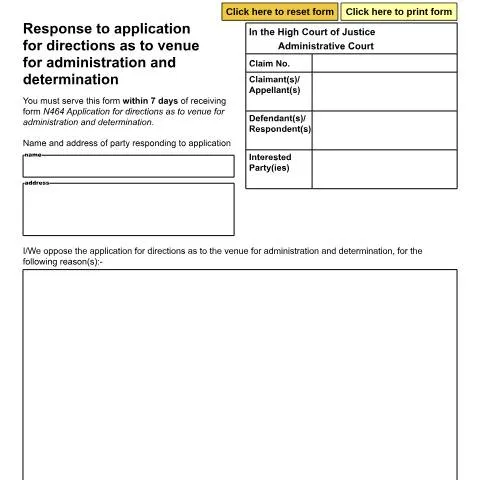
A Deep Dive into Form N645: Addressing Venue for Administration and Determination
The legal landscape in the United Kingdom often necessitates a nuanced understanding of procedural elements, especially when it comes to the administration of justice. Form N645 is a crucial document within this system, specifically designed for parties responding to an application concerning the venue for administration and determination. Situations often arise in legal proceedings where parties may disagree on the appropriate venue. Understanding the implications, responsibilities, and nuances of Form N645 can greatly assist in navigating this delicate process.
The Legislative Framework Surrounding Form N645
Form N645 exists within the context of the High Court of Justice's Administrative Court. This form is not merely a bureaucratic necessity; it is anchored in the need for fair and efficient administration of justice. The requirement to submit this form arises from the principles established in court rules that aim to streamline proceedings and enhance accessibility to justice.
The history of the Administrative Court in the UK reveals multiple reforms aimed at improving the efficiency and effectiveness of judicial processes. The introduction of Form N645 aligns with these reforms, providing a structured means for parties to express their opposition to the directions sought by another party regarding venue. With the Data Protection Act 2018 and UK GDPR governing personal data in official forms, it is imperative that all submissions, including Form N645, adhere to these regulations to ensure the integrity of personal information.
Navigating the Submission Channels: Paper, Online, and In-Person
When it comes to submitting Form N645, it is essential to understand the various channels available, as each has its unique advantages and considerations. While the form can be submitted via traditional paper methods, it can also be lodged through online portals offered by courts, facilitating a faster and more efficient processing time.
Submission Methods
- Paper Submission: The traditional route involves mailing the completed form to the Administrative Court Office. This method may take longer due to postal delays, and parties must ensure that they account for the 7-day deadline from the receipt of Form N464.
- Online Submission: Electronic submissions may be accepted depending on the court's operational capabilities. This method can significantly reduce processing time and offers immediate confirmation of receipt.
- In-Person Submission: For those who prefer face-to-face interactions, visiting the Administrative Court Office to submit the form in person could provide an opportunity to clarify queries directly with court staff.
The Essential Role of Form N645 in Judicial Processes
The primary function of Form N645 is to facilitate responses from parties who oppose an application regarding venue. This form is essential for ensuring that all voices are heard and that any disagreements regarding the venue are formally addressed. By completing this form, a party can assert their stance and provide justifications for their opposition, contributing to a more informed decision-making process by the court.
Within a broader chain of legal procedures, Form N645 serves as a pivotal document. Once the form is filed, it initiates a series of steps leading to hearings where the court will consider the arguments presented. Thus, understanding how to articulate one’s position on this form becomes critically important for the involved parties.
Completing Form N645: A Step-by-Step Guide
Completing Form N645 requires careful attention to detail. Each section of the form must be filled out accurately to avoid potential delays or complications in the judicial process. Below is a detailed breakdown of the form's components, along with insights into common pitfalls to avoid:
Form Breakdown
- Claim Information: Start with the claim number and the parties involved. This information directly links your response to the relevant case.
- Respondent Details: Clearly state your name and address. If you are responding on behalf of a firm or company, include the correct title and position held.
- Opposition Statement: You must articulate your reasons for opposing the application for directions. This is the heart of the form; clarity and precision are key here. Avoid vague language that might weaken your stance.
- Signature and Date: Ensure that the form is signed and dated appropriately. If someone is signing on your behalf, indicate the capacity in which they are signing.
Common Pitfalls
- Neglecting to provide all required information, such as the claim number or complete addresses, can lead to unnecessary delays.
- Failing to submit the form within the stipulated 7-day timeframe is perhaps the most critical error. Late submissions can jeopardize your standing in the case.
- Inadequate justifications for your opposition may weaken your case in the eyes of the court. Ensure that your reasons are well-articulated and legally relevant.
The Aftermath of Submission: Tracking Your Case
Once Form N645 has been submitted, it enters a phase of judicial consideration. Understanding the subsequent steps in the process is vital for managing expectations effectively. After submission, the court will review the information provided and may schedule a hearing to discuss the opposing views regarding the venue.
Following Up on Your Submission
To ensure that your submission is being processed, you can take the following actions:
- Contact the Administrative Court Office: It is advisable to follow up with the court if you have not received confirmation of your submission or if you have questions about the next steps.
- Prepare for Possible Hearings: Be ready to present your case verbally during any subsequent hearings regarding venue. This may require further documentation or legal representation.
The Implications of Ignoring Form N645
Failing to respond to a Form N464 with Form N645 can have serious ramifications. The court may proceed to make decisions regarding the venue without considering your position, which may ultimately disadvantage your legal standing. It is crucial to understand the obligations that come with this process:
- Legal Consequences: If you do not respond in a timely manner, the court may interpret your silence as acquiescence to the proposed venue.
- Impact on Case Management: Ignoring this step may lead to a procedural disadvantage, potentially affecting the outcome of your case and the efficiency of the judicial process.
Special Circumstances: When the Standard Rules Don't Apply
There are scenarios where the standard procedures associated with Form N645 may not be applicable. Understanding these exceptions can be key for certain individuals.
Exceptional Cases
- Minors: If a minor is involved in the application, special provisions may apply, and additional safeguarding measures may be necessary.
- International Parties: For individuals or entities based outside the UK, the process may be more complex, potentially requiring additional legal guidance to navigate jurisdictional nuances.
- Urgent Applications: In situations demanding immediate attention, it may be possible to expedite the response process; however, this typically requires a separate motion and justifiable reasons as to why urgency is warranted.
Conclusion: Empowering Yourself with Knowledge
In navigating the complexities of legal procedures relating to venue determinations, Form N645 represents a critical touchpoint. By engaging with this document thoroughly and understanding the implications of your responses, you can better advocate for your interests within the judicial system. The importance of timely submission, clear articulation of opposition, and understanding the subsequent processes cannot be overstated. Legal proceedings can be daunting, but with the right information and guidance, you can approach them with confidence.
| Submission Method | Advantages | Considerations |
|---|---|---|
| Paper Submission | Can be hand-delivered; physical record of submission | Longer processing time; potential postal delays |
| Online Submission | Faster processing; immediate confirmation | Limited availability; may require technical literacy |
| In-Person Submission | Direct interaction with court staff; immediate feedback | Travel requirements; possible waiting times |
Understanding the Venue for Administration and Determination
The choice of venue for administration and determination in legal proceedings is a critical aspect that can significantly impact the outcome of a case. Under the jurisdiction of the HM Courts & Tribunals Service, the venue is determined based on several factors, including the nature of the case, the location of the parties involved, and the convenience of witnesses. When responding to an application related to the venue, it is essential to understand the procedural framework and the implications of the chosen court. For instance, cases that require specialist knowledge may be better suited to certain courts, such as the Technology and Construction Court, rather than generic county courts.
Moreover, the venue can affect the legal costs incurred by the parties. For example, litigating in courts located far from one party’s residence may lead to increased travel expenses and associated costs. Therefore, when submitting Form N645, applicants should carefully consider how the chosen venue aligns with the legal proceedings' objectives and the parties' logistical considerations. Additionally, parties should be aware that some courts may have specific rules or precedents that could influence the determination process, making it crucial to research thoroughly before making a decision on the venue.
Common Challenges when Responding to Form N645 Applications
Responding to an application regarding the venue for administration and determination using Form N645 can present several challenges. One common challenge is the interpretation of the grounds for the request. Applicants may argue for a change of venue based on convenience, but what constitutes “convenience” can vary widely based on individual circumstances. For instance, if one party resides in a remote area while the other resides in a metropolitan city, the court may need to weigh the logistical burdens against the need for a fair and accessible legal process.
Moreover, the timeline for responding to Form N645 can be stringent. Parties must be aware of the deadlines for submitting their responses to ensure their perspectives are considered. Failing to adhere to these timelines can lead to losing the right to contest the venue or even negatively impacting the case's overall strategy. Furthermore, engaging legal representation knowledgeable about procedural nuances can be beneficial, as they can provide insights into potential pitfalls and assist in crafting a robust response to the venue application.
Another challenge is gathering sufficient evidence to back up the response. This may include affidavits from witnesses, documentation regarding travel times, or other relevant information that supports the argument for maintaining or changing the venue. Being thorough in presenting this information can significantly influence the court's determination.
The Role of Mediation in Venue Disputes
Mediation has become an increasingly popular method for resolving disputes surrounding venue applications. As an alternative dispute resolution mechanism, mediation offers a more collaborative approach, enabling parties to discuss their preferences regarding venue without the adversarial nature of court proceedings. When a Form N645 application is contested, courts may encourage or even mandate mediation before proceeding with a determination. This can lead to negotiated solutions that address the needs of both parties and may result in a mutual agreement on venue without the need for a formal court hearing.
During mediation, parties can present their concerns and rationales regarding the chosen venue. Mediation allows for more flexibility, as parties may agree to a compromise location that suits both sides, rather than being bound to specific geographical limitations. Moreover, successful mediation can preserve relationships, which is especially beneficial in cases involving ongoing business or familial ties.
It is important to note that while mediation can facilitate a resolution, it also requires skilled negotiators to effectively advocate for each party's position. Legal representatives can play a pivotal role in this process by ensuring that their clients’ interests are protected and that any agreement made during mediation is legally sound and enforceable. Ultimately, incorporating mediation into the venue determination process can lead to more satisfactory outcomes for all involved.