Skip to content
Government & admin

The Role of Form CS R2 in Tribunal Appeals in Wales

Official documentGovernment & admin
PreviewDocument preview: The Role of Form CS R2 in Tribunal Appeals in Wales — Government & admin
Official document

What would you like to do?

Complete the fields, sign, then download.

Understanding the Significance of Form CS R2 in Tribunal Appeals

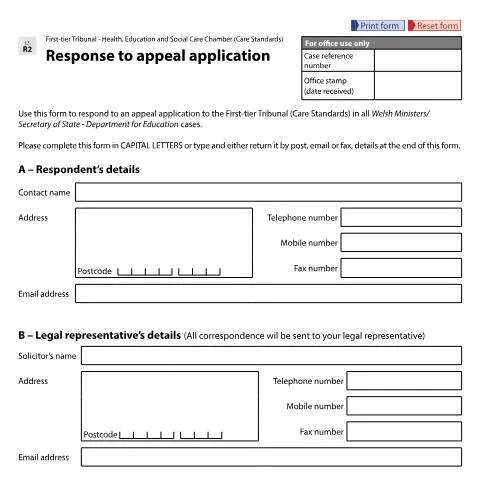
When navigating the intricate landscape of legal appeals concerning education in Wales, Form CS R2 emerges as a pivotal component. This official response document serves as a formal mechanism for parties responding to appeal applications made to the First-tier Tribunal (Health, Education and Social Care Chamber). Unlike other forms that may appear similar, such as appeal submissions or preliminary response forms, CS R2 is uniquely tailored for cases involving Welsh Ministers and the Secretary of State for Education. It underscores the importance of each stakeholder's role in the continuing dialogue within the tribunal framework.

Who Needs to Complete Form CS R2?

The completion of Form CS R2 is primarily undertaken by the respondent, which can include local authorities, educational institutions, or any parties named in an appeal application. The respondent must address the appeal presented by the applicant, providing their reasons for opposing it. This form not only identifies the respondent but also facilitates communication through legal representatives if applicable.

Respondent’s Details

  • Contact Name: This should reflect the individual completing the form.
  • Address: A complete postal address is mandatory for correspondence.
  • Legal Representative: For those represented by solicitors, their details are critical, ensuring all communications are directed appropriately.

The necessity of Form CS R2 is rooted in legislation and tribunal regulations. Specifically, it is informed by the Education Act 2002, which delineates the roles and responsibilities of entities within the educational sector. The form's design reflects a historical evolution of educational law, aiming to streamline processes while ensuring fairness for all parties involved in tribunal proceedings.

Regulatory Compliance

Form CS R2 aligns with principles outlined under the Data Protection Act 2018 and UK GDPR, which governs personal data processing within tribunal cases. Respondents must be cognizant of how their information is handled, adhering to confidentiality and data protection standards. This is particularly pertinent when sensitive cases involving minors or vulnerable individuals are in question.

Key Sections of the CS R2 Form: Completing It Correctly

Filling out Form CS R2 accurately is paramount to ensure that the tribunal proceeds efficiently. Each section of the form is designed to capture pertinent information that aids the tribunal’s understanding of the case. Here’s a breakdown of essential sections:

A: Respondent's Details

Clear identification of the respondent allows the tribunal to maintain communication effectively. This section should always be filled out in capital letters or typed for clarity.

B: Legal Representative's Information

If the respondent engages a legal representative, their details must be accurately provided. This ensures that all correspondence related to the appeal is directed to the correct recipient.

C: Urgent Decision MOU

This section assesses whether the appeal is subject to a Memorandum of Understanding (MOU), which can expedite decisions in urgent cases. Failing to address this could lead to procedural delays.

D: Type of Hearing Preference

Respondents can indicate their preference for a decision to be made without a hearing. Understanding implications of this choice is essential as it shapes the pace and nature of the tribunal's proceedings.

E: Section 166(5) Application

The authority may request an order to regard a school as unregistered while the appeal is determined. This section necessitates a thorough explanation regarding the grounds of the application, supporting evidence, and witness availability, ensuring all bases are covered.

F: Articulating Reasons for Opposition

Respondents must clearly articulate their opposition to the appeal, providing comprehensive reasons. This section can often be expanded on supplementary sheets if necessary and should reflect any relevant documentation pertaining to the case.

Timelines and Submission Channels: What You Need to Know

Timeliness is a cornerstone of the appeal process. Respondents are required to submit their responses within 20 working days of receiving the appeal application. Failure to meet this deadline can jeopardize their position, although there is a provision to request an extension if justified.

Submission Methods and Their Implications

The CS R2 form can be submitted through various channels:

  • Post: Send the completed form to HM Courts & Tribunals Service (Care Standards). Ensure that the document is sent to the correct address as listed on the form to avoid delays.
  • Email: A digital copy can be emailed directly to the tribunal. This method is often quicker, but ensure the attachment is in an acceptable format.
  • Fax: For those who prefer traditional methods, faxing is an option, though it is less commonly used in contemporary communications.

Unique Situations and Additional Considerations

In specific cases, such as appeals concerning vulnerable persons or complex legal situations, respondents might face additional challenges. Understanding how these situations can affect the completion and submission of Form CS R2 is crucial.

Appeals Involving Minors

When appeals pertain to minors, there’s an added layer of sensitivity to consider. Parties must ensure that confidentiality is maintained throughout the process, and that submissions protect the interests of the young individuals involved.

Cross-Border Cases

For cases involving parties from outside Wales or the UK, variations in legal representation and frameworks may complicate the submission process. Respondents should seek guidance on how to navigate these complexities to ensure compliance with relevant laws.

Post-Submission: What to Expect Next

Upon submission of Form CS R2, respondents should prepare for a variety of outcomes. The tribunal aims to resolve appeals swiftly, typically targeting a 30-week timeframe from registration. Understanding this timeline allows respondents to prepare adequately for possible hearings or further correspondence.

Possible Outcomes

Outcome Description
Decision in Favor of the Appeal The tribunal may uphold the appeal, affecting the respondent's standing significantly.
Decision Against the Appeal The tribunal may reject the appeal, in which case the original decision stands.
Request for Further Evidence The tribunal may request additional documentation or a hearing to clarify complex elements.

Regardless of the outcome, respondents should remain proactive in their engagement with the tribunal, ready to provide any further information if requested.

Successfully navigating the intricacies of Form CS R2 requires not only attention to detail but also an understanding of available resources. Respondents are encouraged to seek guidance from legal professionals who specialize in tribunal matters or consult the resources available on the HM Courts & Tribunals Service website.

Furthermore, those unsure about specific details of the form can reach out directly to tribunal contacts for clarification regarding submission processes or deadlines. The potential for miscommunication can lead to delays, so being well-informed is advantageous.

Form CS R2 is not merely a bureaucratic requirement; it represents a crucial touchpoint in the tribunal system, enabling a fair and transparent process for all involved. Respondents must approach the completion and submission of this form with diligence, ensuring they fulfill their responsibilities while advocating effectively for their position in the appeal process.

Understanding the CS R2 Form: Essential Elements

The CS R2 form is a critical document used in the context of appeals against decisions made by Welsh Ministers and the Secretary of State for Education. As an applicant or respondent, understanding the essential elements of this form is not only key to ensuring compliance but also to presenting a strong case. The form requires specific information that is crucial for the appeal process, and failing to provide complete and accurate details can significantly impact the outcome. One of the primary sections of the CS R2 form asks for personal information, including the name, address, and any relevant identification numbers. It is important to ensure that all information is current and accurately reflects your situation. This includes your National Insurance number, which may be relevant in education-related cases involving financial support or entitlements. Furthermore, applicants must provide detailed information about the nature of the appeal. This includes a succinct summary of the decision being challenged, the grounds for the appeal, and any supporting evidence. It is advisable to make a clear distinction between legal grounds and factual arguments, citing relevant legislation or guidance where applicable. The more coherent and structured your submission, the better the chance that the appeal will be considered favorably. Another significant aspect of the CS R2 form is the section that allows applicants to outline what they hope to achieve through their appeal. This might include a reversal of a decision, a request for further consideration, or the introduction of new evidence. Being clear about your objectives not only helps the reviewing body understand your perspective but also frames your appeal within the context of what is legally permissible. Lastly, as with any formal application, ensure that you follow the guidelines regarding the submission of the CS R2 form. This includes adhering to deadlines, which can vary based on the nature of the case and the specific stipulations laid out by the Welsh Ministers or the Secretary of State for Education. It is essential to maintain detailed records of all communications and submissions related to your appeal, as these may be referenced in future correspondence or hearings.

Common Mistakes to Avoid When Submitting the CS R2 Form

Submitting a CS R2 form can be a daunting task, particularly for those unfamiliar with the procedural aspects of the appeals process. While the form itself may seem straightforward, there are several common pitfalls that applicants may encounter, which could jeopardize their appeal. One frequent mistake is the incomplete or inaccurate filling out of personal details. It is vital that all sections, including contact information and identification numbers, are filled in accurately. Even minor errors, such as a misspelled name or incorrect postcode, can lead to delays or communication issues. Therefore, double-checking these details after completion is essential. Another common error involves neglecting to provide adequate grounds for the appeal. It is crucial to articulate your reasons clearly and to support them with the necessary evidence. A vague or poorly constructed argument may not only weaken your case but may also discourage the reviewing body from taking your appeal seriously. Ensure that you are precise in your claims and that they are backed up by relevant statutes or case law. Additionally, applicants sometimes overlook the importance of adhering to submission deadlines. Each appeal has specific timelines that must be followed, and missing a deadline can result in the rejection of your application. Familiarize yourself with these timelines when you begin the process, and consider setting reminders to ensure you stay on track. Moreover, failing to include supporting documents is a significant oversight that can hinder an appeal. The CS R2 form explicitly states that you should provide any evidence that substantiates your appeal. This could include letters, emails, or official records. Ensure you attach all relevant materials, as these can provide important context and support for your position. Finally, remember that communication with the relevant bodies should be clear and professional. Avoid using overly complex language or legal jargon, as this may obscure your main points. A straightforward and respectful tone can go a long way in facilitating a constructive dialogue with the reviewing authority. Engaging in the appeals process via the CS R2 form can often be complicated, and for many individuals, seeking legal representation may be a beneficial step. The role of a solicitor or legal advisor in this context can be invaluable, particularly when navigating the complexities of education law and administrative procedures. One of the primary advantages of having legal representation is the expertise that solicitors bring to the process. They are well-versed in the legal framework surrounding education and can provide tailored advice based on individual circumstances. This includes a thorough review of the grounds of the appeal and the formulation of a persuasive argument that adheres to legal standards. Legal representatives can also assist with the preparation of the CS R2 form itself. They can ensure that all required information is accurately completed, and that the language used is professional and clear. This can significantly enhance the credibility of the appeal and increase the chances of a favorable outcome. Moreover, legal representatives can play a pivotal role in gathering and presenting evidence. They understand the types of documentation that are most effective in supporting an appeal and can help in obtaining these materials. This might involve liaising with schools, educational institutions, or other relevant bodies to procure necessary records that bolster the appeal case. Another benefit of engaging legal representation is their ability to provide strategic advice throughout the process. They can outline your options at each stage and help you understand what to expect moving forward. This can be particularly important when considering whether to proceed with an appeal or whether there are alternative options available, such as mediation or negotiation. Lastly, if your appeal progresses to a hearing, having a legal representative can provide essential support. They can advocate on your behalf, making oral submissions and addressing any questions posed by the reviewing authority. Their experience in handling similar cases can be a significant advantage in presenting a compelling case. In summary, while it is possible to submit a CS R2 appeal independently, engaging legal representation can provide crucial support and expertise. It may be particularly beneficial for complex cases or those involving significant disputes, where the implications of the decision reach beyond immediate educational concerns.

Frequently asked questions

What is Form CS R2?

Form CS R2 is an official response document used in tribunal appeals related to education in Wales.

Who uses Form CS R2?

It is specifically tailored for cases involving Welsh Ministers and the Secretary of State for Education.

How does Form CS R2 differ from other forms?

Unlike other appeal forms, CS R2 is uniquely designed for responding to appeal applications in the First-tier Tribunal.

What is the purpose of Form CS R2?

The form serves as a formal mechanism for parties to respond to appeal applications in education-related cases.

Similar documents