When Disease Strikes: The Critical Role of Contingency Planning at Licensed Animal Gatherings
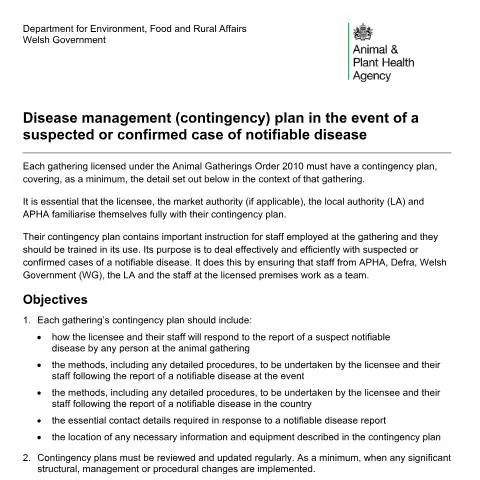
Picture this: it's market day at a bustling livestock auction in Yorkshire, hundreds of cattle, sheep and pigs flowing through the pens, when suddenly a veterinarian spots lesions on a cow's mouth that could indicate foot and mouth disease. Within minutes, the entire operation must transform from commercial hub to containment facility. This scenario illustrates precisely why the Animal and Plant Health Agency requires every licensed animal gathering to maintain a detailed disease management contingency plan, documented through form AGO04.
The stakes couldn't be higher. A single uncontrolled outbreak of notifiable disease at an animal gathering can cascade across the countryside, potentially costing the agricultural sector millions and requiring mass culling operations. The 2001 foot and mouth crisis, which saw over six million animals destroyed, serves as a stark reminder of why robust contingency planning isn't optional—it's absolutely essential for protecting Britain's livestock industry.
Regulatory Framework: The Animal Gatherings Order 2010 and Beyond
The legal foundation for contingency planning stems from the Animal Gatherings Order 2010, which mandates that every licensed gathering must have a comprehensive disease management plan. This isn't merely bureaucratic box-ticking; it's a critical component of the UK's biosecurity infrastructure, developed in collaboration between Defra, the Welsh Government, and APHA.
The requirement applies across England and Wales to any premises hosting temporary assemblies of livestock from different holdings. This encompasses traditional livestock markets, agricultural shows, breed society sales, and even smaller specialist gatherings. The scope is deliberately broad because disease doesn't discriminate based on event size or prestige.
Multi-Agency Coordination Requirements
What makes the AGO04 framework particularly sophisticated is its emphasis on coordinated response. The plan must detail how licensees, market authorities, local authorities, and APHA will function as an integrated team during a disease emergency. This collaborative approach reflects lessons learned from previous outbreaks where fragmented responses delayed containment efforts.
Each stakeholder brings specific expertise: APHA provides veterinary and diagnostic capabilities, local authorities handle public health and crowd control aspects, while licensees possess intimate knowledge of their facilities and operational procedures. The contingency plan serves as the blueprint for harmonising these diverse capabilities into effective action.
Core Components: What Every Contingency Plan Must Address
The AGO04 framework establishes five fundamental objectives that every contingency plan must satisfy. These aren't suggestions—they're mandatory requirements that APHA inspectors will scrutinise during licensing assessments.
Immediate Response Protocols
The first critical element involves initial response procedures when anyone at the gathering reports suspected notifiable disease. This covers the chain of command from the moment suspicion arises to formal veterinary assessment. The plan must specify exactly who staff should contact, in what order, and within what timeframes.
Crucially, the procedures must account for different scenarios: suspicion raised by visiting farmers, concerns flagged by attending veterinarians, or observations by market staff. Each pathway requires clear escalation procedures to prevent delays that could prove catastrophic.
On-Site Disease Management Procedures
Detailed operational procedures form the plan's backbone, covering everything from animal isolation protocols to visitor management. The requirements distinguish between different disease categories, recognising that vesicular diseases like foot and mouth demand more stringent controls than conditions like tuberculosis or brucellosis.
| Disease Category | Control Level | Key Measures |
|---|---|---|
| Vesicular diseases (FMD, SVD) | Maximum restriction | Complete site lockdown, immediate auction cessation, controlled public evacuation |
| Swine fever | Maximum restriction | Movement prohibitions, barrier implementation, veterinary authorisation required |
| Brucellosis, TB, bluetongue, anthrax | Targeted containment | Suspect animal isolation, section access control, monitoring protocols |
National Disease Outbreak Response
The plan must also address scenarios where notifiable disease is confirmed elsewhere in the country, potentially affecting the gathering even without on-site cases. This forward-thinking approach ensures gatherings can implement enhanced biosecurity measures or suspend operations entirely if national circumstances dictate.
Staff Training and Preparedness: Building Human Capacity
Perhaps the most overlooked aspect of contingency planning involves human preparedness. The most comprehensive written plan remains worthless if staff lack the knowledge and confidence to implement it effectively under pressure.
Comprehensive Training Requirements
Every employee and event steward who might work during a gathering must receive documented training in contingency plan implementation. This training goes far beyond basic awareness—staff must demonstrate competency in disease recognition, understand their specific roles during emergencies, and know exactly how to implement movement restrictions.
The training record book becomes a crucial document during APHA inspections, providing evidence that theoretical plans translate into practical capability. Regular refresher sessions ensure knowledge remains current as procedures evolve or new staff join the team.
Disease Recognition Capabilities
Staff training must include practical disease recognition skills for major notifiable conditions. This means understanding the clinical signs of foot and mouth disease, recognising neurological symptoms that might indicate BSE or scrapie, and identifying the skin lesions associated with bluetongue virus.
While staff aren't expected to provide definitive diagnoses—that's the veterinarian's role—they must possess sufficient knowledge to raise appropriate alerts when concerning signs appear. Early detection often makes the difference between contained incidents and widespread outbreaks.
Operational Implementation: From Theory to Practice
When disease suspicion arises, the contingency plan transforms from document to operational reality. The AGO04 framework establishes three distinct control levels, each calibrated to the specific disease threat and its transmission characteristics.
Maximum Security Protocols
For vesicular diseases and swine fever—conditions with devastating transmission potential—the response is immediate and comprehensive. Complete site lockdown takes effect within minutes, with all auction activities ceasing and public evacuation commencing through controlled exits.
The physical infrastructure becomes crucial during implementation. Sites must maintain readily available barriers, tape, and signage to establish isolation zones rapidly. Staff members who haven't contacted suspect animals take charge of perimeter security, turning away arriving vehicles and managing communications with in-transit livestock transporters.
Cleansing and Disinfection Protocols
Perhaps no aspect of disease control proves more critical than proper cleansing and disinfection procedures. The plan must ensure adequate footbath facilities at all pedestrian access points, with appropriate disinfectants maintained at effective concentrations.
Personal hygiene measures extend beyond simple hand washing. Visitors leaving the premises must receive detailed instructions about clothing disinfection, vehicle cleaning, and the crucial requirement to avoid livestock contact until thorough decontamination is complete. The plan must ensure at least twenty information leaflets remain permanently on-site, with facilities to produce additional copies within thirty minutes of an incident.
Documentation and Contact Management
Effective disease response depends heavily on accurate information flow between multiple agencies operating under intense time pressure. The contingency plan must establish clear communication protocols and maintain current contact details for all relevant authorities.
Essential Contact Networks
The plan must include direct contact information for APHA veterinary inspectors, local authority officers, and emergency services. However, maintaining current details requires ongoing attention—personnel changes, departmental restructuring, and updated phone systems can quickly render contact lists obsolete.
Many successful plans establish primary and secondary contacts for each agency, reducing delays when key individuals prove unavailable. The system must also account for out-of-hours scenarios, ensuring 24/7 response capability during extended events or weekend markets.
Information and Equipment Accessibility
Critical resources must be immediately accessible when emergencies arise. This includes not only contact details and procedural documents but also physical equipment like barriers, disinfection supplies, and signage materials. The plan should specify exact storage locations and ensure responsible staff know how to access these resources quickly.
Regular Review and Adaptation Requirements
Static plans quickly become obsolete in the dynamic world of disease control and agricultural operations. The AGO04 framework mandates regular review and updating, with specific triggers requiring immediate plan revision.
Mandatory Update Triggers
Significant structural changes to gathering facilities automatically trigger plan updates. This might include new building construction, modified livestock flow patterns, or altered access arrangements. Similarly, management changes—new licensees, different operational procedures, or revised staffing arrangements—necessitate comprehensive plan review.
Procedural changes prove equally important. Updates to national disease control policies, revised APHA guidance, or new local authority requirements all demand corresponding plan modifications. The review process must be systematic, ensuring no critical elements are overlooked during updates.
Learning from Experience
The most effective contingency plans evolve through practical experience and regular testing. While nobody welcomes actual disease outbreaks, each incident provides valuable lessons about plan effectiveness and areas requiring improvement.
Simulation exercises offer safer learning opportunities, allowing staff to practice procedures without real-world consequences. These exercises often reveal communication gaps, equipment shortages, or procedural ambiguities that weren't apparent during plan development. Regular tabletop exercises with local authority and APHA representatives strengthen inter-agency cooperation and identify potential coordination challenges.
Compliance and Enforcement Landscape
APHA takes contingency planning requirements seriously, with robust inspection and enforcement procedures ensuring licensed gatherings maintain appropriate standards. Inadequate planning doesn't just risk disease spread—it can result in licence suspension or revocation, effectively ending the gathering's operations.
During licensing assessments, APHA inspectors scrutinise both written plans and practical capabilities. They'll examine training records, test staff knowledge, and verify that physical resources match plan specifications. Mock scenarios may be employed to assess real-world implementation capacity.
The enforcement approach recognises that effective disease control serves broader public interest beyond individual gathering operations. Consequently, APHA maintains the authority to impose immediate restrictions when contingency planning proves inadequate, even during ongoing events if necessary.
For gathering operators, robust contingency planning represents both regulatory compliance and commercial protection. While developing comprehensive plans requires significant investment in time, training, and resources, the alternative—facing an uncontrolled disease outbreak—could prove catastrophic for both individual businesses and the wider agricultural community. The AGO04 framework provides the roadmap for transforming theoretical preparation into practical protection, ensuring Britain's livestock gatherings can continue operating safely within the broader biosecurity landscape.
Understanding the Risk Assessment Requirements for Your Animal Gathering
The risk assessment forms a cornerstone of your animal gathering licence application, yet many applicants underestimate its complexity. The Animal and Plant Health Agency expects a comprehensive evaluation that demonstrates your understanding of disease transmission pathways, biosecurity protocols, and emergency response procedures.
Your risk assessment must address multiple disease categories. Notifiable diseases such as foot-and-mouth disease, avian influenza, and African swine fever require specific consideration, particularly if your gathering includes susceptible species. The assessment should detail how you'll prevent introduction through contaminated vehicles, equipment, or clothing. Document your cleaning and disinfection protocols, including the specific products you'll use and their application methods.
Weather contingencies deserve particular attention in UK conditions. Heavy rainfall can compromise biosecurity measures, creating muddy conditions that facilitate pathogen spread. Your assessment should outline alternative arrangements for wet weather, including covered areas for vulnerable animals and enhanced drainage systems. Similarly, extreme temperatures may stress animals, increasing their susceptibility to disease.
The movement tracking element often proves challenging for organisers. You must demonstrate how you'll record every animal's origin, health status, and departure destination. This includes contingency plans if animals cannot return to their original premises due to disease restrictions. The APHA may require evidence of agreements with alternative accommodation providers or isolation facilities.
Veterinary oversight requirements vary depending on your gathering's scale and species mix. Events with high-risk combinations—such as mixing cattle from multiple herds or bringing together birds from different flocks—typically require on-site veterinary presence. Your risk assessment should justify the level of veterinary supervision proposed and demonstrate how veterinary advice will be implemented rapidly if health concerns arise.
Water and feed safety considerations extend beyond basic provision. Contaminated water sources can rapidly spread disease through animal populations. Document your water testing protocols, backup supply arrangements, and feed storage methods that prevent contamination. If using communal water points, detail your cleaning schedules and monitoring procedures.
Navigating Species-Specific Licensing Requirements and Restrictions
Different animal species trigger distinct licensing pathways and regulatory frameworks, creating complexity for mixed-species gatherings. Understanding these species-specific requirements prevents costly delays and ensures compliance with multiple regulatory streams.
Bovine gatherings face the strictest controls due to TB testing requirements and movement restrictions. Cattle must undergo pre-movement testing in high-risk areas, with results valid for specific timeframes. Your licence application must demonstrate compliance with TB testing schedules and include provisions for post-gathering testing where required. The 6-day standstill period following cattle movements applies unless specific exemptions are granted.
Sheep and goat events require careful consideration of scrapie monitoring obligations. Breeding animals from monitored flocks may face movement restrictions that affect their participation. Electronic identification requirements for sheep born after certain dates must be verified, and your systems must accommodate reading both traditional tags and electronic identifiers.
Pig gatherings involve complex health schemes and movement documentation. The APHIS (Animal Health and Pig Industry Scheme) requirements may apply, necessitating specific health declarations. Pig movement licenses often require veterinary certification of health status, and mixing pigs from different holdings creates additional biosecurity challenges requiring enhanced monitoring.
Poultry events face heightened scrutiny following recent avian influenza outbreaks. Housing requirements may mandate covered areas or restrictions on outdoor displays. The registration status of participating holdings affects their eligibility, and you'll need to verify that all bird keepers hold appropriate registrations with the relevant authorities.
Equine gatherings benefit from more flexible arrangements but still require consideration of infectious disease risks. Strangles outbreaks can devastate horse populations, making health declarations and vaccination requirements essential. Your application should address isolation protocols for horses showing respiratory symptoms and procedures for rapid veterinary assessment.
Exotic species may require additional licensing under the Dangerous Wild Animals Act 1976 or CITES regulations for endangered species. Even common exotic pets like reptiles or small mammals may need health certificates if crossing certain boundaries. Verify the licensing status of all exotic animals well in advance, as obtaining required documentation can take months.
Mixed-species events create particular challenges around cross-species disease transmission. Your application must demonstrate understanding of zoonotic risks and species-specific vulnerabilities. For example, certain avian diseases can affect mammals, while some bovine conditions pose risks to small ruminants. The APHA may require physical separation between certain species or enhanced monitoring protocols.
Post-Approval Compliance and Ongoing Obligations Throughout Your Event
Securing your animal gathering licence marks the beginning, not the end, of your regulatory obligations. Post-approval compliance requires active monitoring, documentation, and adaptive management throughout your event's duration.
Daily health monitoring protocols must commence before animals arrive and continue until the last animal departs. Your licence conditions will specify monitoring frequencies and recording requirements. Typically, this involves twice-daily observations of all animals, with particular attention to signs of infectious disease. Temperature monitoring may be required for certain species, especially during disease outbreak periods.
The movement register becomes a living document requiring real-time updates. Every animal arrival and departure must be recorded immediately, including precise timing and vehicle details. Late entries or retrospective corrections can trigger compliance investigations. Ensure multiple staff members are trained in register maintenance, as gaps in documentation often occur during busy periods or shift changes.
Veterinary reporting obligations extend beyond routine monitoring. Any suspicious symptoms must be reported to your appointed veterinarian within specified timeframes, often within hours rather than days. The veterinarian's response and any subsequent actions must be documented meticulously. Failure to report suspicions promptly can result in licence revocation and potential prosecution.
Biosecurity protocols require constant vigilance and adaptation to changing circumstances. Vehicle disinfection points must remain operational throughout the event, with backup systems for peak arrival times. Staff training on biosecurity procedures should include refresher sessions, particularly if volunteers are involved. Weather conditions may necessitate enhanced protocols—muddy conditions often require additional cleaning stations and modified traffic flows.
Feed and water quality monitoring continues throughout the event. Water sources require regular testing, particularly in hot weather when bacterial growth accelerates. Feed storage areas need protection from contamination and pest intrusion. Document all monitoring activities with photographic evidence where possible, as this provides valuable protection during any subsequent investigations.
The contingency response system must remain ready for activation at any time. This includes maintaining contact with designated veterinarians, ensuring isolation facilities remain available, and keeping emergency contact lists current. Staff rotas should identify key personnel responsible for implementing emergency procedures during different shifts.
Public health considerations become particularly important at events with visitor access. Hand washing facilities must remain adequately supplied and functional. Signage about animal contact risks should remain visible and legible. If food vendors operate on-site, additional hygiene protocols may apply to prevent cross-contamination between animal and food preparation areas.
Documentation storage and retrieval systems require careful planning. Licence conditions often specify retention periods for various records, typically ranging from two to seven years. Digital backup systems provide security against document loss, but ensure they comply with data protection requirements when personal information is involved.
Post-event reporting obligations vary depending on licence conditions and any incidents that occurred. Standard reports may be required within specified timeframes, covering animal welfare observations, biosecurity compliance, and any veterinary interventions. Unusual incidents or disease suspicions trigger additional reporting requirements that may extend investigation timelines considerably.