Navigating the Poultry Health Certificate Landscape
When transporting poultry, whether it's live birds or day-old chicks, adhering to health regulations is paramount. The Poultry (live): model health certificates are essential documents issued by the UK government, specifically under the jurisdiction of the Department for Environment, Food & Rural Affairs (DEFRA). These certificates not only validate the health status of the birds but also facilitate their movement across borders. Understanding the nuances of these certificates empowers exporters, transporters, and farmers to comply with legal requirements while safeguarding animal health.
Legal Significance: Understanding the Poultry Health Certificate
The Poultry Health Certificate serves as a formal declaration regarding the health of the poultry being transported. It is crucial to note that this document is not just a formality; it holds substantial legal weight. As outlined in Article 4 of Commission Regulation (EC) No 798/2008, the certificate must be completed accurately to ensure the welfare of the animals and to comply with international trade regulations.
Here are key legal components of the certificate:
- Health Status Declaration: It declares the poultry's health status and confirms that they have not been in contact with animals of a lower health status during the journey.
- Transport Details: Information regarding the transport route, including the ship's name and ports of call, must be clearly documented.
- Official Veterinary Endorsement: The certificate must be signed by an official veterinary authority, underscoring its legitimacy.
Who Can Obtain the Poultry Health Certificate?
The issuance of the Poultry Health Certificate is generally reserved for specific entities involved in the transport of poultry. Understanding the eligibility criteria is crucial for compliance:
- Registered Exporters: Only exporters who are registered with the relevant UK authorities can apply for this certificate.
- Veterinary Surgeons: A qualified veterinary surgeon must conduct health inspections and endorse the certificate.
- Transport Companies: Companies responsible for the transport of poultry are also required to manage and present this documentation effectively.
Steps to Obtain the Poultry Health Certificate
Acquiring the Poultry Health Certificate involves a systematic approach to ensure all requirements are met:
- Health Inspection: Schedule a health inspection with an official veterinary surgeon who will assess the poultry's health.
- Complete the Certificate: Fill out the certificate, including details about the poultry, transportation method, and health status.
- Official Endorsement: Have the veterinary surgeon sign and stamp the certificate to validate it.
- Transport Logistics: Ensure that the transport method complies with regulations, including any necessary declarations from the ship's master.
Handling Errors and Contingencies
Errors can occur during the issuance or completion of the Poultry Health Certificate. Knowing how to respond to these issues is essential:
- Document Accuracy: Always verify all details on the certificate before submitting to avoid discrepancies.
- Re-issuance Process: If the certificate is lost or contains errors, contact the issuing veterinary authority immediately to initiate the re-issuance process.
- Contestation Procedures: In cases of disputes regarding the validity of the certificate, involve the relevant regulatory bodies to mediate and resolve the issue.
Real-World Applications of the Poultry Health Certificate
The Poultry Health Certificate is not merely a bureaucratic necessity; it plays a vital role in various practical scenarios:
- International Trade: It is a prerequisite for exporting poultry to other countries, ensuring compliance with international health standards.
- Animal Welfare Advocacy: The certificate assists in demonstrating commitment to animal welfare by ensuring healthy transport methods.
- Regulatory Compliance: It is often required by customs and import/export authorities to facilitate the smooth passage of goods.
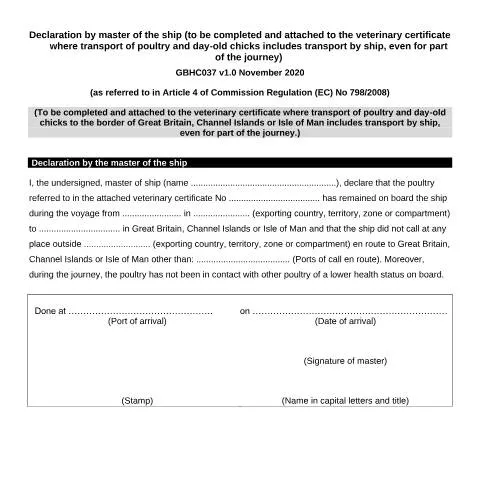
Understanding the Declaration by the Master of the Ship
A crucial component of the Poultry Health Certificate is the declaration by the master of the ship transporting the poultry. This declaration provides essential logistical details:
| Field | Description |
|---|---|
| Name of the Ship | The vessel transporting the poultry must be identified. |
| Exporting Country | The country from which the poultry is being exported. |
| Port of Arrival | Destination port in Great Britain, Channel Islands, or Isle of Man. |
| Voyage Details | Declaration of contact with other poultry and the health status during the journey. |
This declaration must be filled out with precision and attached to the health certificate, as it corroborates the information provided and serves as an additional safeguard for animal health.
Best Practices for Maintaining Poultry Health Certificates
Once obtained, managing Poultry Health Certificates effectively is essential to ensure compliance and animal welfare:
- Documentation Management: Keep a record of all certificates issued and related documentation for future reference.
- Regular Updates: Stay informed about changes in regulations that may affect the health certification process.
- Training and Awareness: Ensure all staff involved in poultry transport are trained on the importance of the health certificate and the protocols surrounding it.
Conclusion: Your Role in Ensuring Compliance and Animal Health
In summary, the Poultry (live): model health certificates serve as a critical link in the chain of poultry transport, ensuring compliance with health standards and protecting animal welfare. By understanding the legal significance, the steps involved in obtaining the certificate, and best practices for maintenance, stakeholders can enhance their operations and contribute positively to the industry. As regulations evolve, remaining vigilant and proactive will be key to successfully navigating this complex landscape.
Understanding the Requirements for Poultry Health Certificates in the UK
When dealing with the transportation of live poultry within the UK or for export, it's crucial to be aware of the specific health certificate requirements. These certificates ensure that the animals are not carrying any diseases that could affect other birds or poultry populations. The health certificates are essential for both intra-UK movements and for shipments to countries outside the UK.
The model health certificate for live poultry typically requires the following:
- Identification of the Poultry: This includes species, breed, age, and identification marks or tags, ensuring that each bird can be traced back to its origin.
- Health Status: The certifying veterinarian must attest to the health status of the poultry, confirming that they have been examined and found free from infectious diseases.
- Vaccination Status: Information regarding any vaccinations administered to the birds, as certain vaccines may be a requirement depending on the destination country.
- Origin and Destination: Clear details about where the birds are coming from and where they are going must be included, as this helps in tracking and managing the movement of poultry across borders.
It is vital to complete the health certificate no more than 24 hours before the movement of the birds to ensure the accuracy of the health status. The certificate can be obtained through the Animal and Plant Health Agency (APHA), which governs these processes, and it is advisable to check their latest guidance to avoid any compliance issues.
Common Pitfalls in Poultry Health Certification
Navigating the health certification process for live poultry can be complex, and there are common pitfalls that individuals and businesses should be aware of to avoid delays or rejections.
One major pitfall is the omission of required information. Each health certificate must include every detail mandated by APHA. Missing details regarding the vaccination history or the specific identification of each bird can lead to significant complications in the transportation process.
Another frequent issue is the timing of health inspections. As the certificate must be completed shortly before the poultry is moved, coordinating with a vet can be challenging. It's important to book enough time for the health inspection and certification to avoid last-minute rushes, which could lead to errors or incomplete documentation.
Additionally, fluctuations in regulations can occur, particularly with export standards changing. For those exporting poultry, it is essential to check the latest requirements from the relevant authority in the receiving country, as these can vary widely. Ensuring compliance with both UK standards and those of the destination country is mandatory to ensure a smooth transit of the poultry.
The Role of Veterinary Surgeons in Poultry Health Certification
The certification of the health status of live poultry heavily relies on the role of veterinary surgeons. These professionals are not only responsible for conducting health inspections but also for providing expert assessments that comply with both UK regulations and international standards.
Veterinary surgeons must be registered and have the requisite qualifications to issue health certificates. The process generally involves a thorough examination of the birds, checking for any signs of illness and ensuring that their health records are complete and up to date. This includes verifying vaccination records against the diseases that pose risks to poultry populations.
Moreover, veterinary surgeons play a crucial role in educating poultry keepers about best practices in biosecurity and disease prevention. This proactive approach helps to minimize the risk of disease outbreaks before health inspections take place, ensuring that certifications are more straightforward and that poultry movements are less likely to be hindered by health issues.
It’s also important for veterinary surgeons to stay informed about new diseases and any alterations in health regulations. Continuous professional development and engagement with veterinary networks can provide valuable information that enhances their ability to assess poultry health effectively.
In conclusion, the health certification process for live poultry involves multiple layers of responsibility and adherence to regulations. Understanding the requirements and potential pitfalls, alongside the vital role that veterinary surgeons play, ensures that the process is efficient, compliant, and ultimately beneficial for the agriculture sector in the UK.