Navigating the Application Process for Keeping a Wild Disabled Bird
Imagine discovering a wild bird that is injured and unable to fend for itself. Your instinct might be to rescue it. However, before you can provide a home, you need to navigate the UK’s licensing framework, specifically through the Animal and Plant Health Agency (APHA). The Keeping a Wild Disabled Bird: Licence Application is your gateway to legally caring for these vulnerable creatures. This guide will immerse you in the specifics of the application, ensuring that you are informed and prepared to take the necessary steps.
Understanding the Licensing Necessity
The importance of securing a licence to keep a wild disabled bird cannot be overstated. Under the Wildlife and Countryside Act 1981, it is illegal to keep certain wild birds without appropriate permission. The APHA requires this to ensure the welfare of wildlife and compliance with conservation efforts. This licence is particularly tailored for birds listed on Schedule 4, which are deemed to require special care but are not equipped with a ring as typically mandated by the Bird Registration Scheme.
Who Needs This Licence?
The licence is specifically aimed at individuals who:
- Have found a wild disabled bird, either injured or unable to survive in the wild.
- Wish to keep the bird until it can be rehabilitated and released back into its natural habitat.
- Are aware of the bird's species and its specific requirements for care.
- Can provide evidence of good character, free from serious wildlife-related convictions.
In more complex cases, where the applicant may be under 18, the signature of a parent or guardian is required to validate the application.
Preparing Your Application: Key Documentation and Information
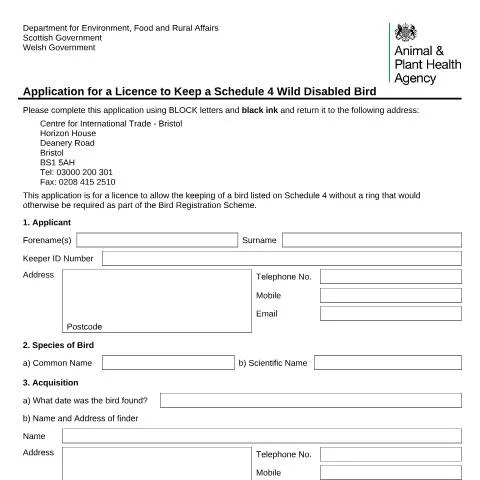
Filling out the licence application requires careful attention to detail. The form asks for specific information that ensures the APHA can assess your suitability to keep the bird. Here’s a breakdown of the sections you will encounter:
1. Applicant Information
You must provide your full name, address, and contact details. If you have a Keeper ID number, it should also be included. The APHA uses this information to communicate with you and process your application efficiently.
2. Species Identification
Detailing the bird species is crucial. Make sure to include both the common name and the scientific name. This helps the APHA understand the specific needs and regulations associated with that species.
3. Acquisition Details
Clearly state the date the bird was found and the circumstances surrounding its discovery. Include the name and contact information of the finder if this is different from your own. If the bird was acquired on a different date, provide that as well. A detailed account of where you found the bird—whether in a residential area, park, or rural location—will bolster your application.
4. Injuries and Rehabilitation
Outline the bird’s injuries or disabilities in detail and give an estimated timeline for when it may be releasable. This information is paramount for the APHA to assess the bird's needs and your preparedness to care for it.
5. Background Checks
Expect a inquiry into your legal history regarding wildlife protection. You'll need to disclose any convictions under the Wildlife and Countryside Act that may affect your application. This information helps the APHA evaluate your suitability as a keeper of a wild bird.
Timeline and Next Steps in the Application Process
Once you've completed the application form, it’s essential to understand the timeline and next steps. Your application will be processed at the Centre for International Trade in Bristol. Here’s how the process typically unfolds:
Submission and Acknowledgment
After mailing your application to the designated address, keep an eye on your inbox and phone for communication from the APHA. They may request additional information or clarification on your application. The initial processing time can vary, but patience is crucial as the APHA thoroughly evaluates each submission.
Decision Notification
You will receive a formal notification regarding the outcome of your application. This can take several weeks, dependent on volume and complexity. If approved, you’ll receive your licence, which you should keep on hand as it may be required during inspections or if questioned about your bird.
Post-Licensing Obligations
Once you receive your licence, ensure compliance with any conditions set forth by the APHA. Monitoring the bird’s health and wellbeing is your responsibility, and you may be subject to inspections to ensure adherence to wildlife care standards. Failure to comply can jeopardize your licence and the welfare of the bird.
Distinguishing the Keeping a Wild Disabled Bird Licence from Other Forms
Many may confuse this application with other wildlife-related licences, such as those needed for keeping non-wild birds or for breeding. Here’s what sets this form apart:
| Licence Type | Purpose | Specific Requirements |
|---|---|---|
| Keeping a Wild Disabled Bird | To care for specific wild birds that cannot survive independently | Requires proof of injury, species identification, and no serious convictions |
| Wildlife Rehabilitation Licence | To rehabilitate and release injured wildlife | Training in wildlife care may be required, focusing on rehabilitation |
| Pet Bird Registration | For keeping domesticated bird species | No rehabilitation aspect; typically easier to obtain |
Understanding these distinctions helps applicants avoid unnecessary confusion and streamline the process of obtaining the correct permissions.
Unique Cases: Special Circumstances and Considerations
Occasionally, applicants may find themselves in unique situations that can impact the application:
Foreign Applicants
If you are a non-UK resident, the application process remains the same, but you may need to provide additional identification and possibly a local address. Additionally, ensuring that the bird is not a protected species in your home country is vital.
Minors Seeking to Apply
Should the keeper be under 18, parental or guardian consent is a prerequisite. This requirement ensures that minors have adult supervision in case of legal responsibilities arising from wildlife care.
Emergency Situations
In cases where a bird is in immediate danger and requires urgent care, applicants should still complete the licence application. However, seeking guidance from local wildlife rescue organizations may expedite the care process while your application is being processed.
Ensuring Compliance: The Importance of Accurate Information
Completing the application accurately is not just about transparency; it is also about the wellbeing of the bird you wish to keep. False declarations or incomplete information can lead to legal repercussions. Understanding your ethical and legal obligations is paramount, as is maintaining a commitment to the bird’s health throughout your time as its keeper.
Record Keeping
Maintain thorough records of any veterinary care, feeding schedules, and rehabilitation efforts. Should the APHA query your practices or conduct an inspection, having these records available demonstrates your commitment to proper wildlife care.
Legal Awareness
Stay informed about changes in wildlife laws and regulations that may affect your licence. The Wildlife and Countryside Act 1981 is subject to amendments, and compliance with updates is necessary to maintain your legal standing and that of the bird in your care.
Final Thoughts on Wildlife Care and Licensing
The path to becoming a licensed keeper of a wild disabled bird is filled with responsibilities and legalities. By understanding each facet of the application process—from gathering necessary information to ensuring compliance with regulations—you are not only protecting yourself legally but also championing the welfare of wildlife in your community. Keeping a wild disabled bird is a substantial commitment, and your dedication to its care can lead to successful rehabilitation and release.
By familiarizing yourself with the Keeping a Wild Disabled Bird: Licence Application, you are empowered to make informed decisions. Whether you are a first-time applicant or seeking to renew an existing licence, this knowledge equips you with the tools needed to navigate the complex landscape of wildlife care and legal requirements.
Understanding the Legal Framework for Keeping Wild Disabled Birds
In the UK, the legal framework surrounding the care and keeping of wild disabled birds is predominantly governed by the Wildlife and Countryside Act 1981. This legislation is crucial as it outlines the protections afforded to wild birds, including those that are injured or disabled. The act categorically states that it is generally illegal to take, injure, or keep wild birds without the appropriate license. Therefore, before embarking on the process of applying for a license to keep a wild disabled bird, it’s essential to understand these legal stipulations and ensure compliance.
The Act’s primary intent is to protect wild birds in their natural habitats, and any exceptions to this rule, such as keeping a disabled bird, require meticulous adherence to the outlined procedures. Additionally, the Animal Welfare Act 2006 mandates that any wild bird kept in captivity should receive proper care and welfare standards. This includes providing adequate food, water, shelter, and medical attention if required.
Applying for a License: Step-by-Step Guide
The application process for a license to keep a wild disabled bird can be intricate but manageable if approached methodically. Below is a detailed step-by-step guide that individuals must follow:
- Identify the Need for a License: Ensure that the bird in question qualifies under the criteria set by the Wildlife and Countryside Act. Typically, this includes birds that are injured and incapable of living independently in the wild.
- Contact the Appropriate Authority: The first point of contact should be the UK’s Animal and Plant Health Agency (APHA). They can provide guidance on the type of license required, which generally falls under the category of a “Wildlife Rehabilitation Licence.”
- Fill Out the Application Form: The application form, often referenced as an APHA-specific form (e.g., WML-A14 for Wildlife Management Licenses), should be completed in full. Be prepared to provide detailed information about the bird, including species, condition, and any rehabilitation efforts undertaken.
- Submit Supporting Documents: Alongside the application, you may need to submit various documents, such as veterinary records if applicable, proof of previous rehabilitative experience, and your plans for the bird’s care.
- Await Approval: Once submitted, the licensing authority will review your application. This process could take several weeks, depending on the workload of the agency and the complexity of your case.
- Compliance Checks: If your application is approved, be prepared for periodic checks from the local authority or wildlife officers to ensure compliance with wildlife welfare standards.
Understanding each stage of the application process is critical for ensuring a smooth experience, as failure to comply with any part of the procedures could result in legal repercussions or revocation of the license.
Post-Licensing Responsibilities and Best Practices
After successfully obtaining a license, it is vital to adhere to the responsibilities it entails. Keeping a wild disabled bird comes with significant obligations concerning its welfare and rehabilitation. Below are some best practices to consider:
- Continuous Care and Monitoring: Regularly monitor the bird's health and progress. This includes observing its physical condition, dietary needs, and signs of stress or illness. Consult a veterinarian experienced in avian care for routine health checks.
- Creating an Enriching Environment: Ensure that the bird's living environment is enriched to promote natural behaviours. This could include the provision of suitable perches, nesting materials, and safe spaces for exercise.
- Planning for Release: In cases where the bird may recover sufficiently to be returned to the wild, develop a rehabilitation plan that includes gradual acclimatization to its natural environment. It is important to consult with wildlife rehabilitation experts for guidelines on the release process.
- Reporting Requirements: Be aware of any reporting requirements stipulated by your licensing authority. This may include regular updates on the bird’s status, any changes in its condition, or difficulties encountered during its rehabilitation.
Staying informed about best practices and legal responsibilities not only ensures the bird's wellbeing but also contributes positively to wildlife conservation efforts within the UK, aligning with the broader objectives of the Wildlife and Countryside Act.