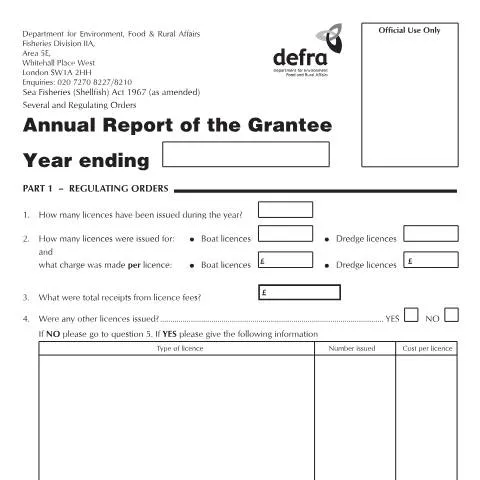
Navigating the Annual Report of the Grantee: An Essential Guide for Grantees
Picture this: You have successfully secured a grantee status and have been diligently managing your fisheries. As the year draws to a close, the responsibility of submitting the Annual Report of the Grantee looms ahead. This report is not just another piece of paperwork; it’s critically important for maintaining transparency and compliance within the fisheries sector under the governance of the Department for Environment, Food & Rural Affairs (DEFRA). This article will delve into the intricacies of this document, providing you with a comprehensive understanding of its requirements, timelines, and procedures.
Understanding the Stakes: Why Your Report Matters
The Annual Report of the Grantee serves multiple purposes. It acts as a record of all licensing activities, including the issuing of licenses, collection of fees, and any leases associated with the fishery. By compiling this information, DEFRA can monitor the health of marine resources, ensuring sustainability in fisheries management. Failure to submit this report accurately and on time could lead to potential penalties, or even jeopardize your licensing status.
The Reporting Year
The reporting year for this document runs from the 6th of April to the 5th of April of the following year. As a grantee, you'll need to gather all relevant data covering this period. It's essential to keep meticulous records throughout the year to streamline the reporting process. Let’s break down the essential components required in your report.
Key Components of the Annual Report
Your report will consist of several parts, each addressing specific aspects of your operations:
- Regulating Orders: This section includes details on the number of licenses issued, the type of licenses (boat, dredge), and the associated fees. Accurate reporting here is crucial for both transparency and financial accountability.
- Several Orders: Here, you will provide a list of grantee members, including their names, addresses, and occupations. Additionally, if applicable, a waiting list must be included.
- Shellfish Harvesting: Reporting on the shellfish harvested from the fishery is essential. You will need to categorize these into registered and non-registered production, detailing the types of shellfish, their quantity, and their market value.
- Activity in the Fishery: This section requires insight into the measures you've undertaken to enhance and manage the fishery. You'll need to comment on cultivation, pest control, and adherence to your management plan.
Preparing Your Report: Documentation and Evidence
Preparation is key! As you gather data for each section, it’s important to have supporting documents ready. Here’s a breakdown of what you might need:
- Licensing Information: Keep a record of all licenses issued, including dates and fees.
- Member Information: Create a current list of all grantee members.
- Shellfish Data: Maintain logs of shellfish quantities harvested, both for home markets and exports.
- Management Protocols: Document any changes or updates to your management plans and the actions taken during the reporting year.
Organising Your Evidence
All evidence should be meticulously organized to make the reporting process smoother. You can create a checklist of documents that align with the report’s requirements. This can include:
| Document | Status (Attached/Not Attached) |
|---|---|
| Licenses Issued | |
| List of Grantee Members | |
| Shellfish Harvest Records | |
| Management Plans |
Timeline: When and How to Submit Your Report
Understanding the submission timeline is crucial for compliance. The deadline for submitting your Annual Report of the Grantee is the 31st of January following the end of the reporting year. This gives you a few months to collect data and prepare the report once the reporting year concludes on the 5th of April.
Submission Options
The completed report can be submitted via postal mail or electronically, depending on the guidance provided by DEFRA. Ensure that you double-check the submission method relevant to your case:
- Postal Submission: If sending by post, allow sufficient time for delivery.
- Electronic Submission: Make sure to follow all guidelines to ensure the document is correctly formatted.
Tracking Your Submission: What Comes Next?
After submission, monitoring the progress of your report is important. You can do this by:
- Keeping Copies: Always retain copies of your submitted documents for your records.
- Contact DEFRA: If you have concerns or wish to confirm receipt, do not hesitate to contact DEFRA directly at 020 7270 8227/8210.
In case of discrepancies or any issues that arise, DEFRA may reach out for clarification or additional documentation. Responding promptly will help maintain your standing and ensure compliance.
Situational Considerations: Unique Circumstances to Keep in Mind
Not all grantees operate under the same conditions. Here are some potential scenarios that could influence how you approach your report:
Foreign Grantees
If you are a foreign entity managing fisheries within the UK, ensure that you understand the local regulations that apply to your operation. This may include additional documentation such as proof of eligibility to operate under UK law.
Complex Situations
For grantees facing unusual challenges—such as a significant decline in stock or a natural disaster affecting operations—it’s advisable to include detailed accounts of these incidents in your report. Not only does this contextualize your activity, but it also shows compliance with your management plan, demonstrating a proactive approach.
Minors and Other Unique Profiles
Should the grantee be a minor or involve any special considerations (e.g., legal guardianship), ensure that requisite approvals and documentation are also attached. This helps in smooth processing and adherence to legal protocols.
Conclusion: Beyond Compliance, Towards Stewardship
Your diligence in completing and submitting the Annual Report of the Grantee extends beyond mere compliance. It reflects a commitment to sustainable fisheries management and the responsible stewardship of marine resources. By approaching this task with care and attention, you contribute not just to your success, but to the health of the fisheries industry as a whole. As you prepare your report, remember that accurate and comprehensive documentation not only serves regulatory purposes but also supports your operational integrity.
For any queries or assistance, do not hesitate to reach out to DEFRA for guidance. They are there to support you in fulfilling your responsibilities as a grantee.
Understanding the Annual Report Requirements for Grant Recipients
In the UK, the annual report is an essential requirement for recipients of grants, ensuring that funds are utilized appropriately and transparently. This report offers a comprehensive overview of the financial status and the impact of the project funded by the grant.
When preparing the annual report, grantees must adhere to the guidelines set forth by the granting body. These guidelines often specify the format of the report, including required contents such as:
- Financial Statements: Detailed accounts of income and expenses related to the grant.
- Project Outcomes: Information on the achievements and milestones reached during the grant period.
- Quantitative and Qualitative Data: Metrics and narratives that illustrate the impact of the funded project.
- Future Plans: A projection of how the grantee intends to continue or build upon the funded project.
The report should be tailored to the specific requirements of the funding body, as various organizations have different expectations. For instance, local councils may require a more community-focused narrative, while large charities might seek detailed financial breakdowns.
It’s vital to adhere to the submission deadlines stipulated by the funding body, as late submissions can lead to penalties or even the requirement to return the grant. Generally, the annual report should be submitted within a specified timeframe after the end of the financial year, often overlapping with the end of the tax year on 5 April.
Common Challenges in Preparing Annual Reports
Preparing an annual report can be a daunting task for grantees, particularly for smaller organizations or first-time recipients. Here are some common challenges that may arise:
- Data Collection: Gathering the necessary data can be time-consuming, especially if the organization lacks a robust financial management system or has not maintained detailed records throughout the year.
- Understanding Requirements: Different funding bodies often have specific reporting formats and requirements, which can be confusing. Failure to meet these can result in additional scrutiny or loss of funding.
- Resource Constraints: Smaller organizations may not have dedicated staff for report writing, which can lead to rushed or incomplete submissions.
- Impact Measurement: Demonstrating the impact of a project can be challenging. Grantees often struggle to quantify their success or to articulate their story compellingly.
To mitigate these challenges, grantees should consider implementing a few best practices:
- Establishing a clear reporting schedule at the outset of the grant period helps keep the organization on track.
- Utilizing project management tools can streamline data collection and reporting processes.
- Engaging stakeholders in the evaluation process can help gather diverse perspectives and strengthen the narrative.
Best Practices for Writing an Effective Annual Report
An effective annual report not only fulfills regulatory obligations but also enhances the reputation of the grantee. Here are some best practices to consider:
- Clarity and Conciseness: Write in clear, straightforward language. Avoid jargon and technical terms that may confuse readers. Aim to make the report accessible to a broad audience.
- Visual Aids: Incorporate charts, graphs, and images to visually represent data and project successes. This makes the report more engaging and easier to digest.
- Executive Summary: Start with a brief overview of the key points, including financial highlights and major accomplishments. This allows readers to quickly grasp the essential information.
- Case Studies: Include testimonials or case studies that illustrate the project's impact on the community or target audience. Personal stories resonate well with funders and stakeholders.
- Review and Revise: Before submission, ensure the report is reviewed by multiple stakeholders within the organization. This can help catch errors and ensure that all relevant information is included.
Moreover, grantees should consider the layout and design of the report, as a well-organized and professionally presented document can positively influence perceptions of the organization.