Understanding the Export Plant Health Phytosanitary Certificate
The Export Plant Health Phytosanitary Certificate is an essential document for exporters of plants and plant products from the UK. This certificate ensures that the goods being exported meet the phytosanitary standards required by the importing country. It serves as proof that the plants are free from pests and diseases, validating their compliance with international plant health regulations. Obtaining this certificate not only facilitates trade but also supports global plant health initiatives.
Eligibility and Application Process
When initiating the application for the Export Plant Health Phytosanitary Certificate, it is crucial to determine eligibility. This certificate can be applied for by any individual or business wishing to export plant products. However, there are specific conditions that must be adhered to:
- Consignment Inspection: Goods may require inspection by a Forestry Commission Plant Health Inspector before certification.
- Application Timing: Applications should be submitted a minimum of five working days prior to the planned export date.
- Document Preparedness: Details such as the botanical name, where the timber was grown, and the quantity of products must be ready for inclusion in the application.
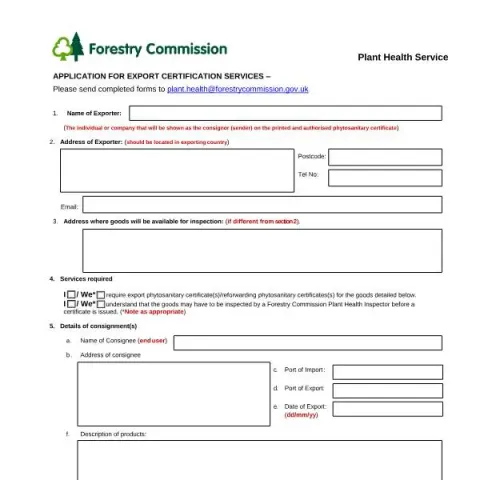
To begin the application process, complete the Form PH 25 and submit it via email to [email protected]. Ensure that all fields, including the exporter’s details and consignment specifics, are accurately filled out.
Key Components of the Application Form
The Form PH 25 consists of several sections that need careful attention. Here’s an overview of its structure:
| Section | Description |
|---|---|
| 1 - Exporter Details | Information about the individual or company exporting the goods. |
| 5 - Consignment Details | Specifics about what is being exported, including the consignee’s details and product description. |
| 6 - Special Conditions | Any treatments the goods have undergone, including disinfestation or disinfection. |
| 7 - Declaration | A confirmation statement ensuring the accuracy of the provided information. |
Duration of Validity and Renewal Procedures
The Export Plant Health Phytosanitary Certificate is valid for a limited period. Notably:
- Certificates cannot be issued more than 14 days before the date of export.
- Once the goods have left the country, no certificates can be issued.
If the certificate is approaching expiration or there are changes to the consignment details, it is advised to apply for a renewal or an updated certificate promptly. All amendments must adhere to the regulations set forth by the Forestry Commission to remain valid.
Practical Uses and Regulatory Requirements
- Importing Countries: Many countries require a phytosanitary certificate to ensure that imported plant products do not introduce pests or diseases into their ecosystems.
- Trade Agreements: Existing trade agreements often necessitate up-to-date phytosanitary documentation as part of compliance checks.
- Exporters’ Responsibilities: Exporters must ensure that their products satisfy both UK and international phytosanitary standards to avoid penalties or rejections of their shipments.
Addressing Issues: Loss, Errors, or Disputes
In the event of lost certificates, errors in the documented information, or disputes regarding the certificate’s validity, there are established procedures to rectify these issues:
- Report Loss: If a certificate is lost, contact the Forestry Commission immediately to initiate replacement procedures.
- Incorrect Information: If there is an error in the certificate, it is crucial to notify the issuing body as soon as possible to correct the information.
- Dispute Resolution: For any disputes regarding the validity of the certificate, reach out to the Forestry Commission for further assistance and guidance.
Legal Value and Compliance Standards
The Export Plant Health Phytosanitary Certificate holds significant legal weight in trade discussions and compliance checks. It acts as a legal assurance that the exporter has taken all necessary steps to comply with phytosanitary regulations. Should issues arise during customs checks, this document can protect exporters from penalties by providing proof of due diligence in ensuring plant health.
Final Thoughts on the Importance of Compliance
Engaging in international trade of plant products demands a robust understanding of compliance requirements, particularly concerning phytosanitary standards. The Export Plant Health Phytosanitary Certificate is a cornerstone of this compliance, safeguarding both exporters and importing countries’ ecosystems. Exporters should invest time in understanding the requirements and ensure that all documentation is correctly completed and submitted on time to facilitate smooth transactions.
Understanding the Phytosanitary Certificate Application Process
The application process for a phytosanitary certificate in the UK can seem daunting, but understanding the steps involved can ease any concerns. The certificate is crucial for exporting plants and plant products, as it confirms they are free from pests and diseases and comply with the importing country's regulations.
First, you need to identify the specific phytosanitary requirements of the destination country. Each nation has its own set of regulations regarding what constitutes a healthy plant, and failing to comply can result in delays or the rejection of your shipment. It's advisable to consult the official government website of the importing country or an appropriate contact at the relevant embassy for precise requirements.
Once you have gathered the necessary information, you will need to fill out the appropriate application form. In the UK, this is typically the Plant Health Certificate (PHC) application, and it is essential to ensure that this form is completed accurately.
After submitting the application, the UK Plant Health Authority will carry out an inspection of your plants or plant products. This inspection assesses whether the goods meet the phytosanitary standards. Should your application be approved, you will receive the phytosanitary certificate that accompanies your goods during export, which must travel with them to the destination country.
It's worth noting that any discrepancies or lack of compliance during this process can lead to issues, including additional inspections or rejections at the border. Therefore, maintaining clear records and ensuring that your plants are healthy and well-maintained prior to inspection is paramount.
Common Challenges and Solutions in Obtaining Phytosanitary Certificates
Exporting plants can present unique challenges when securing phytosanitary certificates. Understanding and preparing for these difficulties can streamline the process significantly.
One common challenge is the varying standards between countries. For instance, what is acceptable in the EU may not necessarily be acceptable in other regions. To navigate this, exporters should conduct thorough research on the importing country’s requirements well before the planned export date. Additionally, keeping updated on any changes to phytosanitary regulations is crucial, as these can occur frequently.
Another potential hurdle is the inspection itself. Inspections can uncover issues that may not have been evident, potentially jeopardizing the export. To combat this, ensure your plants undergo regular health checks. Engage with a professional horticulturist who can assess your plants and advise on any necessary treatments prior to inspection. This proactive approach minimizes the risk of surprises during the official inspection.
Fill in your form directly online
No printing: type your details into the boxes of the official form, tick, then download the PDF ready to send.
- 1Type into the form boxes
- 2Tick in one click
- 3Save and download the PDF
Timing also plays a critical role. The frequency of inspections and the time taken to process applications can vary. It’s recommended to start the application process well in advance of your export date—ideally, several weeks ahead—to account for potential delays. Moreover, staying in touch with the certifying authority can provide timely updates on the status of your application.
Lastly, costs associated with inspections and certificates should not be overlooked. While these may vary, budgeting for unexpected expenses can help avoid disruptions in your export plans. Research the fees involved in obtaining a phytosanitary certificate from the relevant authorities, as well as any additional costs linked to treatments or re-inspections.
Post-Certificate Considerations for Exporters
Once you have successfully obtained your phytosanitary certificate and your plants are set for export, it's essential to consider the logistics involved in transporting your goods. Proper documentation is critical; ensure that the phytosanitary certificate travels with your shipment to avoid customs issues upon arrival in the destination country.
Additionally, maintain communication with your logistics provider. Share the specifics of your shipment and ensure they are aware of the phytosanitary requirements for the destination. This ensures that packaging and transport methods meet those standards, further safeguarding your export.
Moreover, keep track of the phytosanitary certificate’s validity period. Certificates often have an expiry date, and it is crucial to ensure that the document is still valid upon arrival at the destination port. If there is a potential for delays, consult with the importing country’s regulations on extensions or renewals of phytosanitary certificates.
Furthermore, consider establishing a feedback system with your customers. Post-export, gather information on whether there were any issues with your products once they arrived. This feedback can be invaluable in refining your process and addressing any areas of concern regarding plant health or compliance for future shipments.
Lastly, staying engaged with industry groups or export forums can provide ongoing support and advice. They can offer insights into best practices and changes in regulations, ensuring your knowledge remains current and your export activities compliant.