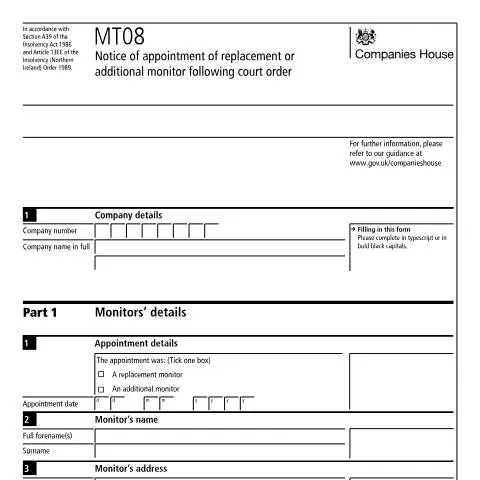
In the realm of corporate governance within the UK, the MT08 form plays a pivotal role, particularly when navigating the complex waters of insolvency. When a company is subjected to court orders necessitating the appointment of either a replacement or additional monitor, it is this very document that facilitates that transition. The implications of failing to adhere to the proper legal channels can be significant—potentially leading to further complications in corporate management or financial oversight.
Understanding the parameters surrounding the MT08 form is essential for stakeholders. Whether a company director, business owner, or legal advisor, knowing how to navigate this form's requirements can make a substantial difference in ensuring compliance and maintaining operational effectiveness amidst legal challenges.
The MT08 form is primarily submitted by company directors or appointed representatives on behalf of a company facing insolvency proceedings. Key players involved in this process may include:
- Company Directors: They are usually responsible for filing the MT08, especially if they are aware of an impending court order.
- Insolvency Practitioners: Often involved in guiding companies through insolvency, these professionals may file the MT08 on behalf of the company.
- Legal Advisors: Lawyers specializing in corporate or insolvency law can assist with the complexities of completing and submitting the form.
Additionally, understanding the legal framework is crucial. Under the
Insolvency Act 1986 and the
Insolvency (Northern Ireland) Order 1989, the appointment of a monitor is mandated by judicial authority, which underscores the importance of accuracy and promptness when submitting the MT08 form.
Completing the MT08 form involves several key steps that must be followed meticulously to ensure compliance and prevent rejection. Here’s a structured approach to filling out the document properly:
1. Gather Necessary Information
Before diving into the MT08 form, ensure you have the following information at hand:
- Company Details: This includes the full name and registration number of the company as it appears in the Companies House register.
- Monitor Details: Information pertaining to the newly appointed monitor—this includes name, address, and contact details.
- Appointment Type: Specify whether the appointment is for a replacement or additional monitor, as this is a critical aspect of the form.
2. Filling in the Form
When filling out the MT08 form, certain key points must be addressed:
- Use uppercase letters or type the information to ensure legibility.
- Complete all required sections, particularly those related to the monitor’s contact information, as this will appear on the public record.
- Select the appropriate box indicating the type of monitor appointment.
- Sign and date the form to validate your submission; without this, your application is void.
3. Double-check Before Submission
It’s crucial to review the completed form thoroughly:
- Verify that the company name and number match the official records held by Companies House.
- Ensure that no required sections are left blank, as incomplete forms may be returned.
- Confirm that all signatures are present and dated appropriately.
Once the MT08 form is complete, the next step is choosing an appropriate submission method. Companies House offers various options, each with its own nuances:
| Submission Method |
Description |
| Online Submission |
Quick and efficient, online submission allows for immediate processing, provided you have the necessary access through the Companies House portal. |
| Postal Submission |
Forms can be sent via post to the relevant address based on the company's registration location (England, Wales, Scotland, or Northern Ireland). Expect longer processing times. |
| In-Person Submission |
For those who prefer a direct approach, forms can be submitted at designated Companies House offices. This offers the benefit of immediate feedback or clarification. |
Choosing your method wisely is crucial, as it can affect the timing and efficacy of your appointment process. For example, if a speedy resolution is vital, online submission is often recommended.
Following Up: Tracking Your MT08 Submission
Once the MT08 form is submitted, it is imperative to monitor its status. Companies House processes these forms but can sometimes require additional information or clarification. Here’s how to effectively track your submission:
1. Confirmation of Receipt
After submission, especially for postal applications, look for a confirmation from Companies House. This could take the form of an email or a letter confirming that your MT08 has been received.
2. Monitoring Progress
You can track the progress of your application through the Companies House online service. This allows you to see updates and whether any further action is required from your side.
3. Handling Queries from Companies House
If there are any discrepancies or issues with your submission, Companies House will often reach out using the contact information provided in your application. Be prepared to respond quickly to any queries to avoid further delays.
Strategies for Overcoming Rejections or Complications
Unfortunately, not all submissions proceed smoothly. Understanding potential pitfalls is essential for navigating the process successfully. Here are some common complications and strategies to address them:
- Incomplete Forms: If your form is returned due to missing information, review the feedback provided, complete the necessary sections, and resubmit promptly.
- Name Mismatch: If the company name does not match the Companies House register, verify against the official records and correct any discrepancies before resubmission.
- Signature Issues: Ensure all required signatures are present. If a signature is missing, this can halt the process; double-check before sending.
Understanding these challenges can not only help in preventing them but also in formulating a swift response should they arise.
Documentation and Evidence: Preparing for Submission
When filing the MT08 form, it’s vital to understand what documentation may be required alongside your form. Although the MT08 is primarily a standalone document, supporting documents may enhance your submission:
- Court Order: If applicable, include a copy of the court order that necessitated the appointment of the monitor.
- Identification of the Monitor: Providing identification for the new monitor can sometimes expedite the process, especially if their credentials are being verified.
- Previous Monitor Documentation: If you are replacing a monitor, be prepared to provide documentation related to the previous monitor's appointment.
Being proactive in gathering supporting documents can streamline the process and reduce the likelihood of delays or complications.
Conclusion: The Significance of Compliance with the MT08 Process
Filing the MT08 form is more than a bureaucratic task; it is a crucial element in ensuring the stability and governance of a company undergoing changes due to insolvency. Every detail in the process, from submission to potential follow-ups, must be approached with diligence and precision.
For those involved, understanding the intricate steps of the MT08 process can lead not only to compliance but also to the safeguarding of the company's integrity during challenging times. Staying informed and prepared is key, and utilizing the resources provided by Companies House can further assist in navigating these complexities seamlessly. Remember, accuracy and promptness are paramount in this process, ensuring the best outcome in the face of corporate restructuring challenges.
Understanding the Court Order Process for Appointing a Monitor
The process of appointing a monitor under a court order can seem daunting, particularly if you are navigating it for the first time. A monitor is typically appointed to oversee specific areas of an organisation’s operations, often in cases where there are concerns about compliance with regulations or when a company is facing financial difficulties. The court order will specify the terms under which the monitor operates, including their powers and responsibilities.
To initiate the appointment of a monitor, you must first understand the underlying court order. This document outlines the reasons for the appointment, the scope of the monitor's authority, and any limitations on their power. It is crucial to adhere strictly to these stipulations to ensure the monitor can perform their role effectively and within legal bounds.
Typically, the appointment process begins with a petition filed in the appropriate court, usually with the assistance of legal counsel. The court will consider various factors, including the monitor's qualifications, their proposed method for carrying out their duties, and any potential conflicts of interest. During this phase, it’s advisable to provide a comprehensive overview of why the particular individual or organisation is suitable for the role, detailing their previous experience in similar situations and outlining their proposed approach.
Once the monitor is appointed, they will work closely with relevant stakeholders, including company management and legal advisors. Regular communication is vital to ensure transparency and that any issues arising during the monitoring period are promptly addressed. The monitor may also need to report back to the court periodically, detailing their findings and any actionable recommendations.
Responsibilities and Powers of the Appointed Monitor
The responsibilities of a monitor appointed by the court can vary significantly based on the context of the appointment. Generally, the monitor is tasked with ensuring compliance with the court's orders and overseeing the operations of the entity being monitored. This could involve a range of activities, from financial assessments to audits of operational practices.
One of the primary powers of a monitor is to access all relevant documentation and data. This power is vital for ensuring that the monitor can perform thorough assessments. They must have the ability to review financial statements, contracts, and internal reports. This access is crucial for identifying any discrepancies or areas of non-compliance.
Additionally, monitors are often empowered to make recommendations regarding operational changes. These recommendations should aim to improve compliance and enhance the overall functionality of the organisation. The monitor might suggest changes in management practices, financial controls, or operational procedures.
Moreover, the monitor can also have the authority to intervene directly in the business operations if required. For example, if the monitor discovers that certain actions taken by the management could lead to further regulatory issues, they may advise or order a pause on those actions until an appropriate plan is put in place.
While monitors have significant authority, it is essential to understand that they are expected to operate within the boundaries set by the court. Their powers are not unlimited, and they must report back to the court regarding their activities and any recommendations made. The court retains ultimate authority over the actions taken by the monitor, which serves as a check on their power.
Implications of Non-Compliance with a Monitor's Observations
Failure to comply with the observations and recommendations of an appointed monitor can have serious implications for an organisation. Non-compliance can lead to further legal action, including contempt of court charges. It is critical for the monitored entity to understand that the monitor's role is not merely advisory; it is a legal requirement that must be adhered to.
In the event that an organisation fails to implement the recommendations made by the monitor, it may face heightened scrutiny from both the court and regulatory authorities. This could involve further investigations, additional monitoring, and even potential penalties.
Moreover, non-compliance not only poses legal risks but can also damage the organisation’s reputation. Stakeholders, including clients, investors, and employees, may lose confidence in the organisation’s ability to operate responsibly and effectively. This could lead to a loss of business, decreases in share value, and challenges in attracting new investments.
It’s also worth noting that, depending on the terms outlined in the court order, a monitored entity may need to provide clear justifications for any failure to comply with the monitor's recommendations. This transparency is essential for maintaining credibility with the court and mitigating any potential penalties.
In conclusion, appointing a monitor following a court order represents a significant undertaking for any organisation. By understanding the appointment process, the responsibilities of the monitor, and the implications of non-compliance, entities can better navigate this complex landscape and work towards achieving a compliant and efficient operational model. Each step of the process should be undertaken with careful consideration and, ideally, with the guidance of legal professionals to ensure all actions align with the court’s directives.