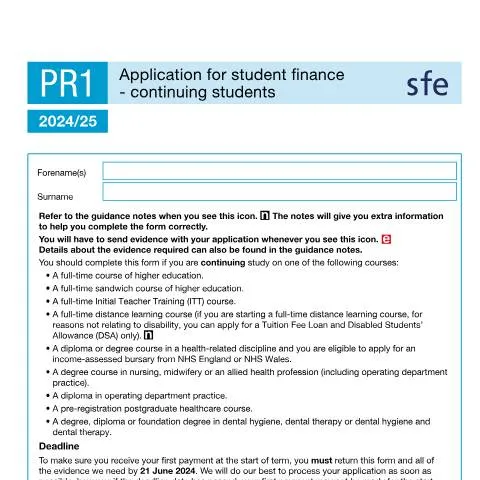
Navigating the Student Finance Application: Your Guide for 2024 to 2025
As a continuing student pursuing higher education in the UK, your financial wellbeing is paramount to successfully completing your studies. The Student Finance Application form, specifically designed for full-time students, lays the groundwork for obtaining essential financial support. This guide aims to equip you with a thorough understanding of the 2024 to 2025 application process, empowering you to navigate it with confidence.
The Importance of Student Finance in Continuing Your Education
Funding your education can be challenging, especially when balancing academic commitments and financial responsibilities. The financial assistance provided through the Student Finance application plays a crucial role in ensuring that students can focus on their studies without the constant worry of financial strain. This form is particularly vital for:
- Students enrolled in full-time higher education courses, including degree and diploma programmes.
- Individuals in Initial Teacher Training (ITT) courses.
- Students pursuing healthcare-related qualifications, potentially eligible for income-assessed bursaries from NHS England or NHS Wales.
The implications of this application extend beyond mere tuition fees; it can significantly affect living expenses, childcare costs, and additional support needs. Therefore, understanding its structure and intricacies is essential.
Setting the Stage: Regulatory Framework of Student Finance
The Student Finance application operates within a structured regulatory framework that has evolved to adapt to the changing landscape of higher education financing. The key legislations include:
- Education (Student Support) Regulations 2011: Governs the eligibility and assessment criteria for student support.
- Data Protection Act 2018: Ensures that personal data is handled responsibly and in compliance with UK GDPR, crucial for safeguarding applicants' sensitive information.
Understanding this backdrop not only highlights the legitimacy of the process but also underscores your rights and responsibilities as an applicant.
A Step-by-Step Breakdown of the Application Process
Completing the Student Finance application form can be daunting, but by breaking down the process into manageable steps, you can ensure a thorough and successful application. The following steps outline the essential actions you need to take:
- Gather Required Personal Information: Collect your National Insurance number, date of birth, and other personal details.
- Assess Your Financial Needs: Determine whether you require a Tuition Fee Loan, Maintenance Loan, or other financial support based on household income.
- Complete the Application Sections: Fill out sections 2-4, ensuring all relevant details are accurately provided. If applicable, complete additional sections regarding dependent support and household income assessments.
- Sign and Submit: Ensure your application is signed and includes all required evidence as indicated throughout the form.
By methodically following these steps, you can alleviate some of the uncertainty that comes with financial applications.
The Critical Role of Evidence Submission
One of the most pivotal aspects of your application is the submission of supporting evidence. Whenever the application form prompts you to provide evidence, it is essential to comply, as failing to do so can lead to delays or even disqualification from receiving support. Common types of evidence you may need to submit include:
- Proof of income for you and your household, if applying for support based on household income.
- Documentation confirming your course details and duration from your educational institution.
- Any additional information to substantiate your eligibility for specific grants or allowances.
Understanding what evidence is necessary and submitting it promptly will significantly impact the speed and efficiency of your application processing.
Understanding the Forward Path: Timelines and Deadlines
Timeliness is paramount in the Student Finance application process. To receive your first payment at the start of the academic term, it is paramount to submit your application along with all required evidence by 21 June 2024. Here are the key timelines to keep in mind:
| Action | Deadline |
|---|---|
| Application Submission | 21 June 2024 |
| Final Application for Payment Processing | 9 months after academic year starts |
Being proactive in adhering to these deadlines is essential; any delays could result in loss of entitlement to financial support.
Submission Channels: Navigating Your Options
Your application can be submitted through various channels, each with its own nuances. Understanding these options will help you choose the one that best suits your needs:
- Online Submission: The most common and convenient method for submitting your Student Finance application. This method allows for real-time updates on your application status.
- Paper Submission: While less common, you can still fill out a physical form and send it via post. However, this method may lead to longer processing times.
- In-Person Assistance: Some institutions may provide a service to assist students in completing their applications, ensuring that all necessary information and evidence are included.
Each method has its advantages and potential drawbacks—choose one that aligns with your comfort level and urgency.
What to Expect After Submission: Processing and Outcomes
Once you've submitted your application, the waiting begins. The Student Loans Company aims to process applications promptly, but various factors can influence the time taken. Here’s what you can expect:
- Application Processing: Expect to receive updates through your preferred communication channel regarding the status of your application.
- Decision Notification: If additional information is required, the SLC will reach out to you directly.
- Financial Support Award: Once approved, be aware of how and when the funds will be disbursed. Typically, payments will align with your academic term dates.
Remaining patient and responsive during this period is key; your diligence will pay off in securing your financing.
Looking Ahead: Additional Support and Resources
Aside from the Student Finance application, consider exploring various additional financial supports available. These may include:
- Bursaries and Scholarships: Many institutions offer financial assistance based on academic merit or specific circumstances.
- Disabled Students’ Allowance (DSA): If applicable, ensure you apply for DSA to cover extra costs related to your studies.
- Childcare Grants: If you have dependents, check the eligibility criteria for financial support in this area.
Each of these options represents a potential financial lifeline, and investigating them can help you manoeuvre through your financial responsibilities more effectively.
Your Journey as a Continuing Student: Empowering Your Future
Completing the Student Finance application is not merely a formality; it is a crucial step towards securing the funding necessary for your educational success. By understanding the application process, regulatory framework, and potential financial aid, you position yourself to make informed decisions about your education financing. Remember, this is your journey—take every opportunity to empower yourself with the resources available.
Understanding the Different Types of Student Finance Available
In the UK, student finance is primarily divided into three categories: tuition fee loans, maintenance loans, and grants. Understanding each type is crucial for students planning to apply for financial support for their studies. Here's a closer look:
Tuition Fee Loans: These loans cover the cost of tuition fees charged by universities and colleges. For the 2024 to 2025 academic year, eligible students can borrow up to £9,250 for full-time courses in England. The repayment of these loans begins only when graduates earn above a certain income threshold, which for the 2024 tax year is expected to be around £27,000 per year.
Maintenance Loans: Maintenance loans are designed to help cover living costs such as accommodation, food, and travel. The amount a student can receive depends on various factors, including their household income, where they will be studying, and whether they will be living at home or away from home. Typically, students living away from home can get a larger maintenance loan compared to those living with parents.
Grants and Additional Support: Some students may also be eligible for grants, which do not need to be paid back. For example, students with disabilities can apply for the Disabled Students' Allowance (DSA) to cover additional costs related to their studies. Additionally, those with dependents may be eligible for support through specific allowances aimed at parents.
Fill in your form directly online
No printing: type your details into the boxes of the official form, tick, then download the PDF ready to send.
- 1Type into the form boxes
- 2Tick in one click
- 3Save and download the PDF
Key Deadlines and Important Dates for the 2024 to 2025 Academic Year
Keeping track of important dates is vital for ensuring that your student finance application is submitted on time. Below are the key deadlines relevant to the 2024 to 2025 academic year:
Application Opening Date: Applications for student finance for the academic year starting in September 2024 typically open in early 2024. It is advisable to apply as soon as possible to ensure timely processing of your application.
Application Deadline: The main deadline for submitting your student finance application is usually around the end of May 2024 for students starting their course in September 2024. This deadline is crucial, as late applications may result in reduced support. If you miss this date, you might still apply, but the amount of funding available could be impacted.
Confirmation of Funding: Students can expect to receive confirmation of their funding approximately six weeks before their course starts. This is when you’ll find out how much financial support you will receive and when the funds will be disbursed.
Repayment Information: It is essential to understand that repayments for your Student Loans will begin once you earn above the income threshold after graduation. Keeping this in mind can help you plan your finances after university.
Common Mistakes to Avoid When Applying for Student Finance
Applying for student finance can be a daunting process, particularly for first-time applicants. However, avoiding some common mistakes can streamline the process and help ensure that you receive the full amount of funding to which you are entitled.
Incorrect Information: One of the most common errors made in student finance applications is submitting inaccurate or incomplete information. Always double-check your details before submitting your application. This includes personal information such as your National Insurance number, bank details, and household income information. Any discrepancies can delay your application processing.
Failing to Submit Supporting Documentation: For certain types of financial support, such as grants or additional allowances, you might be required to provide supporting documents. Make sure you have all necessary documentation ready to upload when applying or have it sent directly to the relevant authorities if required.
Missing Out on Additional Funding Opportunities: Many students are unaware of extra funding opportunities available to them, such as scholarships and bursaries from their prospective universities. Researching and applying for these can significantly enhance your financial situation while studying.
Ignoring Updates from Student Finance: After submitting your application, it is crucial to keep an eye on any communications from the Student Finance body. They may request further information or documentation, and failing to respond promptly can result in delays or denial of funding.