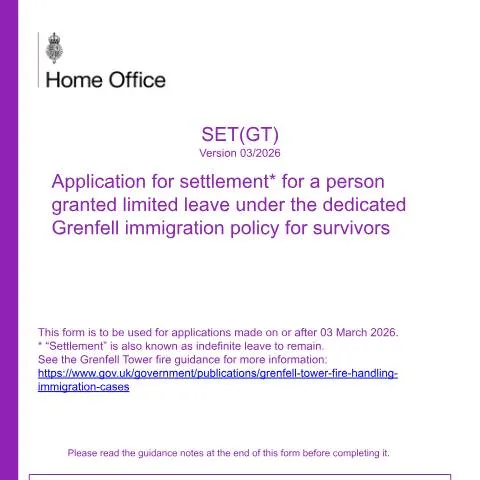
Understanding the SET(GT) Form: A Critical Step for Grenfell Tower Survivors
The journey towards settlement in the UK for Grenfell Tower survivors is both a deeply personal and a complex process. Amidst the emotional turmoil following the tragic events, the SET(GT)
It is essential to recognize how the SET(GT) form is distinct from other immigration forms within the UK’s framework. The Grenfell Tower survivors have specific considerations, and the SET(GT) form addresses these unique circumstances. The Grenfell Tower fire on 14 June 2017 had profound implications on many lives. Survivors were granted temporary protection under a dedicated immigration policy, which allows them to apply for indefinite leave to remain through the SET(GT) form. In contrast, other forms such as the FLR(M) (Further Leave to Remain) cater to general immigration circumstances. Completing the SET(GT) form correctly is vital to avoid delays or rejections. Here’s a chronological walkthrough from receiving the form to submitting it. Before filling out the form, ensure you have all necessary documentation at hand. This includes: The form begins with information about the applicant, including personal details and contact information. It’s essential to double-check the spelling of names and the accuracy of dates. Section 1 of the form asks for details regarding any immigration adviser. If you have an adviser, provide their contact details carefully: Remember, if you don’t have an adviser, simply skip this section. However, if you change your adviser, notify the Home Office immediately. Each section of the SET(GT) form has specific requirements: Before final submission, review your form. Check for: Send your completed form to the designated address: As part of your application, you must undergo biometric enrollment, which involves submitting your facial photographs and fingerprints. Fortunately, there is no fee associated with this process. Failing to complete this step may result in your application being deemed invalid. Make sure to follow all instructions regarding the timing and location for enrollment. After submission, the application enters the review phase, which is managed by the UK Visas and Immigration (UKVI). Here's how the administrative handling works: While specific timelines may vary, typical processing times for settlement applications can be between 6 to 12 months. However, different factors may affect this duration: To keep tabs on your application, you can: It’s recommended to note down any reference numbers provided during your application process for future correspondence. The SET(GT) form is primarily designed for Grenfell Tower survivors who were granted limited leave. However, there are specific eligibility guidelines that could influence application acceptance: It’s vital to understand who cannot use the SET(GT) form: The development of the SET(GT) form is rooted in a broader context of immigration and settlement regulations in the UK. The response to the Grenfell Tower tragedy included creating a specific immigration policy to support survivors. The Grenfell Tower fire raised crucial questions regarding safety, community support, and the treatment of vulnerable individuals within the immigration framework. The subsequent immigration policy was a step towards addressing the need for compassion and support for those affected. The legal basis for the SET(GT) form is founded on the provisions set forth by the UK Visas and Immigration in conjunction with the principles of the Data Protection Act 2018 and the UK GDPR. This ensures personal data processed during the application is handled with the utmost care and respect for privacy. Successfully navigating the complexities of the SET(GT) application requires diligence and attention to detail. Here are practical tips for enhancing your application experience: By understanding the intricacies of the SET(GT) form and following these guidelines, Grenfell Tower survivors can take strategic steps toward securing their indefinite leave to remain in the UK. This process, while daunting, is a crucial milestone in rebuilding lives and fostering a sense of community and stability. The Set(GT) form is specifically designed for individuals who were directly affected by the Grenfell Tower fire on June 14, 2017. Completing this form is crucial for survivors seeking to secure their immigration status in the UK. The application process can seem daunting, but understanding the steps involved can ease the burden. Before filling in the Set(GT) form, it’s essential to gather all necessary documentation. This includes identification papers, evidence of your connection to the Grenfell Tower tragedy, and any previous immigration documentation. The Home Office requires clear evidence that you were directly affected, so keeping records of support received, public statements, or media coverage can be beneficial.Distinguishing SET(GT) from Other Immigration Forms
The Unique Context of Grenfell Tower Survivors
A Step-by-Step Guide to Completing the SET(GT) Form
1. Gather Necessary Information
2. Filling Out Personal Information
3. Addressing Immigration Advisers
4. Section Specifics and Common Pitfalls
5. Final Review and Submission
The Biometric Enrollment Process
Steps to Enroll Biometrics
Understanding the Administrative Handling of SET(GT) Applications
Application Processing Timeline
Tracking Your Application Status
Target Demographics and Exceptions
Who Can Apply?
Exceptions to Note
The Regulatory and Historical Context of SET(GT)
Historical Significance
Legal Framework Underpinning the Form
Engaging with the Process: Tips for Success
Understanding the Set(GT) Form Process
Once you have your documents ready, you can start filling out the form. Be meticulous; any errors or omissions can lead to delays or even rejection of your application. The form requires you to provide personal details, information about your current immigration status, and your reasons for applying. Ensuring that you explain your circumstances clearly and concisely will give your application a better chance of being approved.
After submission, expect a response from the Home Office within a reasonable time frame, typically up to six months. However, this can vary based on individual circumstances. If you experience delays or wish to expedite your process, contacting the dedicated support services for Grenfell survivors may provide additional assistance.
Support Services for Grenfell Tower Survivors
In the aftermath of the Grenfell Tower fire, numerous support services were established to help those affected. These services are not only focused on immediate emotional and physical support but also on long-term assistance, particularly concerning immigration processes like the Set(GT) form.
Organizations such as the Grenfell Foundation and local councils provide comprehensive support systems, including legal advice, mental health services, and housing assistance. It is advisable for survivors to engage with these organizations early in the application process. Legal experts familiar with immigration matters can guide you on how to complete the Set(GT) form correctly and represent you if issues arise.
Furthermore, community support groups have been vital in creating a safe space for survivors to share experiences and learn from one another. These groups often host workshops or sessions to help individuals navigate their rights and entitlements under UK law.
For those who may not speak English fluently, translation services are typically available through these organizations, ensuring language barriers do not impede access to critical information and support.
Potential Challenges and Solutions in the Application Process
Applying with the Set(GT) form can present unique challenges, particularly because many survivors may still be dealing with the trauma from the disaster. It’s crucial to acknowledge that emotional and psychological factors can impact the ability to gather documents and complete forms accurately.
Furthermore, there may be apprehensions about the implications of disclosing personal information, given the sensitive nature of the tragedy. The Data Protection Act 2018 and UK GDPR provide solid protections for personal data, reassuring applicants that their information will be handled with care and confidentiality during the immigration process.
Another challenge is the potential for delays in processing times. Survivors may face uncertainties regarding their immigration status while waiting for a decision. To mitigate this, it is advisable to maintain regular contact with the Home Office and utilize support services to obtain timely updates on the status of applications.
Should your application be denied, know that there are avenues for appeal. Engaging with legal aid organizations that specialize in immigration law can provide guidance on the steps to take next and help prepare any necessary appeals or reviews. This support is crucial in navigating the often complex immigration landscape.
Ultimately, while the journey to secure your immigration status after the Grenfell Tower tragedy may be fraught with challenges, leveraging available resources and support can significantly ease the process. Survivors are encouraged to remain proactive in seeking assistance and to utilize the various services designed to help them during this time of transition.