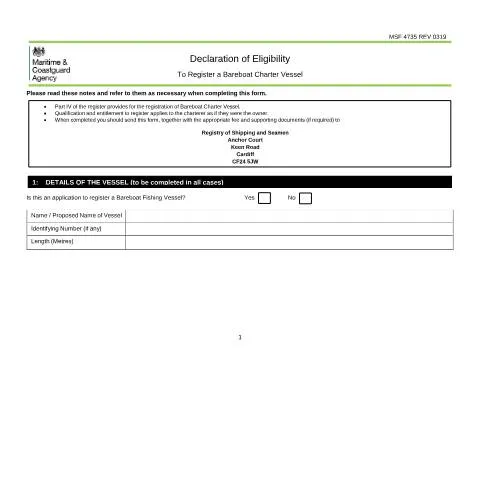
Understanding the MSF 4735: A Key Document for Bareboat Charter Registration
The MSF 4735 form, or the Declaration of Eligibility to Register a Bareboat Charter Vessel, is not merely a piece of paperwork; it serves as a critical linchpin in ensuring that vessels operated under bareboat charters comply with UK maritime regulations. As more individuals and companies enter the maritime sector, the demand for clarity around this form has surged. The registration process facilitated by the MSF 4735 is essential for both legal compliance and operational legitimacy within the maritime community.
The Regulatory Framework: Why MSF 4735 Exists
The MSF 4735 is framed within a robust legislative structure established under the Merchant Shipping Act. This Act provides the foundation for maritime activities in the UK and outlines the requirements for vessel registration. Specifically, Part IV of the register is dedicated to bareboat charter vessels, which are defined as ships that are chartered without crew. This type of arrangement permits the charterer to operate the vessel independently, necessitating a distinct eligibility process to ensure that all charterers are appropriately qualified.
Under the Maritime and Coastguard Agency (MCA), the registration process is designed to protect maritime safety and uphold the integrity of the UK shipping industry. It helps to prevent illegal operations and ensures only qualified individuals or entities can operate a charter vessel. This adherence to regulatory compliance is crucial in fostering safe and responsible maritime practices.
Who Needs to Complete the MSF 4735?
The MSF 4735 must be completed by anyone wishing to register a bareboat charter vessel. This includes a range of potential applicants:
- Individuals: British citizens or non-UK nationals exercising their right of freedom of movement.
- Companies: Bodies corporate incorporated in the UK or any country listed under Schedule 6 of the Registration Regulations.
- Authorities: Local authorities in the UK may also apply for registration.
However, eligibility can vary based on the nature of the vessel (fishing or non-fishing). Each category has distinct criteria outlined in the form, which must be carefully adhered to by the applicant.
Deciphering the MSF 4735: A Detailed Breakdown
The MSF 4735 is structured into several key sections, each requiring precise information. Below is a detailed examination of these sections and the nuances that applicants should be aware of:
1. Vessel Details
In this section, you need to provide:
- Proposed Name of Vessel: Ensure that the name is unique and complies with MCA naming conventions.
- Identifying Number: This may refer to any existing registration numbers.
- Length: Measured in metres, this should match the vessel specifications.
Accuracy is vital here, as any discrepancies can lead to delays or rejection of the application.
2. Owner Information
This part focuses on the owners of the vessel. It requires:
- Sequential Numbering: Each owner must be numbered sequentially, starting from one.
- Details: This includes full names, addresses, and nationalities. Note the requirement for companies to provide their principal place of business.
It’s important to carefully read the notes provided in the form to avoid common pitfalls, especially regarding the status of ownership.
3. Charterer Specification
The charterer's details are crucial, particularly if the vessel is operated by an entity other than the owner. This section requires similar information as the owner section, including:
- Management and Control: Names and addresses of management companies or individuals controlling the vessel.
- Charter Details: Names of those chartering the vessel, distinct from the owners.
Be thorough here; any inaccuracies can delay the processing of the application.
4. Representative Person for Non-Resident Charterers
If the charterer is not UK resident, appointing a representative is mandatory. This representative must be either an individual resident in the UK or a corporate body with a UK presence. The information required includes:
- Full Name: The representative's name must be clear.
- Business Address: A UK address is essential for communication purposes.
This ensures that there is a local point of contact for any regulatory queries or issues that may arise.
Submission Process: Where and How to File the MSF 4735
Once the MSF 4735 is completed, applicants must submit the form along with the appropriate fee and any required supporting documents to the Registry of Shipping and Seamen. The address is:
Anchor Court, Keen Road, Cardiff, CF24 5JW
There are several options available for submission:
- By Post: This is the most common method; ensure that the form is sent via a reliable postal service.
- In Person: Applicants may also choose to deliver the form in person at the registry office during business hours.
- Online Submissions: Currently, online submission is not available for this particular form, but checking for updates on the MCA’s official website is advisable.
Regardless of the submission method, keeping a copy of the completed form and any correspondence is crucial for future reference.
Post-Submission: What to Expect Next
Once the MSF 4735 is submitted, the application will be reviewed by the MCA. This involves several important steps:
- Review Period: The registry will assess the eligibility and accuracy of the information provided.
- Communication: If there are any issues or additional information required, the MCA will reach out to the applicant. It is advisable to respond promptly to avoid delays.
- Approval or Rejection: The final decision will be communicated to the applicant, typically in writing.
Should the application be denied, the applicant is entitled to appeal the decision, provided they have valid grounds for doing so.
The Impact of the MSF 4735: Rights, Responsibilities, and Consequences
Completing and submitting the MSF 4735 has significant implications for the charterers. The successful registration of a bareboat charter vessel allows charterers to operate legally within the UK maritime framework. Furthermore, it protects against potential liabilities associated with unregistered operations.
However, failing to file the MSF 4735 or providing incorrect information can lead to severe consequences. These may include:
- Fines: Operating an unregistered vessel can attract hefty fines from maritime authorities.
- Legal Action: In the event of an incident involving the vessel, unregistered operations may lead to legal repercussions.
- Loss of Insurance Coverage: Many insurance policies require proof of registration; failure to present this could nullify coverage.
Thus, emphasis on accuracy and compliance with the registration process cannot be overstated.
Differences Between the MSF 4735 and Related Forms
While the MSF 4735 serves a specific purpose, it is important to recognize how it differs from other forms related to maritime registration. For instance, another commonly referenced form is the MSF 4736, which applies specifically to fishing vessels under different conditions. Understanding these distinctions is crucial for applicants to avoid confusion:
| Form | Purpose | Key Differences |
|---|---|---|
| MSF 4735 | Registration of Bareboat Charter Vessels | Applies to non-fishing vessels and requires specific eligibility criteria for charterers. |
| MSF 4736 | Registration of Fishing Vessels | Specifically geared towards fishing charterers and has separate eligibility criteria. |
Understanding these differences ensures that applicants submit the appropriate documentation for their specific maritime operations.
Final Thoughts on Navigating the MSF 4735
Completing the MSF 4735 is a fundamental step in the maritime journey for many operators. This form ensures that bareboat charter vessels are registered correctly, fulfilling legislative requirements while promoting safety at sea. Being thorough, accurate, and aware of the implications of the registration process will empower charterers to navigate the maritime landscape with confidence.
Engaging with the procedural aspects of the MSF 4735 not only facilitates compliance but also enhances the overall integrity of the maritime sector. Proper adherence to these requirements reflects a commitment to responsible maritime operations, ultimately benefiting both individual operators and the broader community.
Understanding Bareboat Charter Registration in the UK
In the context of the United Kingdom, a bareboat charter refers to an arrangement where a boat owner rents out their vessel to a charterer without providing a crew or provisions. This type of charter is distinct from time charters or voyage charters where the owner is typically involved in the operation of the vessel. For individuals or organizations looking to register a bareboat charter under the MSF 4735 (Maritime and Coastguard Agency guidelines), it is essential to understand the eligibility criteria, the registration process, and the implications of such registration.
The first step for potential registrants is to ascertain whether they meet the necessary criteria. Generally, eligibility to register a bareboat charter in the UK requires the owner to demonstrate that they are legally capable of entering into a contractual agreement. This includes being of legal age and having the requisite financial and administrative capacity to manage the charter agreement. Furthermore, the vessel itself must comply with certain safety and documentation standards, which will be verified during the registration process.
To begin the registration, applicants will need to gather several key documents, including, but not limited to, proof of ownership, safety certificates, and evidence of compliance with maritime regulations. It's also worth noting that the initial registration may involve a survey of the vessel to assess its condition and suitability for chartering. Ensuring these documents are in order can significantly streamline the registration process and help avoid delays.
Legal Considerations and Compliance
When engaging in a bareboat charter, it is crucial for owners to remain aware of the legal implications associated with this type of vessel operation. The terms and conditions of the charter agreement should be clearly outlined, specifying the rights and responsibilities of both the owner and the charterer. This includes details such as the duration of the charter, payment terms, and liability clauses. Legal advice is often recommended when drafting these contracts to ensure compliance with maritime law and protection against potential disputes.
In addition to contractual obligations, vessel owners must also consider their responsibilities under the UK’s data protection laws. The Data Protection Act 2018 and UK GDPR stipulate how personal data should be managed. If the charterer provides personal information during the registration process, the owner must ensure that this data is stored securely and used only for the purposes intended within the charter agreement. Failure to comply with data protection regulations can result in significant penalties, so it is advisable to implement proper data management practices.
Moreover, it is essential for owners to maintain adequate insurance coverage for their vessels. Insurance policies should cover both damage to the vessel and liability for injuries or accidents that may occur during the charter period. In some cases, charterers may request specific insurance provisions as a condition of the charter agreement. Understanding the nuances of insurance can help to mitigate risks and ensure that both parties are adequately protected.
Tax Implications for Bareboat Charter Owners
Owners of vessels registered for bareboat chartering should also be aware of the potential tax implications associated with their operations. Depending on the nature of the charter business, it may be classified under specific tax regimes, such as income tax or corporation tax. Owners must keep detailed records of their income and expenses related to the charter to accurately report to HMRC (Her Majesty's Revenue and Customs).
Furthermore, if the charter business generates significant income, owners may be required to register for VAT (Value Added Tax) if their taxable turnover exceeds the VAT registration threshold. This involves submitting regular VAT returns and maintaining compliance with VAT regulations. Ensuring proper accounting practices and seeking advice from tax professionals can help owners navigate this complex landscape.
Lastly, it is pertinent for owners to understand how their National Insurance contributions may be impacted by income derived from bareboat chartering. Depending on their status—whether they are self-employed or a limited company—contributions may vary significantly. Staying informed about these financial obligations is essential for effective business management and compliance with UK tax law.