Understanding the MT06 Form: Key Steps for Successful Submission
When a company navigates through financial difficulties, the end of a moratorium can signify a turning point. The MT06 form is integral in marking this transition, specifically regarding the disposal of an application for an extension by the court or following a corporate voluntary arrangement (CVA). Understanding how to correctly complete and submit this form is crucial for company directors and insolvency practitioners. This article delves into the intricate details of the MT06 form, its relevance, and the requirements surrounding its submission.
When to Use the MT06 Form: Practical Contexts
The MT06 form is employed primarily after a moratorium period has concluded. This period can occur for various reasons, such as:
- Disposal of an Application for Extension: When the court decides to end the moratorium after reviewing an application to extend it.
- Corporate Voluntary Arrangement (CVA): When a CVA proposal takes effect, is not approved, or is withdrawn.
Understanding this context is essential, as it helps determine the correct course of action for the company. The implications of a moratorium ending can be significant, affecting creditors and potentially influencing future business operations.
Navigating the Completion of the MT06 Form: A Detailed Breakdown
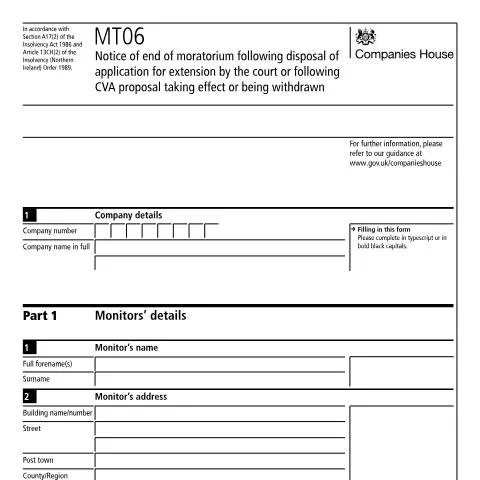
Completing the MT06 form involves meticulous attention to detail. The form consists of two primary sections: details about the company and information regarding the monitor overseeing the moratorium. Below we dissect each section:
Section 1: Company Details
In this section, the following information must be provided:
- Company Name: Ensure that the name is exact as registered with Companies House.
- Company Number: Double-check that this matches the official registration.
Providing accurate information here is crucial, as discrepancies may lead to delays or rejection of the form.
Section 2: Monitor’s Details
Section two requires detailed information on the monitor, who plays a crucial role during the moratorium. Necessary details include:
- Monitor’s Name: Provide full forenames and surname.
- Monitor’s Address: Include building name/number, street, town, county/region, country, and postcode.
- Contact Information: Include email address and telephone number for potential follow-ups.
This section emphasizes transparency and the importance of providing accessible contact information should further inquiries arise.
Important Dates: The Timeline of the Moratorium
One critical aspect of the MT06 form is the designation of specific dates:
- Moratorium End Date: The exact date when the moratorium concluded must be indicated. This date is pivotal as it can affect the company’s subsequent actions.
- Signature Date: The date when the monitor signs the form should also be included. It helps establish the timeframe for the submission process.
Properly documenting these dates is essential to ensure compliance with the relevant regulations under the Insolvency Act 1986.
Submission Channels: Choosing the Right Method
The submission of the MT06 form can be done through various channels, each with its own advantages:
| Submission Method | Description | Advantages |
|---|---|---|
| Online Submission | Submit via the Companies House Online Services. | Faster processing times and immediate confirmation of receipt. |
| Postal Submission | Send the completed form to the appropriate Companies House address based on the company’s registration location. | Allows for physical records and is suitable for those not utilizing online services. |
| In-Person Submission | Hand in the form at a Companies House office. | Immediate feedback and confirmation upon submission. |
Each method serves different needs, so choose the one that aligns with your operational preferences and urgency.
Common Pitfalls: Ensuring Accuracy and Compliance
Completing the MT06 form requires vigilance to avoid common errors that might lead to complications:
- Mismatch of Company Details: Always verify that the company name and number are consistent with the records at Companies House.
- Incomplete Monitor Information: Failing to provide comprehensive monitor details can delay processing. Ensure all sections of the monitor’s details are filled out accurately.
- Omission of Dates: Forgetting to include the moratorium end date and signature date is a frequent oversight.
By being mindful of these potential pitfalls, companies can significantly enhance the likelihood of a smooth submission process.
Consequences of Non-Compliance: What Happens After Submission?
Once the MT06 form is submitted, several outcomes may arise depending on accuracy and compliance:
- Acceptance: If correctly filled out, the form will be processed, and Companies House will update the public record to reflect the end of the moratorium.
- Request for Further Information: If there are issues or missing information, Companies House may reach out for clarification or additional details.
- Rejection: In cases of significant errors, the form may be rejected, necessitating a resubmission.
Understanding these potential consequences reinforces the importance of meticulous attention to detail when filling out the MT06 form.
Regulatory Framework: The Legislation Behind the MT06 Form
The MT06 form is grounded in specific legal frameworks that govern company insolvency in the UK. Key references include:
- Insolvency Act 1986: This act outlines the key provisions around company insolvency, including the procedures for entering and exiting a moratorium.
- Insolvency (Northern Ireland) Order 1989: Similar to the Insolvency Act, this order governs insolvency matters in Northern Ireland.
Understanding this regulatory backdrop can provide valuable insights into the purpose and importance of the MT06 form within the broader context of corporate governance.
Final Considerations: Preparing for the Next Steps
After submitting the MT06 form, it’s essential to prepare for the subsequent stages, which may involve:
- Financial Planning: Companies should strategize on how to manage their finances post-moratorium, whether it involves restructuring debts or revising operational strategies.
- Communications with Creditors: Clear communication with creditors is vital to rebuild trust and establish a conducive environment for future transactions.
- Adhering to Ongoing Obligations: Companies must remain compliant with continuing regulatory requirements as they move forward from the moratorium.
This preparatory outlook can significantly assist companies in navigating the complexities of post-moratorium operations and ensuring long-term sustainability.
Understanding the Implications of the End of Moratorium
The end of a moratorium following a disposal of extension application or a Company Voluntary Arrangement (CVA) action has significant implications for businesses and stakeholders involved. A moratorium provides temporary relief to a company facing financial difficulties, prohibiting creditors from taking legal action or enforcing security. However, once this period concludes, it is crucial to comprehend the ramifications.
During the moratorium, a company must demonstrate that it is actively pursuing a viable restructuring plan. If the moratorium ends without a successful CVA in place, the company may immediately face legal actions from creditors. Directors need to be particularly vigilant about their responsibilities under the Companies Act 2006, as failing to act in the best interests of the company could lead to personal liability.
Moreover, it is essential to notify all relevant stakeholders, including employees and suppliers, about the cessation of the moratorium. This communication can help manage expectations and foster goodwill, which is crucial for the company’s future operations.
Steps to Take After the Moratorium Ends
Once the moratorium has ended, businesses must take decisive steps to navigate the post-moratorium landscape effectively. Here are several critical actions to consider:
- Review Financial Position: Conduct a thorough review of the company’s financial status. This includes assessing cash flow, outstanding debts, and overall financial health. A clear understanding of the current position will inform the next steps for recovery.
- Engage with Creditors: Open lines of communication with creditors as soon as the moratorium ends. Engaging in proactive dialogue can facilitate negotiations and potential agreements on payment terms or restructuring options. Transparency can also help mitigate potential legal actions.
- Seek Professional Advice: It's advisable to consult with insolvency practitioners or financial advisors who specialize in corporate recovery. They can provide tailored strategies to navigate the challenges that arise post-moratorium.
- Reassess Business Model: Consider the viability of the existing business model. The end of the moratorium may highlight areas needing improvement or restructuring. This may involve revising product lines, streamlining operations, or even pivoting to new markets.
- Consider Further Insolvency Procedures: In some cases, if a CVA is unfeasible, exploring other insolvency options such as Administration or Liquidation may be necessary. Each route has its implications and should be considered carefully with professional guidance.
Role of Stakeholders During Transition
The transition following the end of a moratorium also highlights the critical role of various stakeholders. From employees to suppliers, understanding their perspectives can significantly influence the recovery process.
Employees may experience uncertainty about job security and company stability. Therefore, it is vital for directors to communicate transparently about the company's plans and any potential changes in staffing. Cultivating a culture of openness can foster loyalty and retention during challenging times.
Suppliers, on the other hand, may require assurance regarding payment terms or revised agreements. Open dialogue is essential to maintaining good relationships, which can be advantageous for future supply chain negotiations. Many suppliers may be willing to extend credit terms or offer discounts in exchange for prompt payments.
Lastly, shareholders and investors need to be kept informed about the company’s direction post-moratorium. Frequent updates regarding financial performance and strategic initiatives can sustain investor confidence, which is vital for any future fundraising efforts.