Navigating the CPS1 and CPS2 Forms: A Guide for Local Authorities
For local planning authorities across the UK, the CPS1 and CPS2 forms serve a crucial function in tracking and managing county matter planning applications. Understanding how to correctly complete and submit these official documents is essential for efficient planning governance. This guide will take you through the intricacies of the CPS1 and CPS2 forms, helping authorities to report effectively on their planning activities and ensure compliance with governmental requirements.
Understanding County Matters: Why CPS1 and CPS2 Forms Matter
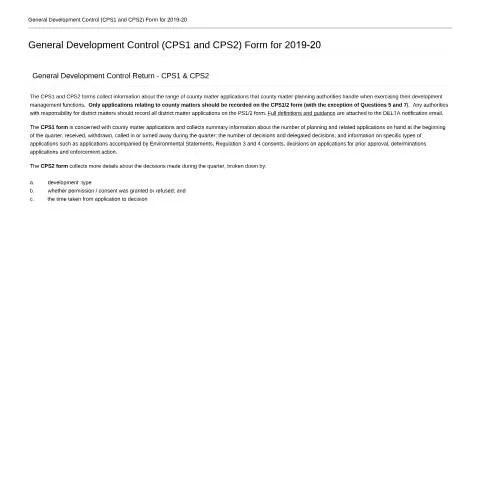
The CPS1 and CPS2 forms are specifically designed for local authorities to provide a comprehensive summary of the handling of county matters in the planning process. Practically, this means they encapsulate the number and types of planning applications received, decided upon, and the actions taken to enforce compliance during a specified quarter.
CPS1 focuses on collecting summary information about planning applications that are on hand at the beginning of the quarter, received during that quarter, withdrawn, or turned away. It also captures data about the number of decisions made, including specifics regarding delegated decisions and applications accompanied by Environmental Statements.
In contrast, the CPS2 form dives deeper into the decisions made, outlining the type of development, whether permissions were granted or refused, and the elapsed time from application to decision. This duality not only enhances data accuracy but also helps in creating a more transparent system of accountability for developmental activities.
Timeframes and Submission Deadlines
Like many administrative processes, the timeline for submitting CPS1 and CPS2 forms is tight and structured. The reporting period typically aligns with the financial quarters:
- Q1: 1 April to 30 June, submitted by 31 July
- Q2: 1 July to 30 September, submitted by 31 October
- Q3: 1 October to 31 December, submitted by 31 January
- Q4: 1 January to 31 March, submitted by 30 April
Failure to submit these forms by the deadlines can result in compliance issues, potentially affecting future funding and planning approvals. Local authorities must ensure that their data is accurate and timely to avoid complications.
Who Needs to Fill Out CPS1 and CPS2?
The responsibility for completing these forms lies primarily with local planning authorities that manage county matter applications. This includes:
- County councils
- Unitary authorities with planning powers
- Environmental agencies when they have planning authority
However, it is essential to note that district councils must not use CPS1 and CPS2 forms for district matters; they are responsible for using the appropriate district planning forms. This delineation helps in maintaining clarity in planning jurisdiction.
Step-by-Step Guide to Completing CPS1 and CPS2 Forms
Completing the CPS1 and CPS2 forms efficiently requires careful attention to detail. Below is a structured approach to ensure that all necessary information is captured accurately:
1. Gathering Preliminary Information
Before you even begin filling out the forms, ensure you have access to your planning database, as this will provide necessary data:
- Current planning application statistics
- Status of applications (on hand, received, withdrawn, etc.)
- Details of decisions made (granted/refused)
2. Completing the CPS1 Form
The CPS1 form typically includes the following sections:
- Q1: Report the number of county matters on hand at the start of the quarter and those received during the quarter.
- Q2: List the number of decisions made during the quarter.
- Q3: Indicate the number of delegated decisions.
- Q4: Note applications accompanied by statutory Environmental Statements.
- Q5-Q9: Capture data on enforcement actions and other specific application types.
3. Transitioning to the CPS2 Form
Once you have filled out the CPS1 form, if any decisions have been made, you will need to transition to the CPS2 form:
- List each decision individually, referencing the application number.
- Indicate the type of development associated with each decision.
- Clarify whether permission was granted or refused.
4. Double-Check and Sign Off
Accurate data entry is crucial, so it is imperative to review the filled forms for any discrepancies:
- Ensure that application numbers are correct.
- Verify that the dates reflect accurate timelines.
- Confirm that all applicable sections are completed.
Finally, sign off on the forms, as this signifies that the provided information is true to the best of your knowledge.
Handling Potential Issues: Missing Information or Errors
In the event of an incomplete form or an error discovered post-submission, local authorities should take the following steps:
- Identify the specific error or missing data.
- Consult relevant datasets to gather the correct information.
- Submit a revised form to HMRC along with an explanation of the changes made, if necessary.
Transparency in managing corrections is vital to maintain trust and ensure compliance with the regulatory framework.
Understanding the Consequences of Non-Compliance
Local authorities must understand the gravity of non-compliance related to CPS1 and CPS2 submission. The consequences can include:
- Increased scrutiny from higher authorities or governmental oversight bodies.
- Potential penalties or delays in funding for future projects.
- Challenges in the planning approval process for subsequent applications.
Thus, it is crucial to emphasize the importance of adhering to submission deadlines and data accuracy to avoid these negative implications.
Conclusion: The Road Ahead for County Matter Planning
The CPS1 and CPS2 forms are more than mere administrative requirements; they represent a vital component of the planning framework in the UK. By correctly managing these forms, local authorities can enhance accountability, improve transparency, and ultimately contribute to better planning outcomes within their regions.
As the landscape of planning continues to evolve, authorities must stay informed about any changes to the reporting process or guidelines associated with these forms. Keeping abreast of updates ensures ongoing compliance and strengthens the integrity of the planning system.
Understanding the County Planning System: CPS1 and CPS2 Explained
The County Planning System in the United Kingdom plays a pivotal role in managing land use and development. CPS1 and CPS2 forms are integral to this system, designed to facilitate various planning applications and decisions. These forms are specifically tailored for different stakeholders, including property developers, local authorities, and residents, making the planning process more transparent and efficient.
CPS1, known as the 'County Planning Application Form,' is primarily used to submit a range of applications for development projects. This includes proposals for housing, commercial premises, and infrastructure works that may impact local communities or the environment. It requires detailed information about the proposed development, including site plans, environmental assessments, and justification for the project's necessity.
On the other hand, CPS2 focuses on the 'County Planning Statement.' This document serves as a narrative that outlines the rationale behind a planning application. It enables applicants to articulate their vision and objectives clearly, demonstrating alignment with local development plans and national policies. Furthermore, it invites feedback from stakeholders, ensuring that their concerns are addressed during the planning process.
Key Considerations for Completing CPS1 and CPS2 Forms
Completing the CPS1 and CPS2 forms may seem daunting due to the level of detail required, but understanding the specific requirements can simplify the process substantially. Here are some crucial considerations to keep in mind:
- Comprehensive Site Analysis: Applicants must conduct a thorough analysis of the site where the development is proposed. This entails understanding the site’s current use, accessibility, and any geographical or environmental constraints. Furthermore, assessing the impact on local wildlife and landscape features can be beneficial, as these factors often influence planning decisions.
- Engagement with Local Communities: Early engagement with local communities and stakeholders is vital. This can involve public consultations, meetings with local council representatives, and discussions with relevant interest groups. Documenting these interactions in the CPS2 form can strengthen the application by demonstrating responsiveness to community concerns.
- Compliance with Planning Policies: It is essential to verify that the proposed development complies with both local and national planning policies. Applicants should refer to relevant local development plans to ensure that their proposals align with the strategic objectives set out by the planning authority. Failure to comply with established policies can result in delays or outright rejections of planning applications.
Navigating the Appeal Process for CPS1 and CPS2 Decisions
When a planning application is refused, applicants have the right to appeal the decision. Understanding the appeal process is crucial for anyone involved in county planning. The process is managed by the Planning Inspectorate, which acts independently of local councils.
Firstly, applicants must ensure that they adhere to the timeframes set out for lodging an appeal. Generally, appeals must be submitted within six months of the refusal notice. The appeal can be made online or through paper submissions, and it typically involves completing an appeal form that references the CPS1 and CPS2 documentation submitted earlier.
It's essential to prepare a compelling case for the appeal. This includes providing any additional evidence or arguments that support the original application and address the reasons for refusal. Engaging a planning consultant or legal advisor experienced in planning law can significantly enhance the chances of a successful appeal.
During the appeal process, the Planning Inspectorate will assess all submitted documents, and may conduct a site visit and hold a public inquiry if necessary. It is also possible for the local authority to submit additional comments regarding the appeal, which can further influence the decision. Ultimately, the Inspectorate’s decision is binding, and if successful, the local authority is required to implement the decision within a specified timeframe.