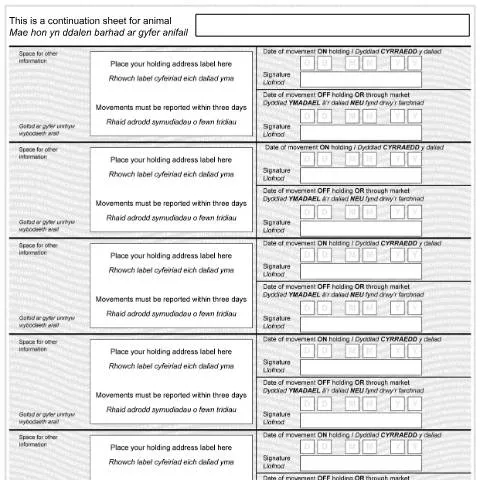
When Your Cattle Passport Runs Out of Space: The Critical Role of Continuation Sheets
A cattle's life story doesn't always fit neatly within the confines of its original passport booklet. When veterinary treatments accumulate, movement records multiply, or ownership changes frequently, the standard passport pages can quickly become insufficient. This is where the Cattle Passport Continuation Sheet (CPP52a) becomes indispensable—a seemingly simple document that ensures complete regulatory compliance whilst maintaining the unbroken chain of your animal's official history.
Managed jointly by the British Cattle Movement Service and the Rural Payments Agency, this continuation sheet serves as a legally binding extension to existing cattle passports, ensuring that every movement, treatment, and ownership change remains properly documented in accordance with Regulation (EC) No. 1760/2000.
The Regulatory Framework Behind Passport Extensions
The continuation sheet system operates within the strict parameters of European regulation that remains embedded in UK law post-Brexit. Article 6(1) of Regulation (EC) No. 1760/2000 mandates comprehensive record-keeping for all bovine animals, creating a paper trail that follows each animal from birth to slaughter.
Unlike standard administrative forms, the continuation sheet must be securely attached to the original passport—a requirement that goes beyond simple stapling or paper clips. The attachment method must ensure that pages cannot become separated during routine handling by farmers, veterinarians, transport operators, or abattoir staff. This physical integrity requirement reflects the document's role as part of the animal's permanent legal identity.
The eartag number serves as the unique identifier linking the continuation sheet to its parent passport, creating an unbreakable administrative bond between the documents.
The bilingual nature of the form (English and Welsh) reflects the UK's commitment to linguistic accessibility in agricultural administration, particularly relevant given Wales's significant cattle farming sector.
Farmers and Keepers: Navigating the Decision to Extend
Cattle keepers face the continuation sheet decision at various critical junctures. Breeding operations with long-lived breeding stock often encounter space limitations first, as these animals accumulate extensive veterinary and movement histories over their productive lifespans. A prize dairy cow might require continuation sheets multiple times during her career, particularly if she moves between farms for breeding purposes.
Commercial beef operations present different challenges. While individual animals may have shorter lifespans, frequent movements between rearing farms, finishing units, and eventually to slaughter facilities can rapidly fill passport pages. Store cattle—animals bought and sold for further fattening—represent particular administrative challenges as their passports change hands multiple times.
Timing Considerations for Different Operation Types
| Operation Type | Typical Trigger Point | Common Scenarios |
|---|---|---|
| Dairy Herds | After 3-4 years | Regular veterinary treatments, breeding records, occasional sales |
| Beef Breeding | Within 2-3 years | Movement between grazing areas, breeding loans, show attendance |
| Commercial Finishing | 6-18 months | Multiple purchases, frequent health treatments, rapid turnover |
| Organic Systems | Variable | Detailed treatment recording requirements, extended finishing periods |
Organic producers face particularly stringent documentation requirements, as their certification bodies demand comprehensive treatment records that often exceed standard passport capacity well before the animal reaches slaughter weight.
The Critical Eartag Connection Process
The eartag number requirement represents more than administrative convenience—it creates the legal nexus between continuation sheet and original passport. This number must be printed or written at the top of the sheet, but the method chosen has implications for long-term durability and legibility.
Hand-written numbers, while acceptable, present risks in wet farm environments or during prolonged storage periods. Many experienced farmers opt for printed labels or stamps to ensure consistent legibility throughout the document's lifespan. The positioning requirement—"at the top of this sheet"—isn't arbitrary; it ensures immediate visibility when the passport is opened, reducing the risk of overlooking continuation sheets during inspections.
Common Identification Challenges
Eartag numbers occasionally become illegible due to weathering, damage, or poor initial application. In such cases, farmers must work with their local Animal Health office to establish the animal's identity through alternative means, such as:
- Cross-referencing with herd register entries
- Veterinary records containing the original number
- Movement records from previous holdings
- Photographic evidence of the original tag
This process can delay continuation sheet preparation, highlighting the importance of maintaining clear, durable eartag numbers throughout the animal's life.
Attachment Methods and Long-Term Integrity
The requirement for secure attachment demands consideration of the passport's expected handling throughout the animal's remaining lifespan. Standard office supplies rarely prove adequate for farm environments, where documents encounter moisture, temperature fluctuations, and frequent handling by multiple parties.
Professional binding systems, heavy-duty staples positioned away from fold lines, or purpose-made document fasteners provide the durability required. Some farmers invest in plastic document wallets that accommodate both original passports and continuation sheets, though these must still allow easy access for recording new entries.
Industry Best Practices for Attachment
Experienced cattle keepers have developed practical solutions that balance regulatory compliance with operational efficiency:
- Multiple attachment points: Using several fasteners prevents complete separation if one fails
- Edge reinforcement: Adding tape or reinforcing strips where fasteners penetrate the paper
- Sequential numbering: Numbering continuation sheets when multiple extensions are required
- Duplicate copies: Maintaining photocopies separately from the working documents
Veterinary and Movement Recording Implications
The continuation sheet's primary function involves accommodating additional entries that would otherwise overflow the original passport's designated spaces. Veterinary treatments represent the most common trigger for continuation sheet use, particularly in herds with proactive health management programmes.
Each veterinary intervention requires detailed recording, including medicine names, dosages, withdrawal periods, and veterinary surgeon details. High-health status herds, while generally requiring fewer treatments, often maintain more detailed preventive medicine records that consume passport space rapidly.
Movement records present their own space challenges, especially for animals in extensive grazing systems where seasonal movements between different land parcels require individual documentation. Common land grazing, traditional hafod and hendre systems in Wales, and seasonal hill grazing arrangements all generate movement entries that can quickly exhaust original passport capacity.
Recording Standards and Continuation Sheets
Continuation sheets must maintain the same recording standards as original passports, with particular attention to:
- Date formatting consistency (DD/MM/YYYY)
- Legible handwriting or clear printing
- Complete veterinary prescription details
- Accurate movement location codes
- Proper signature authentication
Administrative Processing and Official Recognition
Unlike standalone applications, continuation sheets don't require separate submission to the British Cattle Movement Service. Their validity derives from proper attachment to the original passport and correct completion of the mandatory eartag identification field. This streamlined approach reduces administrative burden while maintaining regulatory oversight.
However, the continuation sheet's integration into the animal's official record means that any errors or omissions carry the same legal weight as mistakes in the original passport. Trading Standards officers, veterinary inspectors, and abattoir personnel treat continuation sheets as integral parts of the animal's identity documentation.
The form's reference code CPP52a and revision date (08/2011) indicate its place within the broader cattle passport system. While older versions may still be in circulation, the current format ensures compatibility with modern database systems and inspection procedures.
Integration with Digital Systems
Although the continuation sheet remains a paper-based document, information recorded on these sheets often requires entry into digital systems for movement reporting and health surveillance purposes. The Cattle Tracing System relies on accurate data transfer from paper records, making clear, complete continuation sheet entries essential for system integrity.
Preparing for Inspection and Sale Scenarios
Continuation sheets become particularly critical during pre-movement inspections and sales transactions. Potential purchasers require complete health and movement histories to make informed buying decisions and ensure compliance with their own farm health protocols. Missing or illegible continuation sheets can delay or prevent sales, particularly in premium markets where health status verification is paramount.
Abattoir presentation requires special consideration, as continuation sheets must accompany the animal through the entire slaughter process. The secure attachment requirement becomes crucial here, as documents passing through multiple hands in busy abattoir environments face significant handling stress.
Show circuits and breeding stock evaluations present unique challenges, as animals may accumulate temporary movement entries for events that don't affect their primary residence status. These entries, while individually minor, can rapidly consume available passport space when animals participate in multiple events throughout the showing season.
Successful continuation sheet management requires forward planning, recognising that space limitations often become apparent only when immediate recording needs arise.
The continuation sheet system, while seemingly straightforward, represents a sophisticated solution to the practical challenges of maintaining comprehensive livestock records throughout extended animal lifespans. Its effectiveness depends not on complex procedures, but on careful attention to basic requirements: accurate eartag identification, secure attachment, and consistent recording standards that preserve the unbroken chain of each animal's documented history.
Physical Handling and Storage of Continuation Sheets
Proper physical management of cattle passport continuation sheets requires careful attention to both regulatory compliance and practical farm management. The continuation sheets must be securely attached to the original passport using methods that ensure permanency whilst allowing authorised personnel to access all pages for inspection purposes.
The British Cattle Movement Service recommends using heavy-duty staples or ring binding systems that prevent accidental separation of documents. Loose sheets or temporary attachments such as paper clips are not acceptable for official records. Each continuation sheet should be clearly marked with the animal's UK tag number and the passport serial number to maintain traceability even if pages become temporarily separated during handling.
Storage conditions significantly impact the longevity of these critical documents. Passports and continuation sheets must be kept in dry, secure locations away from direct sunlight and extreme temperatures. Many livestock keepers invest in fireproof filing cabinets or waterproof document storage systems, particularly given the irreplaceable nature of movement records and the potential financial implications of lost documentation.
Digital backup systems, whilst not replacing the requirement for physical documents, provide valuable security against loss or damage. Photographing or scanning each continuation sheet immediately after completion creates a retrievable record that can assist in reconstruction if original documents are compromised. However, these digital copies cannot substitute for original documents during official inspections or when presenting cattle for sale or slaughter.
Access control becomes increasingly important as passport documentation expands. Only authorised persons should handle these documents, and a clear chain of custody should be maintained when passports are transferred between different locations or personnel. This is particularly relevant for larger operations where multiple staff members may need to access movement records or when cattle are moved between different premises under the same ownership.
Fill in your form directly online
No printing: type your details into the boxes of the official form, tick, then download the PDF ready to send.
- 1Type into the form boxes
- 2Tick in one click
- 3Save and download the PDF
Regular condition assessment of continuation sheets helps identify potential deterioration before it affects legibility. Pages showing signs of wear, fading ink, or physical damage should be reported to the issuing authority promptly. In some cases, replacement continuation sheets may be issued, though this typically requires verification of the original entries and may involve additional administrative procedures.
Integration with Electronic Recording Systems
Modern livestock management increasingly relies on electronic systems that complement physical passport documentation. Whilst continuation sheets remain a legal requirement in their physical form, integration with electronic recording platforms can significantly enhance record-keeping accuracy and accessibility.
The Cattle Tracing System (CTS) online platform allows keepers to maintain electronic records that mirror the information recorded on continuation sheets. This dual approach provides redundancy and enables more sophisticated data analysis for herd management purposes. However, the electronic records must accurately reflect the physical continuation sheet entries, and any discrepancies must be resolved promptly through the appropriate channels.
Many commercial farm management software packages now include modules specifically designed to track livestock movements and maintain passport-related records. These systems can generate reports that assist in completing continuation sheets accurately and provide alerts when passports are approaching capacity limits. However, keepers must ensure that any such software complies with data protection requirements and maintains appropriate security standards for sensitive livestock information.
Barcode or RFID integration with continuation sheets represents an emerging area of development. Some keepers implement systems where each movement entry is associated with a unique identifier that links to electronic records. This approach can reduce transcription errors and speed up the process of completing continuation sheets, particularly for operations managing large numbers of cattle with frequent movements.
Mobile applications designed for livestock management often include features for recording movements directly in the field, which can then be transferred to continuation sheets. This approach is particularly valuable for operations where cattle are moved frequently between different grazing areas or where immediate recording is necessary to maintain compliance with movement notification requirements.
Data validation features in electronic systems can help identify potential errors before they are transcribed to continuation sheets. For example, software might flag movements that appear to violate standstill periods or identify inconsistencies in movement patterns that could indicate recording errors. Such features can significantly improve the accuracy of physical records whilst reducing the administrative burden on livestock keepers.
Backup and recovery procedures for electronic systems supporting continuation sheet management must be robust and regularly tested. System failures that result in lost movement data can create significant compliance challenges, particularly if the electronic records were being used to assist in completing physical continuation sheets. Regular data exports and secure storage of backup files are essential components of any integrated recording system.
Regulatory Compliance and Audit Considerations
Continuation sheets are subject to rigorous regulatory oversight, and understanding the audit framework is essential for maintaining compliance. The Rural Payments Agency, Animal and Plant Health Agency, and local authority inspectors all have powers to examine continuation sheets during routine inspections or targeted investigations.
Audit trails for continuation sheets must demonstrate not only the accuracy of recorded movements but also the timeliness of entries and the authenticity of signatures. Inspectors typically examine the chronological sequence of entries, looking for gaps, inconsistencies, or evidence of retrospective completion. The quality of handwriting, ink consistency, and paper condition can all provide clues about whether entries were made contemporaneously with the movements they record.
Cross-referencing continuation sheets with other records forms a crucial part of the audit process. Inspectors may compare movement entries with CTS online records, haulier documentation, market records, or slaughterhouse receipts to verify accuracy and completeness. Any discrepancies identified during this cross-referencing process can trigger more detailed investigations and potential enforcement action.
Record retention requirements extend beyond the animal's lifetime, meaning that continuation sheets must be preserved even after cattle have left the holding permanently. The specific retention period varies depending on the type of movement and the animal's ultimate destination, but keepers should generally plan to maintain these records for at least three years after the animal's departure or death.
Common audit findings related to continuation sheets include incomplete destination details, missing signatures, illegible handwriting, and delayed entry completion. Understanding these frequent issues helps keepers focus their attention on the most critical aspects of record-keeping and reduce the likelihood of compliance problems during inspections.
Penalty frameworks for continuation sheet violations can be severe, particularly where non-compliance is deemed to compromise disease control measures or food safety protocols. Financial penalties, movement restrictions, and exclusion from support schemes represent potential consequences of inadequate record-keeping. In extreme cases, criminal prosecution may be pursued for deliberate falsification of movement records.
Self-audit procedures help keepers identify and rectify potential compliance issues before official inspections. Regular internal reviews of continuation sheets, checking for completeness, accuracy, and legibility, can prevent minor oversights from developing into significant compliance problems. Many successful livestock operations implement monthly or quarterly self-audit routines as part of their overall quality management approach.
Professional advice from veterinarians, agricultural consultants, or legal specialists can be valuable when dealing with complex compliance scenarios involving continuation sheets. This is particularly relevant for operations with unusual movement patterns, multiple premises, or where historical record-keeping practices may not meet current standards.