Navigating the Proxy Voting Application: An Essential Guide for Students
Imagine preparing for a crucial exam or engaging in a life-changing educational course, only to find that it coincides with a key election date. This situation can be stressful, but the UK electoral system provides a solution: the ability to vote by proxy. For individuals attending educational courses, both full-time students and professionals participating in training, completing the Application to vote by proxy due to attendance on an educational course form is a critical step in ensuring your voice is still heard in the democratic process.
Understanding the Purpose and Scope of the Application
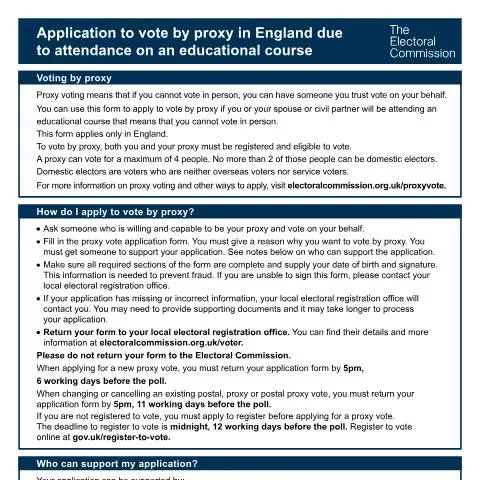
This application serves as a mechanism for voters who will be away from their registered voting location due to educational commitments. The significance of this form extends beyond mere bureaucracy; it embodies the right to participate in elections while pursuing personal and professional development. Importantly, this process applies solely within England and is aligned with provisions set by the Ministry of Housing, Communities and Local Government and the Electoral Commission.
Who is Eligible to Apply?
- Individuals enrolled in educational courses.
- Spouses or civil partners of those attending courses, who can also apply for a proxy vote on their behalf.
It is essential that both the applicant and the designated proxy are registered voters. A proxy can represent a maximum of four individuals, with no more than two being domestic electors—those not classified as overseas or service voters. This ensures that the voting process remains secure and manageable.
The Application Process: Step-by-Step
Filing the application requires careful attention to detail. Here’s a breakdown of the process from start to finish:
Step 1: Identify Your Proxy
The first action is to select a trustworthy individual willing to act on your behalf. This person must be of legal voting age (18 or over) and registered to vote. They will be responsible for casting your vote according to your preferences.
Step 2: Fill Out the Form
Once you've identified your proxy, you need to complete the application form. Here are key sections to focus on:
- Your Personal Information: Including your full name, address, and National Insurance number, which helps confirm your identity.
- Course Details: Indicate whether you or your spouse/civil partner will be attending an educational course and provide details such as the name of the institution and course dates.
- Reason for Proxy Voting: You must articulate why you are unable to vote in person, ensuring that your reasoning aligns with the eligibility criteria.
Step 3: Secure a Supporting Statement
Your application must be validated by a supporter. This could be:
- The director or tutor of your course.
- The principal of the educational institution.
- An authorized employee of the institution.
The supporter must be 18 years or older and needs to provide their details and a declaration within the form.
Step 4: Submission of the Application
Once the form is completed, you must submit it to your local electoral registration office. It’s crucial to do this by the stipulated deadlines:
- For new proxy vote applications, forms must be submitted by 5 PM, six working days before the polling date.
- For changes or cancellations to existing arrangements, the deadline extends to 5 PM, eleven working days before the poll.
Failure to meet these deadlines can mean losing your opportunity to vote.
Key Deadlines and What to Expect Next
Understanding the timeline surrounding your proxy vote application is key to ensuring that you can participate in the election. Here’s what you need to know:
Important Dates
| Action | Deadline |
|---|---|
| Application for Registration to Vote | Midnight, 12 working days before the poll |
| Submit Proxy Vote Application | 5 PM, 6 working days before the poll |
| Change or Cancel Existing Proxy Vote | 5 PM, 11 working days before the poll |
Once your application is received, your local electoral registration office will process it and confirm whether it has been accepted. You will then be notified, and your designated proxy will receive a proxy poll card detailing where and when to vote on your behalf.
The Legal Framework Supporting Proxy Voting
The ability to vote by proxy is legally enshrined in the Representation of the People Act 1983 and subsequent regulations. This framework ensures that the process is both secure and efficient, allowing individuals in unique circumstances—like students—to engage fully in the electoral process without compromising their educational commitments.
Data Protection and Privacy Considerations
Given the sensitive nature of the information provided in the application, the Data Protection Act 2018 and UK GDPR govern the processing of personal data. The Electoral Registration Officer acts as the data controller and is responsible for ensuring that your information is handled securely and in compliance with relevant legislation.
Your privacy notice should outline how your information will be used, and it’s advisable to familiarise yourself with these details to understand your rights regarding data security.
Consequences of Delays or Mistakes
A common concern among applicants is what happens if they encounter issues during the application process. Here are some potential pitfalls and how to address them:
Incomplete Applications
If your submission is missing critical information, your local electoral registration office will reach out to you. It’s essential to respond promptly to any queries or requests for further information to avoid delays in processing.
Changing Your Mind
Should you find that you can attend the polling station in person after all, you have the right to revoke your proxy vote. However, note that this must be done before your proxy has voted or applied for a postal vote on your behalf.
Rejections and Appeals
If your application is denied, you can inquire about the reasons behind the decision. Understanding whether it was due to eligibility issues, incomplete information, or other factors will help you correct any mistakes for future applications.
Engaging with your local electoral office can provide clarity and guidance on the next steps, ensuring you remain informed and prepared for upcoming elections.
Practical Tips for a Smooth Application Process
To navigate the proxy voting process without a hitch, consider these practical tips:
- Start early: Begin the process as soon as you know your educational commitments will overlap with election dates.
- Double-check your details: Ensure all information entered on the application is accurate and complete.
- Maintain open communication with your proxy: Discuss your voting preferences and ensure they understand their responsibilities.
- Stay informed of deadlines: Keep track of all relevant dates to prevent any last-minute rush or confusion.
By taking these proactive steps, you can minimize the risk of complications and ensure that your electoral rights are upheld while you focus on your education.