Navigating the Proxy Voting Application Process for Anonymous Electors
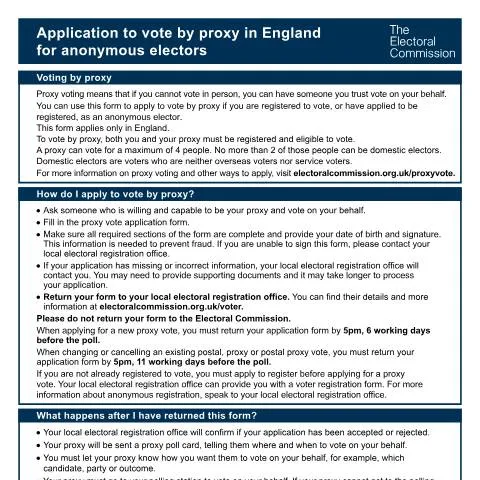
Proxy voting serves a vital function in the democratic process, especially for those who cannot vote in person. It allows individuals to authorize a trusted person—referred to as a 'proxy'—to vote on their behalf. This process becomes particularly significant for anonymous electors, who may have safety concerns or privacy issues that prevent them from voting publicly. The Application to vote by proxy for anonymous electors is specifically designed to streamline this procedure in England, ensuring that these voters have a voice.
Who Can Submit This Application?
Anonymous electors are individuals who have registered to vote under a pseudonym or are in situations that permit them to keep their identities private for security reasons. Before you consider applying to vote by proxy, it is essential to confirm that you meet the following criteria:
- You must be registered to vote or have already applied for registration.
- Your application must be submitted before the designated deadline, usually six working days before the poll.
- Your proxy must also be a registered elector capable of voting.
Understanding your eligibility not only facilitates a smoother application process but also helps ensure that you avoid unnecessary delays.
Specific Cases: Anonymous Electors
Anonymous electors often include individuals such as survivors of domestic violence, police officers, and other professionals whose safety might be compromised if their information were made public. Each case is handled with utmost confidentiality, and it is important to engage with your local electoral registration office if you have specific questions about your situation.
Essential Components of the Application Form
Completing the Application to vote by proxy for anonymous electors requires careful attention to detail. Here’s a breakdown of the key sections you will encounter in the application:
- Your Information: This section typically requests your name, address, and National Insurance number. Providing these details accurately is crucial for verification.
- Proxy Information: Here, you’ll need to specify the person you wish to appoint as your proxy, including their full name and address.
- Duration of Proxy Vote: You can choose to have a proxy vote for a limited period or until further notice. Clear choices must be indicated to prevent any misunderstandings.
- Date of Birth and Declaration: This is a critical section where you confirm the accuracy of your information and the willingness of your proxy to vote on your behalf. Failing to provide accurate information can lead to serious legal consequences, including fines or imprisonment.
Take your time to complete each section, ensuring you adhere strictly to the guidelines provided within the form. This mitigates the risk of application rejection due to minor clerical errors.
Submission: How to Deliver Your Application
Once you have completed the application form, the next step is to submit it to your local electoral registration office. You have several channels available for submission:
- By Post: Ensure you send it well in advance of the deadline, taking into account possible postal delays.
- In Person: If you prefer a direct handover, you can visit your local office. This method also allows for immediate clarification of any queries you might have.
- Electronically: While physical submission remains standard, some authorities may allow for digital submission. It is advisable to check with your local office for availability.
Regardless of the method you choose, ensure you keep a copy of your application for your records. This serves as proof of your submission and can be useful in case of any disputes or delays.
Understanding the Timeline: Key Dates in the Process
Timeliness is critical in the electoral process. Missing deadlines can result in disenfranchisement. Here’s what you need to know:
| Action | Deadline |
|---|---|
| Submit application for a new proxy vote | By 5 PM, 6 working days before the poll |
| Change or cancel an existing proxy vote | By 5 PM, 11 working days before the poll |
After submitting your application, your local electoral registration office will assess it and inform you of the outcome. If accepted, your proxy will receive a card detailing where and when to vote on your behalf.
What to Do If Your Application Is Rejected
Receiving a rejection notice can be disheartening. However, understanding the reasons for the rejection can provide a pathway to resolution:
- Missing Information: If your application is rejected due to incomplete information, your local electoral registration office will inform you of the missing details. Respond promptly to rectify this.
- Ineligibility: If deemed ineligible, you may need to reapply with appropriate documentation or clear up misunderstandings about your voter registration status.
- Fraud Prevention: The process is designed to ensure the integrity of voting; thus, inaccuracies, especially regarding your identity or that of your proxy, can lead to rejection.
Should you feel that your application was unfairly rejected, do not hesitate to reach out to your local electoral office for clarification and guidance on the appeal process.
The Importance of Communication with Your Proxy
Once your application is accepted, communication between you and your proxy becomes vital to ensure your vote reflects your wishes:
- Preference Sharing: Inform your proxy about your voting preferences—whether that’s a specific candidate, party, or policy issue.
- Alternative Voting Methods: If your proxy faces issues getting to the polling station, they can apply for a postal vote until 11 working days before the poll.
- Reminders: Establish a reminder system to ensure your proxy is aware of their voting responsibility as polling day approaches.
Successful proxy voting hinges on clear communication and trust between you and your proxy.
Privacy and Data Protection Considerations
The Application to vote by proxy for anonymous electors involves the handling of personal data, which is governed by the Data Protection Act 2018 and UK GDPR. Here are the key points to keep in mind:
- Your data will be processed securely and only for the purpose of facilitating your proxy vote.
- The Electoral Registration Officer acts as the Data Controller, ensuring compliance with data protection laws.
- You have the right to inquire about how your data will be used, and you can request corrections if inaccuracies are identified.
Familiarize yourself with the privacy notice provided by your local electoral registration office to understand your rights and how your information is safeguarded.
Potential Consequences of Failing to Apply Correctly
Neglecting to complete the application correctly or missing deadlines can have serious consequences:
- Loss of Voting Rights: If your application is not processed in time, you may lose your opportunity to participate in elections.
- Increased Difficulty in Future Applications: Mistakes or omissions in the application process may lead to increased scrutiny in future registrations.
- Legal Implications: Providing false information can lead to prosecution, further complicating your ability to vote.
Being vigilant and proactive in the application process not only ensures your participation in elections but also protects your rights as a voter.
Understanding Proxy Voting for Anonymous Electors
Proxy voting allows voters who cannot attend a polling station on election day to appoint someone else to cast their vote on their behalf. For anonymous electors, this procedure comes with specific considerations and protections to ensure their identities are safeguarded while still exercising their right to vote.
Anonymous electors are typically individuals who have valid reasons for keeping their identity confidential, such as survivors of domestic violence or individuals in certain professions that require a high level of security. In the UK, these electors are afforded the right to register anonymously under the Representation of the People Act 1983. However, applying to vote by proxy while maintaining anonymity involves additional steps and compliance with stringent regulations.
The request for a proxy vote must be submitted to the local Electoral Registration Office well in advance of the election, typically by the deadline set for regular proxy voting applications. An anonymous elector must provide the necessary identification to demonstrate their eligibility without revealing their personal information to the public. The local authority will then process the application, ensuring that the anonymity of the elector is preserved throughout the voting process.
It is critical to keep in mind that the person chosen to act as a proxy must also be registered to vote and preferably reside in the same electoral area. This ensures that they are familiar with the electoral process and can accurately represent the preferences of the anonymous elector on the ballot. It is advisable for anonymous electors to communicate clearly with their chosen proxy about their voting intentions to avoid any confusion on election day.
Fill in your form directly online
No printing: type your details into the boxes of the official form, tick, then download the PDF ready to send.
- 1Type into the form boxes
- 2Tick in one click
- 3Save and download the PDF
The Application Process for Proxy Voting as an Anonymous Elector
The application process for anonymous electors wishing to vote by proxy involves several steps to ensure both compliance with electoral laws and the protection of the elector's identity. This process is outlined in detail in the guidance available from your local Electoral Registration Office.
Firstly, an anonymous elector must ensure that they are registered to vote anonymously. This involves submitting a registration form to their local council, specifically requesting anonymity. Once registered, they can apply for a proxy vote.
The application for a proxy vote typically requires completing the proxy vote application form, which is available from the local council or through official government resources. This form will require information about the chosen proxy, including their name and address, and the anonymous elector must indicate their preference for that individual to vote on their behalf.
It is important to submit the application by the deadline set for proxy voting applications, which is usually several days before the election. If the application is submitted late, the anonymous elector may not be able to vote by proxy and must seek alternative arrangements.
Once the application is processed, the local authority will send a confirmation to both the anonymous elector and the appointed proxy. This confirmation will outline the details of where and when the proxy can vote. It is advisable for the elector to maintain communication with their proxy to confirm their intentions and ensure that any issues can be addressed promptly prior to election day.
Potential Challenges and Considerations
While voting by proxy provides a valuable option for many electors, anonymous voters may encounter specific challenges that require attention. One significant challenge is ensuring that the proxy selected is not only trustworthy but also fully understands the importance of maintaining the electors' confidentiality. As the proxy will be handling sensitive information, it is crucial to choose someone reliable and respectful of the elector's need for anonymity.
Furthermore, anonymous electors may face difficulties in ensuring their chosen proxy is familiar with voting procedures, especially if they are not heavily involved in electoral matters. This can be mitigated by providing guidance to proxies about the voting process and what to expect on election day.
Another challenge is the potential for unexpected circumstances on election day itself, such as travel issues or personal emergencies that may prevent the proxy from voting. To alleviate this risk, it is advisable for anonymous electors to have a backup plan or an alternative proxy in mind, should the original proxy be unable to fulfill their responsibilities.
Finally, understanding the legal framework surrounding anonymous voting and proxy voting can be complex. It may be beneficial for electors to seek advice from local electoral services or community organizations that specialize in electoral matters to ensure they are adequately informed and prepared. By being aware of their rights and the resources available to them, anonymous electors can navigate the voting process with greater confidence and assurance.