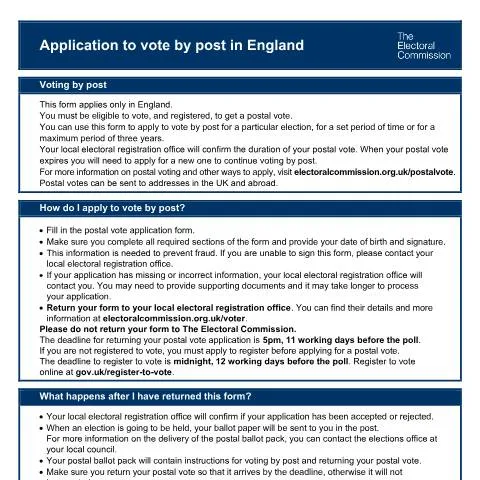
The Electoral Landscape: Why Postal Voting Matters in Modern Britain
In an era where work patterns, mobility, and unforeseen circumstances increasingly shape daily life, the ability to cast a ballot remotely has become more than a convenience—it's often a necessity. The postal vote application form represents a fundamental pillar of electoral accessibility in England, enabling millions of voters to participate in democratic processes regardless of physical location, work commitments, or personal circumstances.
This mechanism has evolved considerably since its inception. Originally designed primarily for military personnel serving overseas, postal voting has expanded to encompass a much broader spectrum of citizens. Today, anyone registered to vote in England can apply for a postal vote without needing to demonstrate specific circumstances or provide detailed justifications—a significant shift from historical requirements that demanded proof of inability to attend polling stations.
The current system operates under strict regulatory frameworks established by the Representation of the People Act 1983 and subsequent electoral legislation. These laws balance accessibility with security, ensuring that postal voting remains both widely available and resistant to fraud. The Electoral Commission oversees the broader framework, whilst local Electoral Registration Officers handle day-to-day administration and security measures.
Navigating the Three-Year Cycle: Understanding Duration Options
The postal vote application form offers remarkable flexibility in duration, accommodating different voting patterns and personal circumstances. Understanding these options prevents unnecessary repeat applications and ensures continuous electoral participation.
Maximum Period Applications
The most popular choice involves applying for the maximum period of up to three years. This option provides comprehensive coverage for all elections occurring within the specified timeframe, including general elections, local council elections, mayoral contests, and any by-elections that arise. The three-year limit serves multiple purposes: it maintains electoral roll accuracy as people move addresses, ensures regular verification of voter details, and provides natural refresh points for security measures.
When selecting the maximum period, applicants receive postal ballot packs automatically for every election they're eligible to vote in during that timeframe. This eliminates the need to track election dates or submit repeat applications, making it particularly valuable for frequent travellers, shift workers, or those with long-term health considerations.
Specific Election Applications
Some voters prefer targeting specific elections, particularly high-profile contests like general elections or significant local referendums. This approach suits individuals who normally vote in person but anticipate being unavailable for particular polls due to holidays, work commitments, or temporary circumstances.
The form accommodates this through precise date specification, requiring exact election dates rather than general timeframes. This precision prevents confusion and ensures ballot papers arrive for intended elections only.
Custom Period Applications
The most sophisticated option involves specifying exact start and end dates for postal voting periods. This flexibility proves invaluable for voters with predictable but temporary circumstances—such as seasonal workers, students studying away from home during term time, or individuals recovering from medical procedures.
Custom periods require careful consideration of election calendars and personal circumstances. Electoral Registration Officers can provide guidance on upcoming elections within specified timeframes, helping applicants align their postal vote periods with anticipated electoral activity.
Decoding Form Sections: Essential Information Requirements
The application form demands specific information categories, each serving distinct purposes in the electoral process. Understanding these requirements prevents delays and rejection risks.
| Section | Purpose | Critical Requirements |
|---|---|---|
| Personal Details | Voter identification and record matching | Exact name matching electoral register, complete address details |
| National Insurance Number | Identity verification and fraud prevention | Full nine-character reference or documented exemption reason |
| Alternative Address | Ballot paper delivery logistics | Complete postal address if different from registered address |
| Date of Birth | Security verification against existing records | Full date in DD/MM/YYYY format using black ink |
| Signature | Authentication and future ballot verification | Clear signature within designated border area |
The National Insurance Number Requirement
The National Insurance number serves as a crucial security measure, cross-referencing against government databases to verify applicant identity. This requirement, introduced as part of enhanced fraud prevention measures, significantly reduces the risk of false applications and duplicate registrations.
Applicants typically find their National Insurance number on payslips, P60 certificates, tax correspondence, or benefit letters. Those unable to provide this information must document their reasons—legitimate circumstances include individuals who have never worked in the UK, recent immigrants awaiting number allocation, or those with specific exemption categories.
Signature Authentication Process
The signature requirement extends beyond simple form completion—it becomes a critical verification tool throughout the postal voting process. Electoral Registration Officers store signature samples digitally, comparing them against signatures on returned ballot papers to detect potential fraud.
This system requires consistent signature reproduction, making it essential to sign naturally rather than attempting elaborate or overly careful signatures that differ from normal writing patterns. Voters experiencing difficulty with signatures due to disability or medical conditions should contact their Electoral Registration Officer to discuss alternative authentication methods.
Alternative Address Logistics: When Ballots Travel
The option to receive ballot papers at addresses different from voter registration addresses reflects modern life's complexity. This flexibility accommodates numerous scenarios whilst maintaining security and delivery reliability.
Domestic Alternative Addresses
Common domestic scenarios include students receiving ballot papers at university accommodations whilst registered at family homes, workers on temporary assignments receiving papers at workplace addresses, or individuals staying with relatives during election periods. The form requires clear justification for alternative addresses, helping Electoral Registration Officers assess legitimacy and prevent potential fraud.
Successful alternative address applications depend on providing complete postal details, including postcodes, and reasonable explanations for the address change. Generic explanations like "convenience" rarely suffice—specific circumstances carry more weight with reviewing officials.
International Postal Voting
The system extends to international addresses, supporting British citizens living abroad, military personnel on overseas deployments, and others temporarily outside the UK during election periods. International postal voting involves additional considerations including postal service reliability, delivery timeframes, and return logistics.
International applicants should factor in extended postal delivery times when planning their voting timeline. While domestic postal ballot packs typically arrive within days of dispatch, international deliveries can take considerably longer, particularly to remote locations or during peak postal periods.
Security Frameworks and Fraud Prevention Measures
The postal voting system incorporates multiple security layers designed to maintain electoral integrity whilst preserving accessibility. These measures reflect lessons learned from electoral challenges and evolving security threats.
Identity Verification Protocols
Each application undergoes rigorous verification against existing electoral registers and government databases. Electoral Registration Officers cross-reference provided information including names, addresses, dates of birth, and National Insurance numbers against multiple data sources to confirm applicant identity and prevent duplicate or fraudulent applications.
This verification process can reveal discrepancies requiring resolution before application approval. Common issues include name variations between electoral registers and official documents, address mismatches following recent moves, or date of birth inconsistencies stemming from data entry errors in historical records.
Signature Comparison Technology
Modern electoral administration employs sophisticated signature comparison systems that analyse multiple signature characteristics including pressure patterns, stroke sequences, and proportional relationships between letter forms. This technology helps detect forged signatures whilst accommodating natural signature variations over time.
The system accounts for legitimate signature evolution due to age, medical conditions, or injury, comparing recent signatures against historical samples to identify unusual deviations that might indicate fraud attempts. This balance between security and practical recognition of signature changes ensures legitimate voters aren't disenfranchised due to natural signature evolution.
Processing Timelines and Critical Deadlines
Electoral timelines operate with precision, reflecting legal requirements and practical constraints of ballot production, postal distribution, and vote counting logistics. Understanding these timelines prevents missed opportunities and ensures successful participation.
Application Submission Deadlines
The critical deadline for postal vote applications falls at 5pm, 11 working days before polling day. This timing allows Electoral Registration Officers sufficient time to process applications, verify information, resolve any discrepancies, and coordinate ballot paper production with printing contractors.
Working days exclude weekends and public holidays, making deadline calculations more complex than simple calendar counting. Election periods spanning bank holidays or extended weekends require particular attention to ensure applications arrive within required timeframes.
Late applications face automatic rejection, with no discretionary extensions available except in exceptional circumstances such as medical emergencies occurring after the deadline. This strict enforcement maintains system integrity and ensures fair treatment across all applicants.
Ballot Paper Distribution Timeline
Approved applicants receive ballot papers according to carefully orchestrated distribution schedules. Domestic ballot packs typically dispatch approximately one week before polling day, allowing time for postal delivery, voter consideration, completion, and return posting.
International ballot papers dispatch earlier to accommodate extended postal delivery times, with timing varying by destination country and available postal services. Some remote international locations may receive ballot papers up to three weeks before polling day to ensure adequate return time.
When Applications Face Rejection: Common Issues and Solutions
Application rejections, whilst relatively uncommon, typically stem from specific information deficiencies or verification failures. Understanding common rejection reasons helps applicants avoid these pitfalls and respond effectively when issues arise.
Information Discrepancies
The most frequent rejection cause involves mismatches between application information and existing electoral register data. These discrepancies might include slight name variations, outdated addresses following recent moves, or incorrect date of birth details stemming from historical data entry errors.
Electoral Registration Officers typically contact applicants when discrepancies arise, providing opportunities to clarify information or provide supporting documentation. Response times matter significantly—delays in providing requested clarification can push applications beyond processing deadlines, resulting in rejection for timing rather than information reasons.
Missing National Insurance Numbers
Applications lacking National Insurance numbers face increased scrutiny, requiring detailed explanations for the omission. Acceptable reasons include recent immigrants awaiting number allocation, individuals who have never worked in the UK, or specific exemption categories under electoral legislation.
Unacceptable explanations include simply forgetting the number, claiming privacy concerns, or providing incomplete numbers. Electoral Registration Officers can access government databases to verify National Insurance numbers, making false claims easily detectable and potentially criminal.
Signature Authentication Failures
Signature-related rejections typically occur when provided signatures differ significantly from existing samples in electoral records or when signatures appear obviously forged or artificial. Natural signature variations receive accommodation, but dramatic differences trigger security reviews.
Applicants experiencing signature difficulties due to medical conditions, disability, or injury should contact Electoral Registration Officers before submitting applications. Alternative authentication methods may be available, ensuring these voters aren't excluded from postal voting opportunities.
Beyond Application Approval: The Complete Postal Voting Journey
Successful application approval marks the beginning rather than the end of the postal voting process. Understanding subsequent stages ensures effective participation and vote counting inclusion.
Ballot Pack Contents and Instructions
Postal ballot packs contain multiple components requiring careful attention: the ballot paper itself, a declaration of identity form, detailed voting instructions, and pre-paid return envelopes. Each component serves specific purposes in maintaining vote secrecy whilst ensuring authentication.
The declaration of identity requires signature and date, serving as the final authentication step before vote counting. This signature undergoes comparison against the original application signature, making consistent signature reproduction essential throughout the process.
Return Logistics and Deadlines
Completed postal votes must arrive at designated counting locations by 10pm on polling day to be included in the count. This deadline applies regardless of posting dates—votes arriving after 10pm face exclusion even if posted well in advance.
Return methods include standard postal services, hand delivery to designated locations, or deposit at polling stations on election day. Each method involves different timeframes and reliability considerations, with hand delivery offering the greatest certainty for last-minute returns.
The postal voting system represents a sophisticated balance between electoral accessibility and security, enabling millions of citizens to participate effectively in democratic processes regardless of circumstances. Success depends on understanding requirements, meeting deadlines, and maintaining consistent authentication throughout the process. This system continues evolving, incorporating technological advances and security enhancements whilst preserving the fundamental principle of universal electoral participation.