Understanding the Criminal Appeal Office Form NG Confiscation Order: A Guide for Defendants
In the unique landscape of UK criminal law, the Criminal Appeal Office Form NG Confiscation Order serves a pivotal role for individuals seeking to challenge confiscation orders imposed on them. When a conviction is upheld, the court may enforce a confiscation order to recover assets believed to be obtained through criminal activity. However, defendants have the legal right to appeal such decisions, and understanding the nuances of this process is crucial. This article provides a comprehensive overview of the form, detailing its function, the preparation required, the pathway of submission, and the subsequent stages in the appeal process.
Making Sense of the Form: Who Must Use the NG Confiscation Order?
The NG Confiscation Order is specifically designed for individuals appealing against a confiscation order made by the courts. Typically, this appeal arises when an individual contests the legitimacy of the confiscation, arguing that the order was issued improperly or without sufficient evidence. Here are some scenarios where you might find yourself needing this form:
- Post-Conviction Appeals: If you have been convicted of a crime and a confiscation order has been placed against you, this form is your means to contest that order in the Court of Appeal.
- Challenging Evidence: If you believe the evidence used to support the confiscation order was flawed or misinterpreted, the NG form allows you to present your arguments to challenge its validity.
- New Evidence: If new evidence has come to light that could undermine the confiscation order, you can file this form to appeal.
The Timeline: Key Dates in the Appeal Process
When lodging an appeal against a confiscation order using the NG form, observing the correct timeline is crucial. The time limit for filing your appeal is precisely 28 days from the date of the confiscation order. This is a hard deadline that must be adhered to strictly. Failure to submit within this timeframe can result in your appeal being dismissed outright.
The Steps from Submission to Hearing
- Submission of the Form: Ensure that you complete the NG Confiscation Order form accurately and submit it to the Registrar of Criminal Appeals.
- Awaiting Acknowledgment: After submission, you should receive confirmation from the court acknowledging receipt of your appeal.
- Preparation for Hearing: This period allows you to prepare your argument and gather any further evidence needed to support your case.
- Hearing Date: The court will schedule a hearing date where both parties can present their arguments regarding the confiscation order.
Navigating the Form: Sections and Common Pitfalls
The NG Confiscation Order form is structured to gather essential information about your case. A comprehensive understanding of each section can help prevent common mistakes that could jeopardize your appeal.
Decoding the Form Sections
| Section | Description | Common Pitfalls |
|---|---|---|
| Personal Details | Provide your full name, address, and contact information. | Ensure your details are current; inaccurate information can delay processing. |
| Details of the Order | Specify the confiscation order you are appealing against. | Be precise; vague references may lead to confusion. |
| Grounds for Appeal | Clearly state your reasons for contesting the order. | Generic statements without supporting evidence may weaken your case. |
| Supporting Documents | Attach any evidence that supports your appeal. | Incomplete submissions can lead to your appeal being dismissed. |
Submitting Your Appeal: Where and How
The process of submitting the NG Confiscation Order form is straightforward, yet it's vital to know the appropriate channels for submission to avoid any delays in your appeal.
Channels for Submission
- By Mail: You may submit your appeal by post to the Registrar of Criminal Appeals at the Criminal Appeal Office, located at the Royal Courts of Justice, Strand, London, WC2A 2LL.
- Email Submission: Depending on the guidelines, there may be an option to submit your appeal via email to the designated address, which is [email protected].
- In Person: Alternatively, if you prefer, you can submit your form in person, which allows you to confirm receipt directly.
Post-Submission: What Happens Next?
Once your appeal has been submitted, it's important to understand the subsequent steps and how to stay informed on your case status.
Tracking Your Appeal
The Criminal Appeal Office typically provides updates as your case moves through the system. Here’s how to stay on top of your appeal:
- Request Updates: Utilize the contact details provided by the court to inquire about your case status.
- Prepare for the Hearing: While waiting for updates, focus on preparing your arguments, gathering evidence, and potentially consulting with legal representation.
The Framework of Regulations Surrounding the NG Form
The NG Confiscation Order form operates within a broader context governed by the Criminal Procedure Rules and the Ministry of Justice's directives. Understanding this legal framework can provide insight into the rationale behind the appeal process.
Historical Context and Legislative Changes
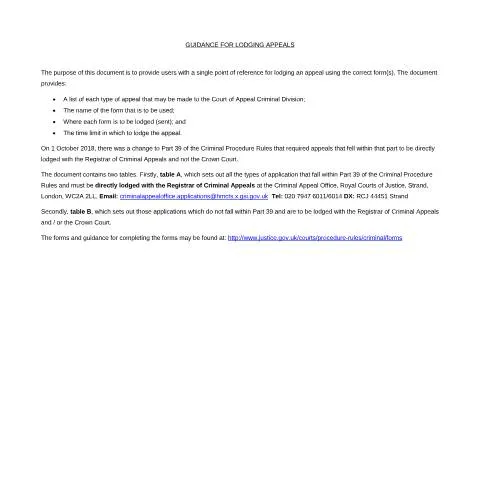
On 1 October 2018, substantial changes were enacted within Part 39 of the Criminal Procedure Rules, impacting how appeals are lodged. These changes aim to streamline the process, ensuring that appeals related to confiscation orders are treated with the urgency and specificity they warrant.
Distinguishing the NG Form from Related Documents
The NG Confiscation Order form is often confused with other appeal forms. Familiarity with these distinctions is essential to ensure you are using the correct document for your specific situation.
Comparison with Other Forms
| Form | Applicable Situation | Key Differences |
|---|---|---|
| NG (Conviction) | Appeal against conviction | Focuses on the legality of the conviction, not specifically on confiscation. |
| NG (Sentence) | Appeal against the sentence imposed | This form disputes the length or nature of the sentence, separate from the confiscation order. |
| NG (Review Decision) | Appeal against a review of sentence decisions | This form is used when contesting the review of an existing sentence rather than a confiscation order. |
In conclusion, the NG Confiscation Order form is a vital tool for individuals wishing to contest a confiscation order. Proper understanding and meticulous completion of this form can significantly impact the outcome of your appeal process. As you navigate through the stages of submission and await your hearing, maintaining an organized and proactive approach will serve you well in your pursuit of justice.