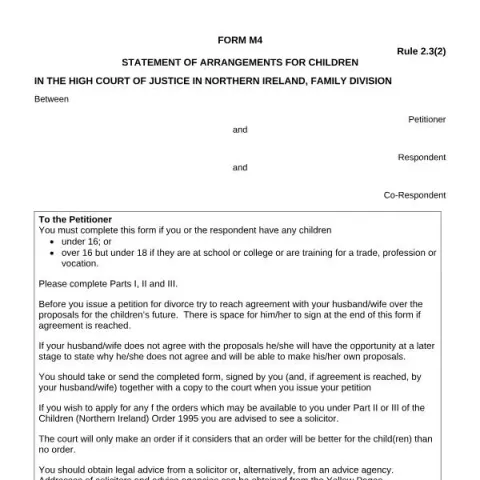
Understanding the Official Form M4: Statement of Arrangements for Children in Northern Ireland
The Form M4, titled Statement of Arrangements for Children, is an official document issued by the Department of Justice Northern Ireland. It plays a crucial role in family law proceedings, particularly when couples are seeking divorce or separation and need to establish arrangements for their children. This form ensures that the court has comprehensive information about the children involved and the proposed living, educational, and care arrangements, helping to determine what is in the best interests of the children.
Who Must Complete the Form M4?
This form must be filled out by either the petitioner (the person initiating the divorce) or the respondent (the other party). It is mandatory if either party has children under the age of 16, or children aged 16 to 18 who are still in school, college, or training for a trade or profession. The purpose is to detail the current and proposed arrangements concerning the children’s care, residence, and education, which will be considered by the court during divorce proceedings.
How to Fill Out the Form M4
Part I: Details of the Children
- Children of both parties: Provide full names and dates of birth for children born to both the petitioner and respondent or adopted jointly.
- Other children of the family: Include children who are treated as part of the family, such as stepchildren or those living with the family but not legally adopted.
- Children not part of the family: List children born to either party who are not considered part of the family or adopted.
Part II: Arrangements for the Children
This section requires detailed information about the living arrangements, education, childcare, and financial support for each child. It is essential to specify if arrangements differ for individual children, and additional sheets can be attached if necessary.
Home Details
- Current address where the children reside
- Type and size of the property, whether rented or owned
- Names of other persons living with the children
- Any planned changes to current living arrangements
Education and Training
- Names of schools, colleges, or training institutions attended
- Any special educational needs
- Whether the institution is fee-paying and if fees are paid regularly
- Anticipated changes in educational arrangements
Childcare Arrangements
- Who looks after the children on a daily basis
- If the parent goes out to work and who cares for the children when they are not with the parent
- Care arrangements during school holidays
- Any planned changes to childcare routines
Financial Support and Maintenance
- Whether the respondent contributes financially towards the children’s upkeep
- If payments are made under a court order or following an assessment by the Child Support Agency
- Whether maintenance has been agreed upon and if an application for a court order is intended
Respondent’s Role and Signatures
The respondent must review the completed form and, if they agree with the arrangements proposed, sign Part IV of the form to indicate their agreement. If they disagree with any aspect, they will have the opportunity to state their objections when the divorce petition is formally served. The completed form, signed by both parties if agreement is reached, must be submitted to the court along with the divorce petition.
Important Considerations When Filling Out Form M4
It is highly advisable to seek legal advice from a solicitor or an advice agency when completing this form, especially if you wish to apply for specific orders under the Children (Northern Ireland) Order 1995. The court’s primary concern is the welfare of the children, and it will only make orders if it considers they are in the children’s best interests.
Fill in your form directly online
No printing: type your details into the boxes of the official form, tick, then download the PDF ready to send.
- 1Type into the form boxes
- 2Tick in one click
- 3Save and download the PDF
Ensure all sections are completed accurately and truthfully, as incomplete or incorrect information can delay proceedings or impact the court’s decisions. The form is a vital part of the divorce process, helping to clarify arrangements and promote the best outcomes for the children involved.