When Family Separation Spans Borders: Understanding the Parent Settlement Route
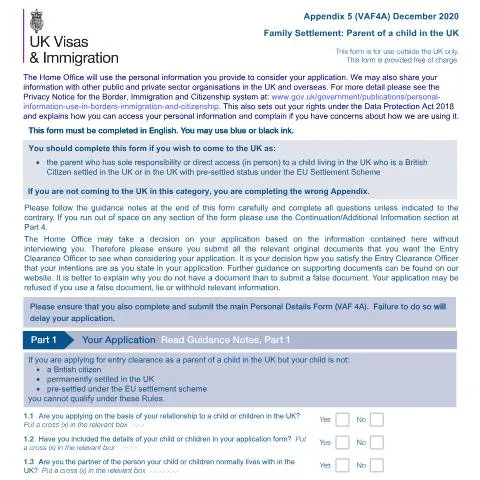
Thousands of parents find themselves separated from their children by immigration circumstances, watching from overseas as their sons or daughters grow up in the UK. Whether following a relationship breakdown, employment changes, or complex family arrangements, these parents face the challenging prospect of maintaining meaningful relationships across international boundaries. For those whose children are British citizens, settled residents, or hold pre-settled status under the EU Settlement Scheme, Appendix 5 for form VAF4A represents a potential pathway back to family unity—but only under strictly defined conditions that demand careful consideration and precise documentation.
This specialised appendix, designed exclusively for use outside the UK, serves parents who can demonstrate either sole parental responsibility or direct access rights to their UK-based children. Unlike broader family reunion routes, this pathway acknowledges the complex realities of modern family structures whilst maintaining rigorous standards for genuine parental relationships that warrant settlement rights.
Qualifying Relationships: Beyond Blood Ties to Legal Recognition
The fundamental question underlying any Appendix 5 application centres on the nature and quality of the parent-child relationship. UK Visas and Immigration doesn't simply accept biological parenthood as sufficient grounds for settlement; the relationship must be legally recognised and actively maintained despite physical separation.
The Sole Responsibility Test
Parents claiming sole responsibility must demonstrate comprehensive decision-making authority over their child's upbringing. This extends far beyond financial support to encompass educational choices, medical decisions, religious instruction, and day-to-day welfare considerations. Documentary evidence might include:
- Court orders granting sole custody or parental responsibility
- School records showing the parent as the primary contact for academic and disciplinary matters
- Medical records indicating consent for treatments and appointments
- Evidence of arranging and funding extracurricular activities, holidays, or significant purchases
Crucially, sole responsibility doesn't require the complete absence of other caregivers. A child might live with grandparents, other relatives, or even the other parent whilst one parent retains ultimate decision-making authority. The key test involves who makes the important decisions and bears the primary responsibility for the child's welfare.
Direct Access Rights: Quality Over Quantity
For parents who cannot establish sole responsibility, direct access rights offer an alternative route. This requires demonstrating regular, meaningful contact that goes beyond occasional phone calls or holiday visits. Immigration officials look for evidence of sustained involvement in the child's life, which might include:
- Formal contact orders from family courts specifying visiting arrangements
- Travel records showing regular visits to the UK
- Communication logs demonstrating frequent, substantial contact via video calls, messaging, or other platforms
- Evidence of involvement in school events, birthday celebrations, or significant milestones
Direct access specifically means in-person contact, not remote communication. Parents must show they have exercised or attempted to exercise face-to-face access rights, even if geographical constraints have limited the frequency of such contact.
Navigating the Financial Disclosure Requirements
Part 2 of Appendix 5 delves extensively into the applicant's financial circumstances, reflecting UK immigration policy's emphasis on self-sufficiency and genuine family relationships. This section requires comprehensive disclosure that extends well beyond simple income statements.
| Employment Status | Required Information | Key Documentation |
|---|---|---|
| Full-time employed | Employer details, salary, additional income | Employment contract, recent payslips, employer confirmation letter |
| Self-employed | Business details, income fluctuation, tax records | Business registration, accounts, tax returns, client contracts |
| Unemployed/retired | Source of support, savings, benefits | Bank statements, pension statements, family support evidence |
| Student | Course details, funding sources, work arrangements | University enrollment, scholarship letters, part-time work contracts |
The financial assessment serves multiple purposes beyond simple means-testing. Immigration officials use this information to evaluate the genuineness of the parent-child relationship—parents who contribute significantly to their children's upbringing typically show financial commitment through regular transfers, school fees, or other support mechanisms.
Documenting Child Support and Financial Commitment
Questions 2.12 and 2.13 require careful consideration, as they establish the balance between the applicant's financial obligations and available resources. Parents should document not only direct payments to their UK-based children but also indirect support such as:
- School fees, uniform costs, or educational materials
- Medical insurance or healthcare expenses
- Holiday funding or travel costs for family visits
- Accommodation contributions when children visit overseas
The monthly living costs calculation should reflect genuine expenses rather than theoretical minimums. Immigration officials recognise that parents planning to relocate to the UK need realistic financial planning that accounts for higher living costs, particularly housing and childcare expenses.
The Critical Separation Narrative: Explaining Family Circumstances
Questions 1.6 and 1.7 represent the emotional and legal heart of any Appendix 5 application. These open-ended responses allow parents to explain the circumstances leading to family separation and demonstrate the ongoing strength of parent-child relationships despite physical distance.
Effective responses typically follow a chronological structure that explains:
- Initial circumstances: Why the family was separated (employment, relationship breakdown, immigration status changes)
- Attempts at reunion: Steps taken to maintain or restore family unity
- Current arrangements: How parental responsibilities are exercised from overseas
- Future intentions: Plans for resuming direct parental involvement upon UK entry
Parents should avoid presenting separation as entirely voluntary or convenient. Immigration officials need to understand that the separation represents a genuine hardship that settlement in the UK would resolve, not simply a lifestyle choice or economic opportunity.
Active Parental Role: Beyond Financial Support
Question 1.8 requires detailed explanation of current and intended parental involvement. This goes far beyond financial contributions to encompass emotional, educational, and developmental support. Strong responses might include:
- Regular involvement in homework supervision and educational planning
- Participation in school events, parent-teacher conferences, or academic decisions
- Cultural or religious instruction that maintains family heritage
- Emotional support during challenging periods or significant life events
- Practical arrangements for healthcare, legal matters, or official documentation
Immigration officials particularly value evidence of sustained effort to maintain parental relationships despite geographical constraints. Parents who have established regular communication routines, arranged supervised visits, or coordinated with UK-based caregivers demonstrate genuine commitment to their children's welfare.
Distinguishing Appendix 5 from Alternative Immigration Routes
Many parents initially confuse Appendix 5 with other family immigration pathways, leading to inappropriate applications or missed opportunities. Understanding these distinctions proves crucial for selecting the correct route and avoiding costly delays.
Partner settlement routes apply when parents remain in relationships with their children's other parent or primary caregiver in the UK. Appendix 5 specifically excludes such cases through question 1.3, recognising that intact parental relationships typically involve different settlement considerations and requirements.
Adult dependent relative routes serve elderly parents or those with significant care needs, requiring different criteria focused on exceptional circumstances and inadequate care arrangements in the home country. These routes don't apply to parents of minor children who seek to resume active parenting roles.
Visit visa applications allow temporary family contact but don't provide settlement rights or long-term solutions to family separation. Parents using Appendix 5 seek permanent resolution of family separation through settlement, not temporary visiting arrangements.
EU Settlement Scheme Interactions
The December 2020 version of Appendix 5 specifically accommodates children with pre-settled status under the EU Settlement Scheme, reflecting post-Brexit immigration arrangements. Parents of EU national children must carefully document their children's immigration status and demonstrate that family separation occurred for reasons beyond simple EU free movement rights.
This provision recognises that Brexit created new barriers to family unity for some EU nationals, particularly those whose children gained pre-settled status whilst parents remained overseas due to employment, visa restrictions, or other circumstances.
Processing Timelines and Decision-Making Considerations
Unlike straightforward visa applications, Appendix 5 cases typically involve complex family circumstances that require careful assessment by experienced Entry Clearance Officers. The Home Office explicitly states that decisions may be made without interviews, placing enormous weight on written documentation and supporting evidence.
Standard processing times for settlement applications vary significantly based on the country of application, complexity of circumstances, and supporting documentation quality. Parents should expect processing periods measured in months rather than weeks, particularly for cases involving:
- Complex custody arrangements or disputed parental rights
- Multiple children with different immigration statuses
- Significant gaps in contact or support history
- Financial circumstances requiring detailed verification
Documentation Standards and Verification
Entry Clearance Officers possess extensive powers to verify submitted information through third-party contacts, including schools, employers, family courts, and local authorities. Parents should ensure all submitted information can withstand scrutiny and provide comprehensive supporting documentation rather than minimal compliance with stated requirements.
Original documents carry significantly more weight than photocopies, translations, or digital submissions. Where original documents cannot be submitted safely, parents should provide detailed explanations and seek official certified copies through appropriate channels such as embassies, notaries, or government agencies.
Managing Refusal Risks and Application Weaknesses
The form's warning about potential refusal for false documents, lies, or withheld information reflects the serious consequences of inadequate preparation or misrepresentation. Common application weaknesses include:
Insufficient evidence of parental relationship quality: Applications that demonstrate biological parenthood but fail to show ongoing, meaningful involvement in children's lives face significant refusal risks. Parents must go beyond establishing legal relationships to demonstrate active, committed parenting despite geographical separation.
Inconsistent financial narratives: Discrepancies between declared income, living expenses, and child support payments raise questions about application credibility. Parents should ensure financial information aligns across all sections and supporting documents.
Unclear separation circumstances: Vague or contradictory explanations of family separation circumstances suggest either misrepresentation or insufficient understanding of immigration requirements. Parents should provide clear, chronological accounts that explain both historical events and current arrangements.
Addressing Documentation Gaps
The form explicitly encourages applicants to explain missing documents rather than submit false alternatives. Common documentation challenges include:
- Court orders from jurisdictions with limited English-language documentation
- Employment records from informal or cash-based work arrangements
- School records from institutions with limited administrative capacity
- Medical or official records affected by conflict, natural disasters, or administrative failures
Parents facing such challenges should provide detailed written explanations, seek alternative documentation sources, and consider obtaining official statements from relevant authorities confirming documentation limitations or unavailability.
Strategic Preparation for Long-Term Family Unity
Successful Appendix 5 applications represent the beginning rather than the end of family reunification processes. Parents should consider their long-term integration plans, including housing arrangements, employment prospects, and children's adaptation to restored parental presence.
The settlement route provides indefinite leave to remain, creating opportunities for naturalisation as British citizens after qualifying residence periods. This pathway offers genuine family security rather than temporary solutions, but requires sustained commitment to UK residence and integration.
Parents should also consider their children's perspectives and needs throughout the process. Children who have adapted to separation may require time and support to adjust to restored parental presence, particularly if they have developed strong relationships with alternative caregivers or established independent routines.
The financial planning required for Appendix 5 applications should extend beyond meeting immigration requirements to encompass realistic budgeting for family life in the UK. Housing costs, childcare arrangements, and educational expenses often exceed parents' initial estimates, particularly for those relocating from countries with lower living costs.
Ultimately, Appendix 5 represents both a complex legal process and a profound family decision. Parents considering this route should carefully evaluate not only their eligibility but also their readiness for the practical and emotional challenges of family reunification across international boundaries.
Documentary Evidence Requirements and Supporting Materials
Appendix 5 applications demand comprehensive documentary evidence to substantiate your relationship with your child and demonstrate genuine parental responsibility. The quality and completeness of your supporting documentation significantly influence the outcome of your VAF4A application.
Birth Certificates and Legal Recognition Documents
Your child's full birth certificate serves as the primary evidence of parentage. If you are the biological father but unmarried to the child's mother at the time of birth, additional documentation may be required to establish legal paternity. This could include a parental responsibility agreement under Section 4 of the Children Act 1989, or a court order granting parental responsibility.
For adoptive parents, you must provide the adoption certificate or decree absolute from the relevant UK court. Step-parents seeking to join step-children must demonstrate their relationship through marriage certificates and evidence of their role in the child's upbringing, though step-parent applications face additional scrutiny under current immigration rules.
Evidence of Active Parental Involvement
UK Visas and Immigration expects substantial evidence of ongoing parental engagement. School reports mentioning your involvement in your child's education, medical records showing your presence at appointments, and correspondence with educational authorities demonstrate active parenting. Bank statements showing regular financial support, including maintenance payments, school fees, or contributions to extracurricular activities, strengthen your case considerably.
Communication records prove particularly valuable—WhatsApp conversations, email exchanges, video call logs, and letters exchanged with your child establish continuity of relationship. However, be selective and provide translated excerpts of lengthy foreign-language communications rather than overwhelming volumes of untranslated material.
Third-Party Statements and Professional References
Statements from teachers, healthcare providers, family friends, or community leaders who can attest to your parental role add credibility to your application. These should be detailed, specific accounts rather than generic character references. Include the referee's contact details, professional qualifications, and how long they have known your family circumstances.
Legal representatives' statements carry particular weight, especially in cases involving custody arrangements, maintenance disputes, or family court proceedings. Solicitors' letters confirming your legal status and ongoing parental responsibilities provide authoritative third-party validation.
Common Challenges and Refusal Grounds Under Appendix 5
Understanding frequent refusal reasons helps applicants address potential weaknesses before submission. The Home Office maintains detailed internal guidance on Appendix 5 assessments, and certain patterns of refusal emerge consistently across different case types.
Insufficient Evidence of Genuine Relationship
The most common refusal ground relates to inadequate proof of genuine, subsisting parental relationship. This particularly affects fathers who have had limited contact with their children or parents who have been absent for extended periods due to immigration restrictions or other circumstances.
Decision-makers scrutinise the chronology of your relationship with your child. Unexplained gaps in contact, lack of financial support during key periods, or absence during significant milestones may raise questions about the authenticity of your parental role. If legitimate reasons explain any gaps—such as immigration restrictions preventing contact or financial hardship—provide detailed explanations with supporting evidence.
Financial Requirements and Maintenance Obligations
While Appendix 5 doesn't impose the same rigid income thresholds as spouse visas, applicants must still demonstrate they won't become a public charge. The absence of adequate maintenance arrangements can lead to refusal, particularly where the applicant cannot show realistic prospects of supporting themselves and contributing to their child's welfare.
Evidence of employment prospects, professional qualifications recognised in the UK, or existing savings demonstrates your capacity for self-sufficiency. Letters from potential employers, professional body registration certificates, or statements from UK-based family members offering temporary accommodation and support can address maintenance concerns.
Previous Immigration History and Credibility Issues
Applicants with adverse immigration history face enhanced scrutiny. Previous visa refusals, overstaying, illegal working, or deception in earlier applications create credibility concerns that extend to Appendix 5 assessments. While past immigration breaches don't automatically preclude success, they require careful explanation and demonstration of changed circumstances.
Be transparent about previous immigration issues rather than attempting to conceal them—the Home Office's records are comprehensive, and discovered inconsistencies severely damage credibility. Provide detailed explanations for past difficulties and evidence of rehabilitation, stable circumstances, or compelling reasons for previous non-compliance.
Post-Decision Procedures and Family Reunion Pathways
Successfully obtaining entry clearance under Appendix 5 represents just the beginning of your family reunion journey. Understanding post-arrival procedures and long-term settlement pathways helps you plan effectively for permanent family reunification in the UK.
Initial Entry and Biometric Residence Permit Collection
Upon arrival in the UK, you must collect your Biometric Residence Permit within ten days. This card serves as proof of your immigration status and right to work or claim benefits. Failure to collect within the specified timeframe can result in civil penalties and complications for future applications.
Your initial leave period depends on your specific circumstances but typically ranges from 30 months to five years. During this period, you can live with your child, work without restriction, and access public services including healthcare through the NHS, having paid the Immigration Health Surcharge as part of your application.
Extension Applications and Continuous Residence
Before your initial leave expires, you must apply for extension if you wish to remain in the UK. Extension applications under Appendix 5 require continued demonstration of your parental relationship and evidence that your presence remains beneficial to your child's welfare.
Maintaining continuous residence becomes crucial for eventual settlement applications. Absences exceeding 180 days in any 12-month period may break continuity, though exceptions exist for compelling circumstances such as serious illness, employment obligations, or caring for elderly relatives abroad. Keep detailed records of all international travel, including purpose and duration of trips.
Path to Indefinite Leave to Remain
After completing the required qualifying period—typically five years of continuous residence—you can apply for Indefinite Leave to Remain (ILR). This grants permanent settlement status, removing immigration restrictions and providing security for long-term family life in the UK.
ILR applications require passing the Life in the UK test and meeting English language requirements at B1 level, unless exempt due to age, disability, or other specified circumstances. The knowledge test covers British history, traditions, and contemporary society, requiring structured preparation for most applicants.
Naturalisation as a British Citizen
One year after obtaining ILR, you can apply for British citizenship through naturalisation. This provides the ultimate security for your family life, including the right to vote, hold a British passport, and live permanently without immigration restrictions.
Naturalisation requirements include demonstrating good character, continued residence in the UK, and intentions to remain permanently. The good character requirement involves criminal record checks, tax compliance verification, and assessment of your conduct during your residence period. Any criminal convictions, tax irregularities, or immigration violations may affect your eligibility and require careful legal consideration.