Navigating International Child Maintenance: The Application for Recognition
When navigating the complexities of child maintenance across borders, understanding the process of obtaining a child maintenance order recognized abroad is vital for ensuring that financial obligations are enforced, no matter where a parent resides. This application, managed through the Official Solicitor and Public Trustee, is a crucial step in safeguarding the rights of children and custodial parents who may find themselves in different jurisdictions.
This engaging journey into the application process covers the document's functionalities, the realm of individuals involved, and actionable guidance for a seamless experience.
Understanding the Purpose Behind the Application
This document serves as the formal request to have a child maintenance order acknowledged in a foreign jurisdiction. Without this recognition, maintenance obligations determined in the UK often do not translate into enforceable actions in another country.
The Implications of Non-Recognition
If left unrecognized, this can lead to a situation where a custodial parent may struggle to receive the financial support necessary for raising their child. The application protects the interests of the child by establishing clear, enforceable obligations that cross international boundaries, ensuring that parents uphold their responsibilities regardless of their location.
Who Requires This Application?
Typically, the custodial parent or a designated authority will initiate this application. Scenarios may encompass:
- A parent residing abroad who requires recognition of a UK court's decision concerning child maintenance.
- A custodial parent who has moved to the UK and needs the support established by a court order from their home country.
- An agency or representative acting on behalf of a parent to facilitate this recognition.
The Application Process: Step by Step
Filling out the application accurately is paramount to avoid delays or rejections. Below is a breakdown of the necessary steps to complete this process.
Preliminary Preparation
Before diving into the form itself, gathering the requisite documentation is essential. The following documents will be required for the application:
| Document Type | Description |
|---|---|
| Copy of the Decision | Include the original decision, court settlement, or authentic instrument. |
| Extract from the Decision | An extract summarizing the decision using the specified forms. |
| Translation/Transliteration | Official translation of the documents if they aren’t in English. |
| Arrears Documentation | Proof of any outstanding payments and the date of calculation. |
| Legal Aid Documents | Proof of legal aid eligibility or exemption from costs. |
| Public Body Representation | Documentation allowing a public body to seek reimbursement of benefits paid. |
Filling Out the Application
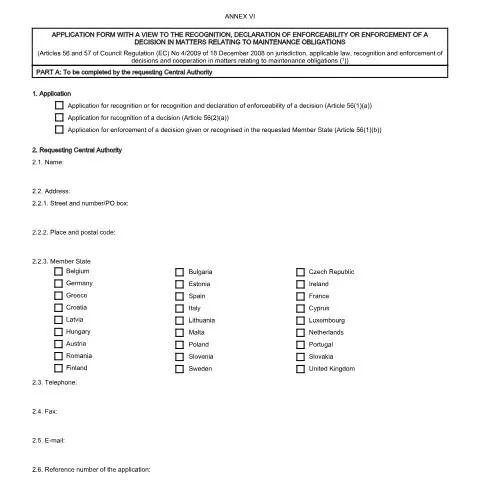
The application itself is structured into two parts, with each section focusing on specific information needed for processing:
- Part A: Completed by the requesting Central Authority, focusing on the application for recognition or enforcement.
- Part B: Filled out by the applicant or an authorized representative. Here, personal details, including identity, nationality, and contact information, must be provided.
Detailing Information Accurately
It is crucial to ensure that every detail is filled out accurately. For example, when entering personal details such as:
- Surname and given names
- Date and place of birth
- Nationality and profession
- Address, including any specific instructions regarding safety, if necessary
Neglecting to complete any section or providing incorrect information can result in delays or outright rejection of the application.
The Timelines You Need to Consider
Understanding the expected timeline for the application process is vital for planning and anticipation.
Initial Submission to Decision
Once submitted, the processing time can vary based on the complexity of the case and the responsiveness of the involved authorities. Generally, here’s a rough timeline:
- Submission: The application is submitted with the required documentation.
- Processing Time: Expect around 30-90 days for the authorities to review and respond.
- Decision Notification: The applicant will receive a formal notification regarding the outcome, including any next steps.
After the Application: Ensuring Compliance
Following the recognition of the maintenance order, it is vital to ensure that the necessary follow-up actions are taken. This can include:
- Communicating with the relevant authorities in the new jurisdiction.
- Monitoring payments to ensure compliance with the court-mandated order.
- Utilizing legal recourse if payments lapse or are not adhered to.
Dealing with Challenges: Refusals and Errors
Despite meticulous preparation, applicants may still face hurdles, such as refusals or requests for additional documentation.
Understanding the Grounds for Refusal
Applications can be denied for various reasons, including:
- Incompleteness of the application form.
- Lack of necessary supporting documents.
- Failure to meet jurisdictional or legal standards required for recognition.
If your application is refused, it is crucial to review the reasons provided and respond promptly, addressing any concerns highlighted by the authorities.
Correcting Mistakes in Your Application
If you discover errors post-submission, contact the Official Solicitor and Public Trustee immediately. They can guide you on the best steps to rectify any mistakes and ensure your application remains valid.
The Larger Context: Integration in International Child Maintenance Systems
This application does not exist in isolation; it forms part of broader initiatives to streamline cross-border child maintenance enforcement.
Collaboration Between Jurisdictions
The UK maintains agreements with numerous countries under various treaties, such as the 2007 Hague Convention, facilitating the recognition and enforcement of maintenance obligations. This underscores the importance of ensuring that your application aligns with these international frameworks.
Comparative Analysis with Other Forms
It’s essential to distinguish this application from other forms of legal requests. For instance, the application for recognition of a maintenance order differs from requests for custody or visitation rights, focusing primarily on financial obligations rather than parental responsibilities.
Final Steps: Beyond the Application
Once the child maintenance order is recognized, the custodial parent should remain vigilant. Regular follow-ups with the authorities and clear communication with the other parent can prevent misunderstandings and ensure that the support obligations are met consistently.
In closing, the path to securing a child maintenance order’s recognition abroad involves careful preparation, attention to detail, and ongoing engagement with both legal frameworks and the involved parties. Being informed and proactive in this process not only protects the financial interests of the child but also enhances the well-being of families traversing international boundaries.
Understanding Child Maintenance Orders in the UK
Before diving into the process of applying for recognition of a child maintenance order abroad, it is essential to grasp what a child maintenance order is and how it functions within the UK legal framework. A child maintenance order is a legal agreement or court order that stipulates how much financial support a non-residential parent must provide to the parent with whom the child primarily lives. This financial support is crucial to ensure that a child’s needs are met, which includes essentials such as housing, food, clothing, and education.
In the UK, child maintenance can be arranged through the Child Maintenance Service (CMS) or through a private agreement. The CMS offers two main schemes: the ‘Collect and Pay’ service, where the CMS collects and transfers payments between parents, and the ‘Family-based arrangement’, which allows parents to manage payments directly. Understanding the nature of your child maintenance order will be vital when seeking its recognition abroad, as different jurisdictions may treat such agreements differently.
For parents planning to move or currently living abroad, it's crucial to ensure that any existing child maintenance order is enforceable in the new jurisdiction. Previous arrangements made in the UK do not automatically hold legal weight in other countries—each country has its own laws governing child support obligations. Therefore, parents should seek to understand the specific laws of the country they are moving to and how these laws might interact with UK legislation.
Steps to Apply for Recognition of a Child Maintenance Order Abroad
The process of applying for the recognition of a child maintenance order abroad depends on the country in which you seek recognition. Generally speaking, there are specific steps you should follow to ensure a smooth application process:
1. Check Local Laws and International Treaties
Before submitting an application for recognition, familiarize yourself with the local laws of the country where you wish to have the order recognised. Some countries are part of international treaties that simplify the recognition of child maintenance orders, such as the 2007 Hague Convention on the International Recovery of Child Support and Other Forms of Family Maintenance. If the country you are moving to is a signatory to this convention, the recognition process may be more straightforward.
2. Gather Necessary Documentation
You will need to compile several documents when applying for recognition of a child maintenance order. These may include:
- A certified copy of the original child maintenance order from the UK court.
- Proof of identity and residence for both parents.
- Any correspondence or agreements made through the CMS, if applicable.
- Supporting evidence regarding the child’s needs, if required.
These documents should be translated into the official language of the country in which you are applying, and you may need to have them notarised or apostilled to confirm their authenticity.
3. Submit Your Application
Once you have gathered your documentation, submit your application to the appropriate authority in the foreign country. This could be a family court or a designated child maintenance authority. It is important to consult local legal advice to ensure you are submitting your application to the right entity and following the correct procedures. Each country will have different requirements, including any applicable fees associated with the application process.
4. Follow Up and Respond to Requests for Additional Information
After submitting your application, be prepared for any additional requests for information or documentation from the foreign authorities. It is essential to respond promptly to ensure that your application is not delayed. Maintaining communication with the relevant authorities can also help clarify any doubts regarding the recognition process.
Challenges and Considerations in International Child Maintenance Cases
While the recognition of a child maintenance order overseas is possible, various challenges may arise during the process. Understanding these challenges can help you better navigate the complexities of international child maintenance.
1. Differences in Legal Frameworks
Different countries have distinct legal frameworks governing child maintenance. The amount, enforcement, and conditions of child support obligations can vary significantly. In some jurisdictions, child maintenance may be calculated differently, which could result in a change in the amount you may receive or need to pay. It is crucial to be aware of these differences and to prepare for potential disputes regarding the amount or terms of the maintenance order.
2. Enforcement Issues
Even if a child maintenance order is recognised in another country, enforcing the order can be problematic. Some countries may lack effective mechanisms for enforcing foreign orders, leading to challenges in acquiring payments. Researching the enforcement capabilities of the relevant jurisdiction is essential to gauge the likelihood of successful compliance with the order.
3. Cultural and Social Factors
Cultural attitudes towards child maintenance can vary from one country to another. In some cultures, the obligation to provide financial support to a child may be viewed differently, which could influence the level of compliance with child maintenance orders. Understanding local cultural practices can provide valuable insights when navigating these complexities.
Overall, while applying for recognition of a child maintenance order abroad can be a daunting task, with the right information and preparation, it is possible to achieve the desired outcomes. Always consider seeking legal advice from professionals experienced in international family law to facilitate the process and safeguard your interests.