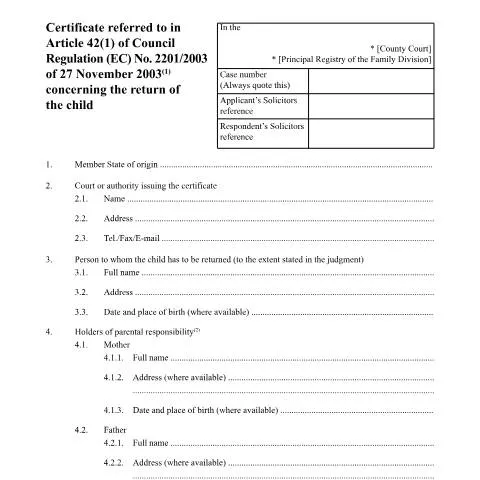
Understanding the Certificate Referred to in Article 42(1) of Council Regulation (EC) No. 2201/2003: An Overview
The Certificate referred to in Article 42(1) of Council Regulation (EC) No. 2201/2003, commonly known as the Brussels IIa Regulation, is an official document issued by courts within the European Union member states. Its primary purpose is to facilitate the return of a child across borders when there are disputes concerning parental responsibility or custody arrangements, especially in cases involving international child abduction.
Context and Purpose of the Certificate
This certificate serves as a formal record that confirms the details of a court judgment concerning the return of a child, as stipulated under the Brussels IIa Regulation. It is designed to streamline the enforcement of child return orders across EU member states, ensuring that decisions are recognized and executed efficiently and consistently. The regulation aims to protect the child's best interests by preventing international abduction and ensuring that courts can enforce custody and visitation orders effectively.
Who Is Concerned by This Certificate?
The certificate is relevant for several parties involved in cross-border child custody cases:
- Courts and judicial authorities: They issue the certificate based on the judgment they have delivered.
- Legal practitioners: Solicitors and legal representatives use the certificate to facilitate enforcement and compliance with court orders.
- Authorities in the Member State of origin: They recognize and enforce the court judgment and the associated certificate.
- Parents and guardians: They are directly affected by the court's decision regarding the child's return.
Key Components of the Certificate
The certificate contains detailed information, including:
- Case details: Case number, court name, and legal references.
- Parties involved: Names and addresses of the applicant, respondent, and any persons with parental responsibility.
- Child's information: Full names, dates, and places of birth.
- Judgment specifics: Date, reference number, and the court that issued the judgment.
- Enforceability: Whether the judgment is enforceable in the child's country of origin.
- Additional considerations: Whether the children and parties had opportunities to be heard and the reasons underlying the judgment.
Legal and Practical Significance
The issuance of this certificate is a crucial step in the legal process of returning a child under international custody disputes. It provides a standardized document that can be recognized across EU member states, ensuring that the court's decision is respected and implemented without unnecessary delays. The certificate also supports the child's welfare by promoting swift enforcement of custody orders, aligning with the objectives of the Brussels IIa Regulation.
References and Authority
This certificate is issued by the relevant court or authority that delivered the judgment concerning the child's return. It is based on the legal framework established by the Brussels IIa Regulation, which aims to facilitate cooperation and mutual recognition of judgments in family law matters across EU member states. The regulation emphasizes the importance of safeguarding the child's best interests while respecting the rights of parents and guardians.
Conclusion
The Certificate referred to in Article 42(1) of Council Regulation (EC) No. 2201/2003 plays a vital role in the cross-border enforcement of child custody and return orders within the European Union. It ensures that judicial decisions are recognized and executed efficiently, ultimately supporting the child's welfare and the legal rights of involved parties. Understanding its structure and purpose helps legal practitioners, authorities, and families navigate complex international custody situations with clarity and confidence.