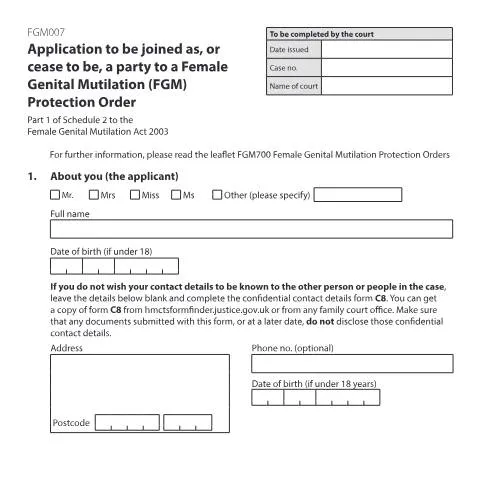
Navigating the FGM007 Application: Ensuring Protection Through Legal Channels
In the realm of safeguarding vulnerable individuals, particularly regarding Female Genital Mutilation (FGM), the Application to be joined as, or cease to be, a party to a Female Genital Mutilation (FGM) Protection Order: Form FGM007 plays a pivotal role. This document is essential for those who seek to either join or withdraw from an ongoing FGM Protection Order. Navigating the legal landscape surrounding FGM protection is crucial for ensuring the safety of individuals at risk. This guide aims to provide a comprehensive overview of the FGM007 form, including its importance, completion process, and the subsequent steps to follow.
The Role of the FGM007 Form in the Judicial Process
The FGM007 form is a key document within the framework of the Female Genital Mutilation Act 2003, which seeks to prevent FGM practices and protect individuals at risk. This application allows an individual to either:
- Join an existing protection order, thereby becoming a party to the proceedings.
- Cease to be a party to the proceedings if they no longer wish to be involved.
Understanding why and when to use this form is essential. For instance, if a concerned individual, such as a family member or guardian, believes that someone is at risk of FGM, they may file an application to intervene on their behalf. This proactive step can lead to legal protection, ensuring the individual’s rights and safety.
Initiating the Process: Determining Eligibility
Before filling out Form FGM007, assess whether you or the person you represent is eligible to apply. Typically, the applicant must have a legitimate interest in the individual being protected, often being a relative, guardian, or legal representative. Here are a few scenarios that highlight when to consider the application:
- If you have concerns about a child or young adult in your care.
- If you are a healthcare professional who suspects a patient is at risk.
- If you are witnessing signs of potential FGM practices within your community.
Breaking Down the FGM007: Completing the Application
Filling out the FGM007 is a critical step that requires careful attention to detail. The form consists of specific sections that must be completed with accurate information. Below is a detailed guide on navigating each part of this form:
Part 1: About the Applicant
This section focuses on the individual submitting the application. It requires:
- Your full name and any title.
- Your date of birth (if under 18).
- Your contact information, though you can opt to keep your address confidential for safety reasons by completing a Confidential Address Form C8.
Additionally, if you have legal representation, include details about your solicitor to facilitate communication.
Part 2: Stating Your Reasons
Here, you must succinctly outline the reasons for your application. This is crucial as it provides the court with context about the urgency and necessity of the protection order. Be clear and specific about any potential risks faced by the individual you seek to protect.
Part 3: Identifying the Respondent
This section requires information about those who will be served with the application. If there are multiple respondents, additional sheets can be included. This is important for ensuring that all parties are informed of the proceedings and can respond accordingly.
Part 4: Special Arrangements at Court
It's vital to consider any special requirements for the court appearance. If either you or the individual being protected needs an interpreter or has a disability that requires accommodations, this section allows you to request those arrangements. It's essential to communicate these needs early to ensure the court can provide the necessary support.
Submitting the Application: Channels of Delivery
Once the FGM007 form is completed, you have several options for submission to the court. Understanding these options can help expedite the process:
- In Person: You can submit the form directly at your local court. This allows for immediate confirmation of receipt and an opportunity to ask any last-minute questions.
- By Post: If you choose to mail your application, ensure that you send it to the correct court address. Consider using a tracked delivery service to confirm receipt.
- Online Submission: Depending on the court's facilities, online submissions may be available. Check the HM Courts & Tribunals Service website for more details about electronic filing options.
Tracking Your Application: Staying Informed
After submitting the application, it’s important to stay informed about its progress. Here are practical steps to follow:
Receiving Confirmation
Regardless of the submission method, you should receive a confirmation from the court acknowledging your application. This document serves as proof that you have initiated the process.
Follow-Up with Court Officials
If you haven't received any communication within a reasonable timeframe, consider reaching out directly to the court. Provide your case number and relevant details to facilitate their search for your application status.
Understanding the Next Steps
Once your application is reviewed, the court will schedule a hearing where parties involved can present their cases. It is crucial to be prepared for this hearing, as the outcome will significantly impact the protection order's implementation.
Legal Obligations and Rights as an Applicant
Being an applicant in the FGM007 process comes with specific rights and obligations. Understanding these can empower you to navigate the process more effectively:
Your Rights
- You have the right to be informed about the status of your application.
- You have the right to legal representation at all hearings.
- You can request adjustments or accommodations to ensure your safety and comfort during the process.
Your Responsibilities
- Ensure that all information provided is truthful and accurate, as false statements can lead to legal repercussions.
- Attend all court hearings and comply with the court's requests for additional information or documentation.
- Maintain communication with any legal representatives to ensure you are fully informed of developments.
Contingencies and Special Considerations
While the process is generally straightforward, there are unique circumstances that may arise requiring additional attention:
International Applicants
If you are applying from outside the UK or on behalf of someone who is not a UK resident, consider consulting a legal expert familiar with international family law to understand the implications involved.
Minors and Vulnerable Individuals
Special considerations apply when the person at risk is under 18. In such cases, an application may need to be made by a responsible adult or through a guardian. This ensures that the minor's rights are adequately protected.
Urgent Situations
If there’s an immediate threat of FGM, it may be possible to expedite the process. Contact the court immediately to discuss your situation and any emergency procedures that could be enacted.
What Happens Next? After the Court’s Decision
The court will ultimately decide whether to grant or deny the protection order based on the evidence presented. Should the order be granted, it will provide legal protection to the individual at risk. Here’s how to proceed:
Understanding the Protection Order
The protection order can include a range of conditions, such as:
- Prohibiting specific individuals from contacting the protected person.
- Preventing travel to certain locations.
- Mandating counselling or support measures for the protected individual.
Enforcement of the Order
The responsibility for enforcing the protection order lies with law enforcement agencies and the court. It is critical to report any violations of the order to the appropriate authorities immediately.
Ongoing Support and Resources
Beyond legal protection, individuals may require additional support services. This can include counselling, legal advice, or community resources. Engage with local organisations that specialise in FGM prevention and victim support to access the necessary resources.
The Importance of Awareness and Advocacy
Ultimately, the FGM007 form represents more than a legal document; it is a beacon of hope and protection for those at risk of FGM. Raising awareness about the significance of this application can encourage more individuals to seek help and ensure that their rights are upheld. Advocacy at community levels, combined with legal measures, can pave the way for eradication of such harmful practices.
By understanding the FGM007 application process, individuals can take meaningful steps toward protecting themselves and others within their communities. For further guidance, consult the relevant legal provisions and consider reaching out to support organisations dedicated to the cause.
Understanding the Female Genital Mutilation (FGM) Protection Order
The Female Genital Mutilation Protection Order is a vital legal instrument aimed at safeguarding individuals, particularly women and girls, from the harmful practice of female genital mutilation (FGM). Under the FGM Act 2003, specific provisions allow courts to issue protection orders aimed at preventing FGM from occurring in the UK or safeguarding individuals who may be at risk of FGM. These orders are tailored to protect those who may be forced into circumstances where FGM could take place, thus addressing a significant public health and human rights concern.
To apply for a Female Genital Mutilation Protection Order, you must understand the implications and the legal framework involved. Typically, the application is made through the family courts, and it can be initiated by any person with the necessary interest, including the individual at risk, a family member, or a professional working with the individual, such as social workers or legal representatives. The FGM Protection Order is not only about safeguarding against violence but also about affirming an individual’s right to bodily integrity and protection from cultural and familial pressures.
Eligibility Criteria for Applying for or Joining FGM Protection Orders
When considering making an application to join a Female Genital Mutilation Protection Order or to cease being a party to such an order, it is essential to understand the eligibility criteria and the factors the court considers. The court will assess whether the applicant is a person who has or may have a significant interest that warrants their inclusion in the proceedings.
The criteria often include the following:
- Connection to the Individual at Risk: Applicants must demonstrate a clear connection to the person who is at risk of FGM. This could be a parent, guardian, or family member, as well as professionals acting on behalf of the individual, like social workers.
- Evidence of Risk: The applicant may need to present evidence or reasonable grounds to believe that the individual is at risk of FGM. This could include previous threats or instances of FGM within the family or community.
- Willingness to Support the Individual: Applicants should be prepared to actively support the individual at risk and work towards their safety and wellbeing.
If you wish to cease being a party to an existing FGM Protection Order, the court will evaluate whether there have been significant changes in circumstances since the original order was issued. This could involve proving that the risk of FGM has been mitigated or that the parties involved have resolved any relevant issues.
The Role of Legal Representation in FGM Protection Order Applications
Navigating the legal landscape surrounding Female Genital Mutilation Protection Orders can be complex and emotionally charged. It is highly advisable for individuals seeking to apply for or amend their participation in such orders to seek legal representation. Having a solicitor who specializes in family law and understands the nuances of FGM legislation can significantly impact the outcome of your application.
A legal representative can provide guidance on the following:
- Application Process: They can assist in filling out the Form FGM007 accurately, ensuring all necessary information is included and that the application meets the court’s requirements.
- Gathering Evidence: A solicitor can help gather relevant evidence to support the application, including witness statements or documentation of previous incidents related to FGM risks.
- Navigating Court Proceedings: The legal representative will guide you through the court process, explain what to expect during hearings, and represent your interests before the court.
In many cases, legal aid may be available to assist with the costs associated with these applications, particularly if the individual at risk cannot afford legal representation. It’s worth inquiring about this option when seeking legal counsel.