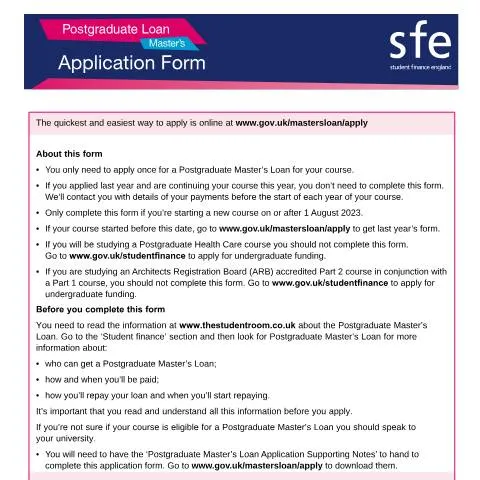
Navigating Your Postgraduate Master’s Loan Application: A Comprehensive Guide
Embarking on a postgraduate journey is an exciting yet challenging experience, and securing financial assistance can significantly alleviate the burden. For many aspiring Master’s students in the UK, applying for a Postgraduate Master’s Loan through the Student Loans Company (SLC) is a pivotal step. This document delves into the intricacies of the application process, ensuring that you are well-prepared to navigate the complexities involved.
Understanding the Application Process: Key Milestones
Before initiating your application, it is crucial to have a grasp of the timeline associated with the Postgraduate Master’s Loan process. This will help you plan effectively and avoid unnecessary delays.
- Application Window: The application for the Postgraduate Master’s Loan typically opens well in advance of the academic year. Make sure to check the official SLC resources to know the exact dates for the 2023-2024 academic year.
- Submission Deadline: For one-year courses, your application must be submitted within nine months after the start of your academic year. For longer courses, the deadline extends to nine months after the beginning of the final academic year.
- Processing Time: Once you submit your application, allow sufficient time for processing. The SLC aims to process applications promptly, but ensuring all information is complete will minimise delays.
Components of the Application: A Deep Dive
Understanding each section of the application form is crucial to avoid common pitfalls. Below, we will break down the application form and highlight key aspects that require your attention.
Section 1: Your Details
This initial section requires you to provide personal information. Ensure that all details are accurate, as discrepancies can lead to delays.
- Personal Information: Include your full name, date of birth, and National Insurance number. These identifiers are essential for the SLC to process your application.
- Contact Information: Provide up-to-date contact details to receive important correspondence from the SLC.
Section 2: Course Details
Detailing your course accurately is imperative, as this determines your eligibility for the loan.
- Institution: Clearly state the name of your university and the specific course you are enrolling in.
- Course Start Date: Ensure this is correct, as it will impact your funding timeline.
Section 3: Financial Details
Here, you will declare your financial background, which helps determine the level of funding you are eligible for.
- Income Information: Be honest and accurate when reporting your income, as failing to do so could impact your application.
- Funding Details: Note any other funding sources, as this can influence your loan eligibility.
Post-Submission: What to Expect
Once your application is submitted, it’s essential to understand the subsequent steps and how to manage any potential issues that may arise.
- Loan Approval: After processing your application, you will receive a letter detailing your loan amount and payment schedule.
- Payment Schedule: Payments are typically divided into three instalments per academic year, paid directly into your bank account.
Dealing with Common Issues: Refusals and Errors
In the event of a refusal or an issue with your application, knowing your options can help you navigate the next steps effectively.
- Reasons for Refusal: Common reasons include incomplete applications or insufficient supporting documentation.
- Appeals Process: If you believe your application was unfairly denied, you can appeal the decision through the prescribed channels outlined in your refusal letter.
Preparing for Your Application: Documentation and Evidence
Before you start filling out your application form, gathering the necessary documentation is crucial for a smooth application process.
- Proof of Identity: Have your passport or driver’s licence ready, as this will be required to verify your identity.
- Proof of Address: Utility bills or bank statements dated within the last three months can serve this purpose.
- Financial Statements: Prepare your recent payslips or bank statements to support your income claims.
Special Circumstances: Navigating Unique Situations
Not every applicant will fit neatly into standard categories; some may have unique circumstances that affect their application. Here’s how to prepare for these situations.
- International Students: If you are an international student, check specific eligibility criteria, as not all international students qualify for the Postgraduate Master’s Loan.
- Previous Funding: If you’ve previously received a Postgraduate Master’s Loan, ensure you meet the criteria for re-application, particularly regarding course completion.
Understanding Your Repayment Obligations
Once you receive your loan, it is essential to understand how repayments work, especially how they align with your income.
- Income Threshold: Repayment begins when you earn over £21,000 a year, which is important to note as it impacts your financial planning post-study.
- Repayment Rate: You will repay 6% of your income above the threshold, and this will be deducted automatically through the PAYE system or directly if you're self-employed.
Support Networks and Resources
Utilising available resources can help you make informed decisions throughout your postgraduate journey.
- Student Finance England: This is the primary resource for information on loans and financial support.
- University Financial Support Offices: They can provide tailored advice that considers your specific situation and course requirements.
Final Thoughts: Preparing for Your Journey
The Postgraduate Master’s Loan application process can seem daunting, but armed with the right information and preparation, you can navigate it confidently. Ensure that you read all guidelines thoroughly, gather the necessary documents, and stay informed about any updates or changes in the process. Your educational aspirations deserve the best financial support available, and understanding this application process is a crucial step toward achieving your academic goals.
| Step | Details |
|---|---|
| Application Timing | Open ahead of academic year; check SLC for specific dates. |
| Submission Deadline | 9 months post-start date for one-year courses; final year deadlines apply for longer courses. |
| Processing Time | Allow time for processing; ensure completeness to avoid delays. |
| Repayment Start | After leaving University and once income exceeds £21,000. |
Understanding the Different Student Finance Options for Postgraduate Master's Students
In the UK, postgraduate Master's students have access to various forms of financial support designed to ease the financial burden of higher education. Understanding the distinctions between these options is crucial for applicants wanting to make informed decisions. The primary types of funding available include postgraduate loans, grants, and scholarships. Each of these has its own eligibility criteria, application processes, and financial implications.
The postgraduate Master's loan, administered by Student Finance England, provides up to £12,167 for students in England. This amount is designed to cover tuition fees and living costs. Unlike undergraduate loans, these funds are not means-tested, meaning your household income does not impact the amount you can borrow. This loan is repayable, with repayments starting once you earn above the repayment threshold, currently set at £27,295. The interest rate is variable, depending on your income level.
On the other hand, grants and scholarships are often awarded based on merit or need. Various universities and external organizations offer these funds, which do not require repayment. For instance, some universities provide specific scholarships aimed at international students or those from underrepresented backgrounds. It's critical to explore all options available through your prospective institution’s financial aid office or website.
Lastly, the Higher Education Statistics Agency (HESA) publishes comprehensive data on funds available to postgraduate students, which can be a helpful resource in making an informed choice. Be sure to check the eligibility requirements specific to your chosen course and university as these can vary significantly, influencing your overall financial planning.
Navigating the Application Process for Postgraduate Funding
Applying for student finance can seem daunting, especially for those transitioning from undergraduate to postgraduate studies. The application process for postgraduate Master's loans is generally straightforward but requires attention to detail to avoid delays.
Firstly, you will need to create an account on the Student Finance England website if you haven't done so already. The online application form requires personal details, including your National Insurance number and bank information for payment processing. You will also need to provide proof of identity, which may involve uploading scanned copies of your passport or other identification documents.
Once you have submitted the online application, you will receive a confirmation email. It is essential to keep track of your application status, which can be done through your account dashboard. Typically, you can expect an initial response within a few weeks, but it might take longer during peak application periods, especially before the commencement of the academic year.
Additionally, be mindful of deadlines. For the 2023 academic year, applications opened in March 2023, and while there is no strict closing date, it's advisable to apply as early as possible to ensure you receive your financial support on time. Late applications can result in delayed disbursements or even reduced loan amounts.
Should you encounter any issues or have questions about your application, don’t hesitate to contact the Student Finance England helpline. They can provide guidance on specific queries, helping to clarify the process and resolve any outstanding issues.
Repayment and Financial Planning for Postgraduate Loans
Once you graduate or leave your course, understanding the repayment terms of your postgraduate loan is crucial for effective financial planning. As mentioned previously, repayments begin when your income exceeds £27,295. The rate of repayment is set at 6% of your income above this threshold, which means if you earn £30,000, your monthly repayment will be approximately £22.
Interest on your loan is charged at the Retail Price Index (RPI) plus up to 3%, depending on your income. For those earning less than £27,295, the interest rate is capped at RPI, while it increases with income, reaching the maximum rate for those earning £49,130 or more. Awareness of these rates is important for budgeting, particularly as interest accrues even while you are studying.
Moreover, the loan is written off 30 years after you become eligible to repay, meaning that if you do not earn enough to meet the repayment threshold, you may never need to repay the full amount. This characteristic makes postgraduate loans significantly different from commercial loans, where the expectation is full repayment regardless of your financial situation.
To facilitate better financial decision-making, postgraduate students should create a budget that includes anticipated living costs, tuition fees, and potential income during studies. Various budgeting tools and templates are available online, which can help in preparing a realistic financial plan.
Additionally, consider your long-term career prospects in relation to your field of study. For example, programmes in fields with high earning potential, such as finance or engineering, may justify the debt accrued through postgraduate studies, while others may not provide a return on investment as quickly. Researching potential salary outcomes based on your course choice can help ensure that you make a financially sound decision.