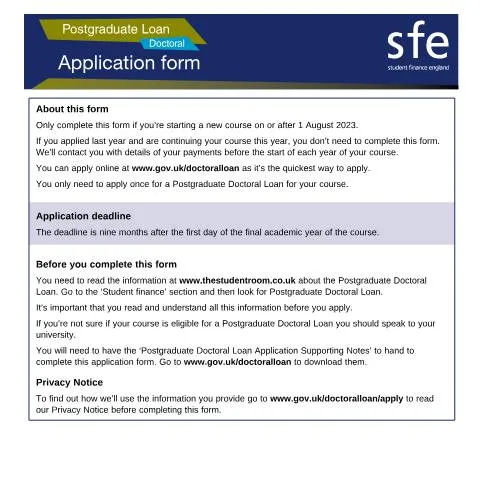
Understanding the 2023 to 2024 Student Finance Application for Postgraduate Doctoral Students
As a postgraduate doctoral student preparing to embark on an intensive research journey, securing adequate funding is crucial to your success. The 2023 to 2024 Student Finance Application Forms provided by the Student Loans Company (SLC) serve a pivotal role in ensuring that you can access financial support during your studies. This document is tailored specifically for individuals enrolling in doctoral programs starting on or after August 1, 2023.
Navigating the Application Timeline
Understanding the timeline for submitting your application is essential. The application process is initiated by your decision to start a new doctoral course, and you are required to complete the necessary forms. Here’s a brief overview of the timeline:
- Application Start: If you are beginning your course on or after August 1, 2023, this is your starting point.
- Application Deadline: You must submit your application within nine months after the first day of your final academic year. Missing this deadline may jeopardise your funding.
- Payment Schedule: Funds will be disbursed in instalments directly into your bank account throughout the duration of your course.
Example Timeline
| Milestone | Deadline |
|---|---|
| Course Start Date | August 1, 2023 |
| Final Year Start Date | August 1, 2026 |
| Application Deadline | May 1, 2027 |
Who Should Submit This Application?
This application specifically targets postgraduate doctoral students who are entering their first year of study in a qualifying program. It is pertinent to note that if you have previously applied for funding and are continuing your current course, you do not need to reapply. The SLC will proactively contact you with payment details each academic year.
Eligibility Criteria
- Must be enrolled in a full-time or part-time doctoral course.
- Must have a valid Student Finance Customer Reference Number if previously applied.
- Must meet residency criteria as stipulated by the SLC.
Breaking Down the Application Sections
Completing the application form requires careful attention to detail. Each section must be filled out accurately to avoid delays in processing. Below is a detailed breakdown of the major sections of the application:
Personal Details
This section requires you to provide your personal information exactly as it appears on your legal identification, such as your passport or birth certificate. It includes:
- Title: Choose from the options provided.
- Full Name: Ensure that forenames and surname are spelled correctly.
- Date of Birth: Input the date in the format specified (Day/Month/Year).
- Nationality: This is crucial for determining eligibility.
- National Insurance Number: If applicable, provide your NI number, as it’s critical for income assessment.
Common Pitfalls in the Personal Details Section
One frequent error is providing outdated names if you have undergone a change. Be prepared to submit official documentation confirming any name changes.Supporting Documents: What You Need
To ensure your application is processed smoothly, you must gather and submit the required supporting documents. Failing to include these can lead to significant delays.
Types of Supporting Documents
- Proof of Identity: Copy of passport, ID card, or birth certificate.
- Proof of Change of Name: If applicable, official records like marriage certificates.
- Eligibility Verification: This may include transcripts or letters from your university confirming your enrolment.
Understanding the Importance of Complete Documentation
Each document serves to validate your application claims. Incomplete submissions can lead to processing delays, affecting when you receive funding. Always double-check against the guidelines available at the SLC website before submitting.
Income Assessment and Implications
Your application's financial aspect hinges on your income and the income of any household members, if applicable. The SLC utilizes this information to determine your eligibility and the amount of funding you receive.
Income Thresholds and Loan Repayment
Key Points:- The maximum loan amount available for doctoral students is currently set at £28,673.
- You will be charged interest from the date of your first payment, which is based on the Retail Price Index plus an additional 3%.
- Repayment begins once your income exceeds £21,000 per year; you will repay 6% of any income over that threshold.
Special Situations: Non-UK Students and Others
If you are a non-UK student or fall under a special category, you may have additional considerations. It’s imperative to ascertain your eligibility and understand any unique requirements.
Special Categories of Applicants
- EU Students: Check if your status allows you to apply for funding.
- Part-Time Students: Funding amounts may differ based on the intensity of study.
- Disabled Students: You may be eligible for additional support through the Disabled Students’ Allowance (DSA).
Advice for Non-Standard Situations
If you find yourself in a complex situation, consider contacting your university’s student finance office for personalised guidance.The Bigger Picture: How This Application Fits Into Your Academic Journey
This form is not merely a bureaucratic hurdle; it is a crucial element of your academic and financial planning. Understanding its role in the broader context of your postgraduate journey will enhance your preparedness.
Integration with Other Financial Support
- This application may complement other funding sources, such as scholarships or grants.
- Consider how varying funding sources will impact your financial landscape.
- Reflect on the overall cost of your course, including tuition and living expenses, when planning your finances.
Next Steps After Submission
Once you submit your application, there are several actions you can take to ensure you remain informed and proactive.
Monitoring Your Application Status
Stay updated through the SLC’s online portal where you can track the progress of your application. Promptly respond to any requests for additional information to prevent delays.
Preparing for Loan Disbursement
Once approved, you should set up a bank account where your funds can be deposited. Consider budgeting for your expenses, ensuring that your funding supports your academic journey effectively.
Resources for Additional Information
Several resources can assist you throughout this process. Leverage them to ensure you have all the necessary information at your fingertips:
- The Student Room: A wealth of community-generated knowledge about student finance.
- Government Websites: For official guidelines and updates on funding changes.
- University Financial Aid Office: Direct assistance tailored to your specific circumstances.
Contacting the Student Loans Company
If you require direct assistance, the SLC offers various contact methods, including phone support. Be sure to have your reference number handy for quicker assistance.
By understanding and preparing to complete the Student Finance Application for Postgraduate Doctoral Students, you are taking a significant step towards securing the financial resources necessary for your educational success. Ensuring diligence in this process can impact not only your immediate funding but also your long-term financial obligations and academic journey. Remember, the details matter, and being thorough and informed is key to a smooth application experience.
Understanding Eligibility Criteria for Doctoral Student Finance
When applying for student finance as a postgraduate doctoral student in the UK, it is crucial to have a comprehensive understanding of the eligibility criteria. The first step involves verifying that your programme is eligible; typically, this means that it must be a full-time or part-time PhD, including professional doctorates. Additionally, your institution must be recognised and registered with the relevant student finance authority.
Postgraduate doctoral courses can vary widely, and eligibility can hinge upon several factors, including your previous qualifications. Generally, applicants should hold a Master’s degree, but specific courses may have unique prerequisites. If you are a non-UK resident, you must also meet residency requirements, as these can differ markedly based on your home country. For instance, EU students post-Brexit may have different criteria compared to UK or international candidates.
Moreover, your age can affect your eligibility for certain financial assistance programs. Most postgraduate funding is available to those under the age of 60, as older candidates may not qualify for certain loans. Always ensure that you check the latest rules on age limitations and eligibility for the student finance you’re applying for.
Key Financial Support Options for Doctoral Students
The financial landscape for doctoral students in the UK offers a variety of support mechanisms, but it can be complex. Aside from tuition fee loans, UK postgraduate doctoral students can access living cost loans, scholarships, and grants. Tuition fee loans can cover up to £11,000 for the entire course, while living cost loans may also be available to support your day-to-day expenses.
Many universities also offer their own scholarships and grants specifically tailored for doctoral students, which may not need to be repaid. This can include funding for research projects, travel allowances for conferences, and stipends for specific research activities. Be sure to check with your university’s financial aid office for available options as each institution may have its own set of resources.
In certain cases, candidates may also approach external bodies and organisations for scholarships. These can range from research councils to charitable foundations that are committed to fostering academic research. Some sectors may also have partnerships that provide funding opportunities for students pursuing research in specific fields, such as technology or social sciences.
Application Process: Tips and Common Pitfalls
The application process for student finance can be daunting, particularly for first-time postgraduate students. Start by gathering all necessary documentation, such as proof of residency, previous academic qualifications, and your National Insurance number. Ensure that your application aligns with the specific criteria laid out by the UK Student Loans Company. This means being aware of the deadlines specific to your course and location.
Common pitfalls during the application process include underestimating the complexity of the online application system. It is advisable to begin your application at least a few weeks in advance of the deadline. This allows time to navigate any technical difficulties and ensure that all information is accurate and complete. Double-checking the details of your application against the guidelines provided by the Student Loans Company can prevent unnecessary delays.
Another frequent mistake is failing to provide the required supporting documents. Ensure that you attach all requested evidence, as the Student Loans Company will not process your application until they have received all necessary documentation. Furthermore, always keep copies of everything you submit for your records, including receipts or confirmation emails.
Lastly, don’t hesitate to reach out for help if you are uncertain about any aspect of the application process. Your institution’s financial aid office will have resources available to assist you, and they can guide you through any specific queries regarding your application.