Navigating the Waters: The Importance of the Compass Adjuster Certificate
In the maritime industry, precision is key. A compass adjuster plays a crucial role in ensuring the safety and navigational accuracy of vessels at sea. The Compass Adjuster Certificate of Competency, issued by the Maritime and Coastguard Agency (MCA), is not just a piece of paper; it is a testament to the holder's skills and knowledge in the intricate art of compass adjustment. This article delves into the depths of this certification, exploring its significance, the requirements for obtaining it, and the application process.
Who Needs a Compass Adjuster Certificate?
The demand for qualified compass adjusters is evident among various maritime operators. The certificate is essential for:
- Ship owners looking to comply with international safety standards.
- Navigational officers who need to demonstrate their competency in adjusting and calibrating compasses.
- Maritime training institutions to develop a curriculum that meets industry standards.
Furthermore, regulatory bodies such as the International Maritime Organization (IMO) stipulate the necessity of qualified personnel for safe navigation, making this certificate not only beneficial but often mandatory.
Eligibility Criteria for Aspiring Compass Adjusters
Becoming a certified compass adjuster requires meeting specific qualifications. Candidates must:
- Have a background in maritime operations or navigation.
- Possess relevant experience in compass manufacturing or adjustment.
- Provide testimonials or supporting documents that verify their competency and experience.
Additionally, applicants must be able to demonstrate practical experience aboard vessels, which is crucial in validating their skills in real-world scenarios.
The Legal Weight of the Certificate
The Compass Adjuster Certificate holds significant legal standing within maritime operations. It attests that the holder has met the standards set forth by the Standards of Training, Certification, and Watchkeeping (STCW). This recognition supports the holder in various professional capacities, including:
- Compliance with safety and regulatory requirements.
- Enhancing employment opportunities in the maritime sector.
- Providing peace of mind to employers regarding their employees’ qualifications.
If a certificate is discovered to be obtained through fraudulent means, severe penalties may apply, including fines up to £5,000. This underscores the importance of integrity in the application process.
Step-by-Step Guide to Securing Your Certificate
The journey to obtaining the Compass Adjuster Certificate requires thorough preparation and adherence to guidelines. Here’s a streamlined process:
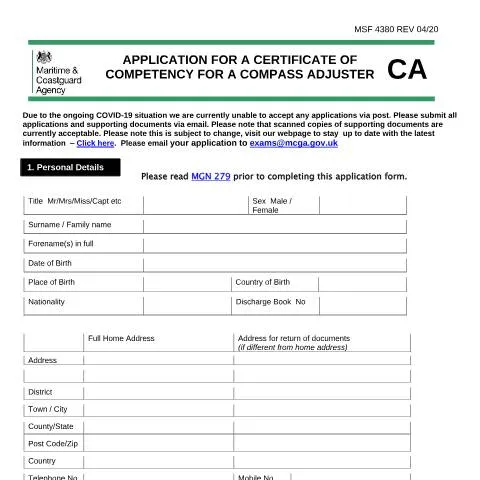
- Review the Guidelines: Before beginning your application, thoroughly read MGN 279, which outlines the requirements and guidelines for applicants.
- Gather Documentation: Collect all necessary documents, including proof of experience and testimonials from previous employers.
- Complete the Application Form: Fill out the application form carefully, ensuring that all information is accurate and truthful. This includes personal details, employment history, and experience in compass adjustment.
- Email Your Application: Due to the ongoing COVID-19 situation, applications must be submitted via email to [email protected]. Make sure to include scanned copies of your supporting documents.
- Payment of Fees: Ensure your payment is made promptly, as outlined in the Merchant Shipping Fees Regulations. The current fee for a Notice of Eligibility application is £482.
- Prepare for Examinations: Depending on your experience and qualifications, you may be required to pass written exams and an oral examination to demonstrate your competency.
- Receive Your Certificate: Upon successful completion of all requirements and examinations, you will receive your Compass Adjuster Certificate.
Understanding the Validity and Renewal of the Certificate
The Compass Adjuster Certificate is valid indefinitely, provided that the holder continues to engage in relevant maritime activities. However, it is crucial to stay updated on industry practices and regulations, as changes may affect competency requirements.
Renewal is not formally required; however, continuous professional development through additional training or courses is strongly encouraged. This not only enhances the skills of the adjuster but also ensures compliance with evolving maritime standards.
Potential Pitfalls and How to Avoid Them
While the application process may seem straightforward, there are common challenges applicants may encounter:
- Incomplete Documentation: Ensure all required documents are included to avoid delays.
- Inaccurate Information: Double-check personal and professional details to prevent application rejection.
- Failure to Pay Fees: Be vigilant about the payment process and ensure that the fee is submitted correctly to avoid processing delays.
By anticipating these challenges, applicants can streamline their journey to certification.
Staying Informed: The Role of the Maritime and Coastguard Agency
The Maritime and Coastguard Agency plays a pivotal role in maintaining safety and standards within the maritime industry. They provide resources, guidelines, and updates that are crucial for compass adjusters and other maritime professionals. It's advisable to regularly check the MCA’s website for:
- Updates on application processes and requirements.
- Changes in fees or certification standards.
- Additional training opportunities and resources.
Final Thoughts on Becoming a Compass Adjuster
Obtaining a Compass Adjuster Certificate of Competency is an invaluable step for anyone serious about a career in maritime navigation. The process may appear daunting, but with diligence and adherence to the guidelines set by the Maritime and Coastguard Agency, aspiring compass adjusters can successfully navigate their way to certification. As the maritime industry continues to evolve, staying updated and proactive in skill enhancement will ensure a rewarding career on the high seas.
Understanding the Role of a Compass Adjuster
Before diving into the application process for a Compass Adjuster Certificate of Competency (CoC), it's essential to grasp the pivotal role that a compass adjuster plays within the maritime industry. Compass adjusters are responsible for ensuring the accuracy and reliability of a ship's compasses, which are critical for navigation, safety, and compliance with maritime regulations. The job entails not just calibration but also an understanding of how various factors—such as magnetic interference and environmental conditions—can affect compass readings.
Typically, a compass adjuster's work might involve conducting thorough tests on the ship's magnetic compass, evaluating the installation of the compass system, and making necessary adjustments. This role requires extensive knowledge of maritime navigation and a solid foundation in technical skills. Consequently, the UK Maritime and Coastguard Agency (MCA) requires aspiring adjusters to meet specific educational and experiential criteria before they can apply for the CoC.
Preparation and Required Documentation for Application
Applying for a Compass Adjuster Certificate of Competency involves meticulous preparation to ensure your application is successful. Below are the key documents and steps you will need to prepare:
- Proof of Relevant Qualifications: You must present evidence of your professional maritime qualifications. Typically, a valid RYA Yachtmaster or equivalent qualification may suffice. If you have completed any specialized compass adjustment training programs, include those certificates as well.
- Sea Service Experience: You will need to provide documentation proving your sea service. This typically involves completing at least 6 months of documented sea time, which is directly related to compass work. Ensure that your sea service testimonials are signed by a competent person, such as a master or chief engineer.
- Medical Fitness Certificate: Before applying, obtain a medical fitness certificate from an MCA-approved medical practitioner, confirming that you meet the health requirements necessary to work at sea.
- Evidence of Continuing Professional Development: As this field requires continuous learning due to advancements in technology and regulations, you may be asked to provide proof of CPD activities, workshops, or additional training you have undertaken since your initial qualifications.
- Passport-Sized Photograph: Ensure you include a current passport-sized photograph that adheres to the specifications set out by the MCA. This image will be used for your certificate.
Once you have gathered all required documentation, you can proceed to the next step of filling out the application form, which is available on the MCA website. It's advisable to double-check that all the documents comply with the MCA's guidelines to avoid delays in processing your application.
Frequently Overlooked Aspects and Common Pitfalls
While applying for the Compass Adjuster CoC can seem straightforward, there are several common pitfalls and overlooked aspects that applicants should be aware of:
- Incomplete Documentation: One of the most frequent reasons for application rejection is incomplete documentation. Ensure that each required document is included and correctly filled out. Cross-reference the MCA checklist to make sure nothing is skipped.
- Inaccurate Sea Time Reporting: Falsifying or inaccurately reporting sea service time can lead to severe penalties, including disqualification from obtaining your CoC. Always ensure that your sea service records are accurate and verifiable.
- Ignoring Updates in Regulations: The maritime industry is continually evolving, and regulations around competency certificates may change. Stay informed on any updates from the MCA or related maritime authorities to ensure your application meets current standards.
- Delaying the Application Process: The application process can take several weeks, and it's essential to allow ample time to gather your documents and complete the application form. Start the application process well before any deadlines you may be facing, especially if you are trying to secure a job that requires the CoC.
- Not Seeking Guidance: If you find the application process daunting, consider reaching out to current compass adjusters or mentors in the field. Their experiences can provide invaluable insights and tips for your application.
By keeping these common pitfalls in mind, you can streamline your application process and enhance your chances of obtaining your Compass Adjuster Certificate of Competency successfully.