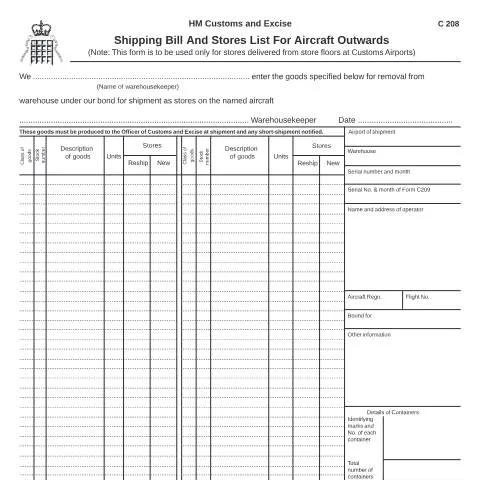
Navigating the C208 Shipping Bill: An Essential Guide
The C208 Shipping Bill and Stores List for Aircraft Outwards is not just a piece of paper; it embodies the intricate process of air transport logistics. Understanding its role within the broader framework of customs procedures is vital for businesses engaged in international trade. This document serves as a formal declaration to HM Revenue & Customs (HMRC) for goods being exported via air, ensuring compliance with UK customs regulations.
The Significance of the C208 in Air Cargo Operations
In the bustling world of air freight, the C208 form is an indispensable part of the export process. This document is required for the movement of goods from a customs-approved warehouse to an aircraft. It signifies the completion of various preparatory steps and helps to prevent any customs-related complications that could arise during transit.
Who Needs to File the C208?
Primarily, warehousekeepers—those responsible for the storage and subsequent shipping of goods—must complete and submit the C208. However, the ultimate responsibility lies with the consignor, who must ensure that all necessary documentation is in order before the goods are shipped. This includes:
- Exporters shipping goods internationally.
- Logistics companies managing air freight.
- Businesses involved in the supply chain that necessitate the export of goods.
The Procedural Journey: From Preparation to Submission
The process of submitting a C208 involves several critical stages, which are essential for ensuring a smooth export operation.
Step 1: Preparation of Goods
Before filling out the C208 form, it's crucial to prepare the goods for export. This includes verifying that all goods are properly packaged and labelled, and that they comply with both international and UK customs regulations.
Step 2: Completing the C208 Form
The C208 form consists of multiple sections that require precise information. Each field must be filled out carefully to avoid delays. Important sections include:
- Name of Warehousekeeper: The individual or entity responsible for the goods.
- Description of Goods: A detailed account of what is being exported, including any relevant codes.
- Units of Goods: The quantity of each item being shipped.
When filling out the form, attention to detail is paramount. Any discrepancies can lead to complications with customs clearance.
Step 3: Submission to Customs
Once the form is completed, it must be submitted to HMRC at the customs airport where the goods will be shipped. This submission is crucial, as customs officers will verify that the information matches the actual goods being transported.
During this step, it is essential to keep copies of all submitted documents. This documentation may be required for future reference or in the event of an audit.
Understanding Regulatory Framework: Legal Obligations Around the C208
The use of the C208 form is underpinned by UK customs legislation. The legal framework, including the Customs and Excise Management Act 1979 and subsequent regulations, necessitates that businesses comply with proper customs procedures when exporting goods.
Moreover, the Data Protection Act 2018 and UK GDPR govern the handling of personal data within these forms. It is important for businesses to be aware of their obligations under these laws, ensuring that they process personal information in compliance with legal requirements.
Consequences of Non-Compliance: What’s at Stake?
Failure to correctly complete and submit the C208 can lead to significant repercussions for individuals and businesses alike.
- Financial Penalties: Customs may impose fines for incorrect or incomplete forms.
- Delays in Shipment: Goods may be held up at customs, leading to disruptions in supply chains.
- Legal Consequences: In serious cases, deliberate misrepresentation can lead to prosecution.
It is essential for exporters to understand these risks and to take the necessary steps to ensure compliance.
A Timeline: Key Dates in the C208 Process
Timing is crucial when it comes to submissions related to exporting goods. Here’s a timeline to help businesses manage their operations effectively:
| Action | Time Frame |
|---|---|
| Preparation of goods for export | 1-2 weeks prior to shipment |
| Completion of C208 form | 5 days prior to shipment |
| Submission of C208 to customs | 24 hours prior to departure |
| Goods shipment | As per flight schedule |
Breaking Down the C208: Sections and Common Pitfalls
As previously mentioned, the C208 form consists of various sections, each requiring specific information. Let’s delve deeper into these sections and highlight common pitfalls:
Section 1: Warehouse Details
This section requires accurate information regarding the warehousekeeper. Ensure that the name and address are current and match official records. Common mistakes include:
- Incorrect warehousekeeper details.
- Omission of warehouse address.
Section 2: Description of Goods
Providing a detailed description of the goods is essential. Common errors include:
- Using vague terms that do not adequately describe the goods.
- Failure to include relevant codes, such as HS codes.
Section 3: Units of Goods
Accurate quantities must be listed here. Issues often arise from:
- Mismatch between the quantities on the C208 and the actual shipment.
- Rounding quantities improperly, leading to discrepancies.
Section 4: Declaration and Signature
The warehousekeeper must sign the declaration. Common mistakes include:
- Unsigned forms.
- Failure to use original signatures if required by customs.
Identifying Stakeholders: Who is Affected?
Various stakeholders are involved in the completion of the C208 form, including:
- Warehousekeepers: They play a crucial role in managing the goods and ensuring compliance.
- Exporters: Those who own the goods have the responsibility to ensure all documentation is accurate.
- Customs Officials: They verify submitted documents against the goods being shipped.
Understanding the roles of each stakeholder can streamline the process, reducing the likelihood of errors.
Preparing for Changes: Future of the C208 Form
As international trade evolves, so too does the landscape of customs documentation. Emerging technologies are likely to influence how forms like the C208 are completed and submitted. Anticipated changes may include:
- Increased automation in the submission process.
- Integration with digital platforms for more efficient processing.
- Changes in regulatory requirements influenced by international trade agreements.
Businesses should stay informed about these potential changes to remain compliant and efficient in their operations.
Understanding the Shipping Bill Process for Outgoing Aircraft
The shipping bill is an essential documentation requirement when exporting goods via aircraft from the UK. This document serves multiple purposes, including declaring the contents of the shipment, outlining the details of the exporter and the consignee, and ensuring compliance with customs regulations. Understanding the intricacies of the shipping bill process is crucial for businesses engaged in international trade.
When preparing a shipping bill (C208), exporters must provide comprehensive information, including the nature of the goods, weight, and value, as well as any applicable licenses or permits. Additionally, the shipping bill typically includes the Harmonised System (HS) code, which categorizes the goods for tariff purposes. This code is critical, as it determines the duties that may be applicable to the commodity being exported.
Furthermore, ensuring accuracy in the shipping bill can greatly reduce the risk of delays or penalties from HM Revenue & Customs (HMRC). It is also advisable to maintain records of all shipped items and corresponding shipping bills for at least six years, as these may be requested during a customs audit.
Exporters should be aware that different types of goods are subject to various regulations, particularly those relating to hazardous materials or controlled items. In these cases, additional documentation beyond the standard shipping bill may be required, such as safety data sheets or export licenses. Always consult the latest guidelines from HMRC and other relevant authorities to ensure compliance with all necessary regulations.
Airline Regulations and Compliance for Exportation
Exporting goods via aircraft is not solely dependent on customs regulations; compliance with airline-specific policies and regulations is equally important. Airlines have stringent requirements regarding the transport of goods, especially concerning safety, security, and cargo weight limitations. Therefore, it is vital for businesses to understand both the customs paperwork and the airline's operational requirements before dispatching goods.
When preparing shipments for air transport, exporters must communicate directly with the airline regarding any specific packing instructions, labelling requirements, and booking processes. Each airline may have specific protocols defining how goods should be secured within the aircraft and how they should be documented. Failure to adhere to these protocols can result in delays and increased costs.
Moreover, it is essential to be informed about the airline's cut-off times for accepting cargo, as these times can vary significantly between carriers. If goods are not delivered by the specified cut-off time, they may be delayed until the next available flight. Additionally, exporters should be aware of any surcharges that can apply for late bookings or changes to shipping arrangements.
Regulations regarding dangerous goods are particularly stringent. If your shipment contains hazardous materials, you must comply with the International Air Transport Association (IATA) Dangerous Goods Regulations, which dictate how such goods must be packaged, labelled, and handled. Proper training for personnel involved in the shipping process is critical to ensure compliance and safety.
Documentation and Record-Keeping Best Practices
Effective record-keeping is a crucial aspect of managing the shipping and export process. Businesses should establish a systematic approach to documentation, ensuring all records related to the shipping bill and other export documents are easily accessible and well-organized. This practice is not only beneficial for operational efficiency but also essential for compliance with HMRC regulations and potential audits.
Every shipping bill, along with any accompanying documents (such as invoices, packing lists, and certificates of origin), should be retained for a minimum of six years. The six-year retention period allows HMRC to verify compliance with tax and customs regulations, especially concerning Value Added Tax (VAT) reclaim processes. Therefore, businesses should implement a structured filing system to categorize and store these documents.
Additionally, consider leveraging digital solutions for managing shipping documentation. Electronic records can enhance organization and accessibility while also enabling easier sharing of information with stakeholders and partners in the supply chain. Many businesses now employ cloud-based document management systems that offer security, backup, and compliance features that align with the Data Protection Act 2018 and UK GDPR.
Finally, regular audits of shipping records can help identify any discrepancies or compliance issues before they become problematic. Engaging a qualified professional or consultant to review shipping practices and documentation can provide peace of mind and ensure adherence to best practices and legal obligations.