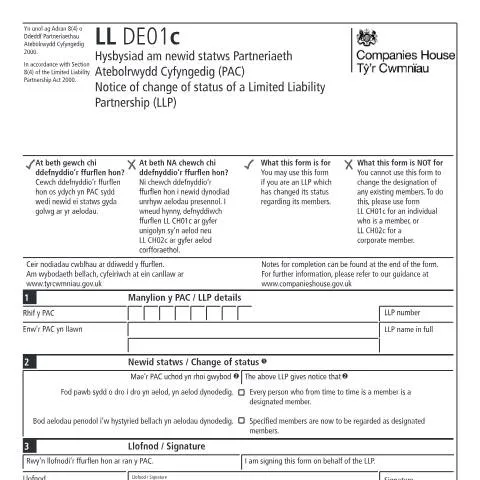
Navigating the Notice of Change of Status for Limited Liability Partnerships
For professionals managing Limited Liability Partnerships (LLPs) in the UK, understanding the intricacies of the Notice of Change of Status of a Limited Liability Partnership (LL DE01c) is essential. This document serves an important function in the administrative life of an LLP, marking changes in the status of its members and ensuring compliance with the Limited Liability Partnership Act 2000. Misinterpretation of its purpose can lead to significant complications. Therefore, a deep dive into its contents and practical application is vital for smooth operation and legal adherence.
The Importance of Status Changes in an LLP
Limited Liability Partnerships can experience various adjustments in their member statuses for numerous reasons, including changes in membership structure, the retirement of a partner, or a shift in a member's role within the LLP. The LL DE01c form is specifically designed to notify Companies House of such changes, ensuring that the public record reflects the current structure of the LLP.
- Understanding Member Designations: The LLP may have designated and non-designated members, each with specific responsibilities. Changes in designation can affect the operational dynamics and legal responsibilities within the partnership.
- Legal Implications: Failure to notify Companies House of a change in status may lead to legal repercussions, including potential penalties or complications in the LLP’s functioning.
- Public Transparency: Maintaining current records in the public domain ensures transparency, which is crucial for trust amongst stakeholders, clients, and regulatory bodies.
Decoding the Content of the LL DE01c Document
The LL DE01c form encompasses several critical sections that guide the LLP through the notification process. It is structured to facilitate ease of completion while ensuring that all necessary information is duly captured. Key elements include:
Contact Information
While providing contact details is optional, it is advisable to include them. This information allows Companies House to reach out in case of queries regarding the submitted form. However, it is important to note that this information will be visible to the public.
Section on Status Change
In this section, the LLP must indicate the nature of the status change. Options will typically involve designating current members as designated members or noting any changes in the roles of existing members. A clear understanding of what constitutes a 'status change' is crucial to completing this section correctly.
Signature Requirement
The document must be signed by a designated member of the LLP, which confirms that the information provided is accurate and reflective of the LLP's current circumstances. This signature underscores the importance of accountability and compliance within the partnership.
Common Misinterpretations to Avoid
Many applicants encounter difficulties while processing the LL DE01c, often due to misunderstandings surrounding its use. A few common areas of confusion include:
- Changing Member Designations: The LL DE01c cannot be used for changing the designation of current members. For such modifications, the LLP should use the LL CH01c for individual members or LL CH02c for corporate members.
- Completeness of Information: All fields marked mandatory must be completed. Incomplete forms may be returned, delaying the process.
- Matching Information: The name and number of the LLP must match those on the public register. Any discrepancies may result in rejection of the notice.
When and Why to Use LL DE01c
Knowing when to file an LL DE01c is just as critical as understanding its contents. Situations that necessitate its use include:
- Retirement of a Partner: If a partner retires, their status within the LLP may change, prompting the need to submit this notice.
- Addition of New Members: When new members join the LLP, their designations can alter the existing membership structure.
- Resignation of a Member: Any member's resignation affects the status of the remaining members and requires an update to the public record.
Interconnections with Other Forms and Documents
The process of notifying a change in status does not exist in isolation. It is essential for LLPs to recognize how the LL DE01c intersects with other documentation:
| Form | Purpose | When to Use |
|---|---|---|
| LL DE01c | Notify change of status of LLP members | When there is a change in member's designation |
| LL CH01c | Change designation of an individual member | When an existing member's status is altered |
| LL CH02c | Change designation of a corporate member | For modifications regarding corporate membership |
Limitations of the LL DE01c Document
While the LL DE01c serves an important purpose, it is not a catch-all solution for every administrative need within an LLP. It's critical to understand its limitations:
- Designation Changes Only: This form strictly addresses changes in the status of members and cannot be used for other types of notifications.
- Successor Designation Limitations: If specific members of the LLP need to be designated as designated members, this form is not a substitute for the forms intended for changing membership designations.
In the context of LLP administration, the choice to navigate through the administrative requirements can significantly impact the overall health and compliance of the partnership. By taking the necessary care to accurately utilize the LL DE01c, partnerships can avoid unnecessary pitfalls, ensuring that their legal standing remains intact.
Compliance and Best Practices for Filing
Adhering to best practices when submitting the LL DE01c is essential for maintaining compliance and ensuring effective administration:
- Double-Check Information: Always verify that the information completed on the form aligns with the details held by Companies House.
- Keep Records: Maintain a copy of the submitted notice and any other related documentation for your records. This will aid in future reference and clarity.
- Timeliness: Submit the notice promptly after any change occurs to avoid potential legal ramifications or penalties.
Summary of Key Considerations
The process of notifying a change in the status of an LLP member is a vital aspect of compliance and operational transparency. The LL DE01c form plays a pivotal role in this process. Understanding its nuances, correct usage, and interrelations with other forms can empower LLPs to navigate their regulatory obligations effectively.
By nurturing a culture of clarity and accountability, LLPs can better position themselves for success in an ever-evolving business landscape. Recognizing when to utilize the LL DE01c, ensuring accuracy in submission, and grasping its limitations are integral to effective partnership management.
Understanding Limited Liability Partnerships (LLPs) in the UK
Limited Liability Partnerships (LLPs) are popular business structures in the UK, combining elements of partnerships and companies. An LLP provides flexibility in management while offering limited liability protection to its members. This means that members are not personally liable for the debts of the business, which is a significant advantage compared to traditional partnerships. LLPs must be registered with Companies House and adhere to specific reporting and compliance requirements.
In terms of structure, an LLP is required to have at least two members, who can be individuals or corporate entities. Members of an LLP are responsible for running the business, and their details are publicly available on the Companies House register. Unlike limited companies, LLPs do not pay corporation tax. Instead, profits are distributed and taxed as personal income for the members, who must report their earnings through self-assessment tax returns.
Reasons for Changing Status and Required Documentation
There are various reasons why an LLP might need to change its status. This can include changes in membership, alterations in the business's purpose, or a decision to convert the LLP into a different type of entity, such as a limited company. Each of these changes requires careful consideration and proper documentation to ensure compliance with the legal framework governing LLPs.
When notifying Companies House of a change in status, the primary document involved is the LL DE01c form. This form not only notifies about the change but also requires detailed information about the new status and any implications it might have for the partnership. Along with the LL DE01c, additional documents may be required based on the nature of the change. For instance:
- If there is a change in members, a Statement of Membership Changes may need to accompany the LL DE01c.
- In cases where the LLP is converting to a different entity type, a detailed business resolution may be required to outline the rationale behind the change.
It's important to ensure that these forms are filled out accurately and submitted promptly to avoid any potential penalties or legal issues. Failure to inform Companies House of any changes can lead to complications regarding the LLP's legal standing and tax obligations.
Common Pitfalls When Preparing the LL DE01c Form
While filling out the LL DE01c form may seem straightforward, there are common pitfalls that can lead to delays or rejections. Understanding these pitfalls can make the process smoother and ensure that your notice of change is processed without issues.
One major pitfall is providing incorrect or incomplete information. Each section of the LL DE01c form must be filled out with precise details, including the names and addresses of the members involved in the change. Additionally, any supporting documents must be attached and meet the required standards set by Companies House. Missing signatures or an incorrect form version can also result in rejection, so always double-check that you are using the latest version of the form.
Another common issue arises from not adhering to deadlines. The Companies Act requires that any change in status should be reported within specific timeframes. For example, changes in members must be reported within 14 days. Missing these deadlines not only complicates compliance but can also attract penalties. It's advisable to keep a calendar reminder for significant changes and their associated deadlines to avoid this common mistake.
Lastly, many individuals underestimate the importance of seeking professional advice. Given that changes in status might have wider implications, consulting with a legal expert or an accountant can provide insights into potential tax consequences, changes in liability, and other crucial considerations. Professional advice can save you from costly mistakes and ensure compliance with all relevant laws.