Navigating the LL CH01c: A Vital Document in Limited Liability Partnerships
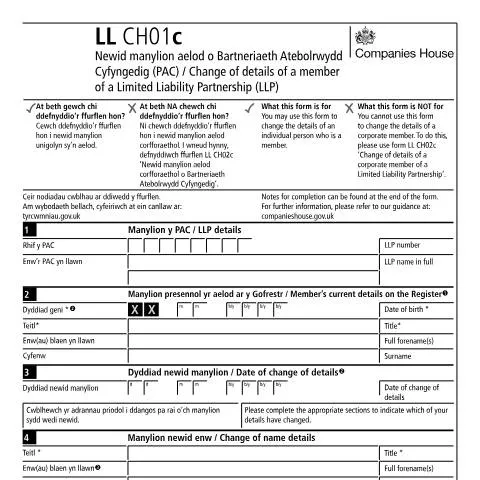
Establishing a Limited Liability Partnership (LLP) is a strategic move for many businesses in the UK, blending the flexibility of a partnership with the protection from personal liability akin to a corporation. However, with these benefits come responsibilities, particularly in maintaining accurate records with Companies House. One such essential document in this process is the "Change details of a member of a limited liability partnership" form, identified by the code LL CH01c. This form plays a pivotal role in updating the details of an individual member when changes occur, ensuring compliance with legal requirements and preventing potential disputes among members.
Understanding the Context: Why LL CH01c Matters
The Companies Act 2006 governs LLPs in the UK, providing a framework that ensures transparency and accountability. Within this legal structure, the LL CH01c form serves as the official channel through which LLPs communicate changes in their membership details to Companies House. Failing to submit this form appropriately can result in penalties, misunderstandings among members, or difficulties in managing the partnership effectively.
The importance of this document cannot be understated, as maintaining accurate details of members is crucial for legal recognition and operational clarity within the LLP. Any alterations, be it a change in name, service address, or status of a member, must be reported timely to reflect the current structure of the partnership accurately.
The Role of Companies House: Guardian of Record Integrity
Companies House acts as a central repository for company information, including that of LLPs. This governmental agency is responsible for registering and overseeing the compliance of companies and partnerships with the Companies Act. When an LLP submits the LL CH01c form, Companies House updates its records to reflect the new details.
A failure to submit this form can have several consequences, including:
- Potential fines imposed by Companies House for non-compliance.
- Difficulty in resolving disputes among members if records are outdated.
- Challenges in establishing the legitimacy of the LLP to external entities, such as banks or potential partners.
For LLPs, keeping their records with Companies House accurate and up-to-date is not merely a best practice; it is a legal requirement that safeguards the partnership’s integrity.
Making Changes: The Process of Filling Out the LL CH01c Form
Filling out the LL CH01c form may initially seem daunting, particularly for those unfamiliar with administrative processes. However, understanding the structure of the form can simplify the task significantly. Below is a breakdown of the key sections of the form and what is required in each:
Section Breakdown
Current Details: This section requires the existing information of the member being updated, such as their full name and current service address. Accurate information ensures that the right member's details are modified.
New Details: Here, you will provide the new name, service address, or usual residential address of the member. It is critical to double-check that all information is entered correctly to avoid delays.
Change of Status: If applicable, specify whether the member's status is changing. This could include changes like becoming a designated member or ceasing to be a member altogether.
Authentication: This part confirms that the form is being submitted on behalf of the LLP. A printed name suffices; a signature is not required.
Submission Information: Whether submitting online or via post, ensure that the form is submitted promptly. The deadline for notifying Companies House of a change should ideally be within 14 days of the change occurring.
Common Mistakes to Avoid
Filling out the form correctly is crucial. Here are common pitfalls:
- Inaccurate details: Make sure to double-check all entries, especially names and addresses.
- Missing information: All fields marked with an asterisk (*) are mandatory and must be filled out to avoid delays.
- Submitting without proper authorisation: Ensure the form is authenticated by a designated member before submission.
The Channels of Submission: Online or Paper? What You Need to Know
Once the LL CH01c form is completed, it's essential to consider how to submit it. Companies House offers multiple channels for submission, each with its advantages and disadvantages.
Online Submission
- Speed: Online submissions are processed more quickly than paper submissions.
- Accessibility: You can submit the form at any time without needing to visit a post office.
- Tracking: Online submissions can often be tracked for confirmation of receipt.
Paper Submission
- Documentation Access: Some users prefer physical copies for their records.
- Potential Delays: Paper submissions can take longer to process due to postal times.
- Cost Considerations: Depending on your office setup, there may be costs associated with printing and postage.
In deciding between the two, consider your business’s operational needs and whether speed or traditional methods suit your preferences.
What Happens After Submission? Tracking Your Changes
Upon submission of the LL CH01c form, the next phase involves waiting for Companies House to process the changes. This phase can be somewhat ambiguous, but it is essential to stay informed.
Processing Timeframes
Companies House typically processes submissions within a few working days if submitted correctly. However, during peak times or due to incomplete submissions, processing may take longer. Here are practical steps to track your submission:
- Confirmation Emails: If submitted online, watch for a confirmation email indicating that your form was received.
- Check the Public Record: Changes should eventually reflect in the LLP’s public record on the Companies House website.
- Contact Companies House: If changes do not appear after two weeks, reach out to Companies House for assistance.
Addressing Issues: What to Do in Case of Refusal or Errors
Sometimes, despite best efforts, the LL CH01c form may be rejected due to errors or other issues. Understanding how to respond in such cases is critical for maintaining compliance.
Common Reasons for Refusal
- Incomplete Information: All required fields must be filled out accurately.
- Incorrect Use of Form: Ensure the right form is used for individual members rather than corporate members.
- Lack of Authentication: The form must be authenticated by a designated member.
Steps to Rectify Issues
- Review the Rejection Notice: Identify the specific reason for the refusal.
- Correct the Errors: Amend the form based on the feedback received.
- Resubmit Promptly: Submit the corrected form as soon as possible to avoid delays in updating records.
The Bigger Picture: The Importance of Keeping Accurate Records
In the realm of business, especially within LLPs, keeping accurate records is more than just a legal obligation; it is a cornerstone of operational integrity. The LL CH01c form represents a small, but crucial, piece of the puzzle that supports the overall governance of an LLP.
Failure to keep these records accurate can have serious implications:
- Legal Repercussions: Non-compliance with Companies House requirements can lead to fines or penalties.
- Operational Challenges: Discrepancies in member details may hinder decision-making processes and affect day-to-day operations.
- Impact on Partnerships: Accurate records help in maintaining trust among members and prevent disputes that could arise from outdated information.
Furthermore, when the LLP seeks external funding or enters into partnerships, having accurate, up-to-date records will significantly enhance credibility and operational stability.
Conclusion: Proactive Management with the LL CH01c Form
The LL CH01c form is more than just a bureaucratic requirement; it is a vital tool for ensuring the smooth operation of a Limited Liability Partnership. Understanding its role, the process for making changes, and how to navigate potential issues is crucial for anyone involved in managing an LLP. Proactive management of this document, along with a commitment to maintaining accurate records, will undoubtedly contribute to the long-term success of the partnership. Always stay informed about your obligations and embrace the tools available to streamline administrative processes, thereby safeguarding your partnership’s integrity and operational effectiveness.
Understanding the Process of Updating Member Details
When it comes to changing the details of a member within a Limited Liability Partnership (LLP) in the UK, it's essential to grasp not only the procedure outlined by Companies House but also the implications of these changes. The process is primarily guided by the need for transparency and accurate record-keeping, fundamental principles stipulated under the Limited Liability Partnerships Act 2000.
The form LL CH01c is specifically used for notifying Companies House regarding changes to the particulars of LLP members. This could include alterations such as name changes, addresses, or even changes in the capacity in which they are acting (e.g., a member may transition from a managing role to a non-executive role). It’s crucial to ensure that these details are updated promptly to avoid any compliance issues that could affect the LLP's legal standing.
Before proceeding with the form, members must ensure that they have all relevant information ready. This includes obtaining consent from the member whose details are being changed and ensuring all particulars are accurate. For instance, if a member has changed their name due to marriage or another legal reason, supporting documents such as a marriage certificate or a deed poll may be required to validate this change.
Common Scenarios for Member Detail Changes
Changing member details can arise from various scenarios, and understanding these can help streamline the process and ensure compliance with legal requirements. Here are some common situations that necessitate the completion of the LL CH01c form:
- Name Changes: A member may change their legal name due to marriage or personal choice. It is essential to reflect this change in the LLP's records to maintain accurate and up-to-date information.
- Change of Address: If a member moves residence, the LLP must update their address on record. This can affect correspondence and legal notifications, making timely updates critical.
- Member Resignation or Addition: When a member leaves the partnership or a new member is introduced, the existing details must be amended to reflect the current structure of the LLP. This process can involve additional paperwork, particularly if a new member is stepping in.
- Change in Role: If a member’s role within the LLP changes, reflecting this on the LL CH01c form is crucial for proper governance and accountability.
Each scenario may involve different considerations, particularly around data protection issues governed by the Data Protection Act 2018 and UK GDPR. Always ensure that personal data is handled with care and only shared when necessary.
The Importance of Timeliness and Compliance
Timeliness in submitting the LL CH01c form cannot be overstated. According to Companies House regulations, any changes should be reported within 14 days of the change occurring. Failing to adhere to this timeline can result in penalties or legal complications for the LLP. Moreover, non-compliance may lead to difficulties in the LLP's operations or potential disputes among members.
It is advisable to regularly review member details within the LLP, perhaps at annual meetings or when strategic decisions are made, to prevent lapses in compliance. Maintaining a culture of transparency and accountability within the LLP will help foster good relationships among members and with external stakeholders.
Furthermore, if the LLP engages in business transactions or seeks financing, lenders and partners may require verification of accurate member information as part of their due diligence processes. Thus, timely updates not only safeguard the LLP’s legal standing but also enhance its credibility in the eyes of external parties.