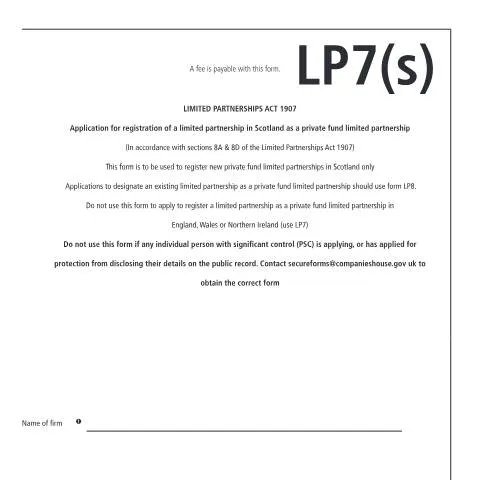
Understanding the LP7(s) Form: A Key Step for Private Fund Limited Partnerships in Scotland
When embarking on the journey of establishing a private fund limited partnership in Scotland, one cannot overlook the critical role of the LP7(s) form. This document serves as the gateway to official registration with Companies House, enabling the formation of a limited partnership that operates as a private fund. Understanding the nuances of the LP7(s) form is essential for any partnership seeking to navigate the regulatory landscape effectively.The Purpose of the LP7(s) Form
At its core, the LP7(s) form is designed specifically for registering new private fund limited partnerships in Scotland. The legal framework governing this registration is rooted in the Limited Partnerships Act 1907, which outlines the criteria and processes necessary for compliance. This form is distinct and should not be confused with others like the LP8 form, which is used for redesignating existing partnerships. For partnerships in England, Wales, or Northern Ireland, the LP7 form applies instead.Who Is Required to Submit the LP7(s) Form?
The submission of the LP7(s) form is typically the responsibility of the proposed partners in the private fund limited partnership. This includes individuals who will share significant control over the partnership. Therefore, it is crucial to ensure that the individuals named on the form are aware of their obligations and the implications of their inclusion.Step-by-Step Guide to Completing the LP7(s) Form
Completing the LP7(s) form requires careful attention to detail. Here’s a structured breakdown of the various sections you will encounter:- Name of the Firm: Clearly state the proposed name of the limited partnership. Ensure it complies with the naming rules stipulated by Companies House.
- Principal Place of Business: Indicate the intended principal place of business of the partnership. Note that it must be located in Scotland.
- Significant Control Statement: This section requires details about any individuals or legal entities with significant control. You must determine whether there is a registrable person or registrable relevant legal entity (RLE).
- Individual PSC Details: If there are individuals with significant control, their personal details must be filled in carefully. This includes their name, nationality, date of birth, and service address.
Filing the LP7(s) Form: Navigating Submission Mechanics
Once the form is meticulously completed, the next step is submission. This can be done digitally or via post. If you are submitting online, ensure that you have set up an account with Companies House and have the requisite fees ready, as a fee is payable upon submission. For postal submissions, address the completed form to Companies House, and consider sending it via recorded delivery for tracking purposes. After submission, it can take several weeks for Companies House to process your application; thus, patience is necessary.What Comes Next? Understanding the Processing Timeline
Upon submission of the LP7(s) form, the processing timeline can vary. However, it’s common to allow up to eight weeks for registration. During this period, Companies House will review the submitted information for completeness and compliance with regulatory standards. If your application is successful, you will receive a certificate of registration, which marks the official recognition of your private fund limited partnership. This document is imperative for carrying out business activities legally within the UK framework.Handling Potential Pitfalls: What If Problems Arise?
In some cases, an application might be rejected, or you may receive a request for further information. Understanding how to respond to these situations is vital:- Application Rejections: If your application is rejected due to missing information or inaccuracies, you can rectify the issues and resubmit. However, ensure that you address all feedback provided by Companies House in your resubmission.
- Requests for Additional Information: Should Companies House require further information, respond promptly and thoroughly to avoid further delays.
- Handling Errors: If you discover an error in your application after submission, contact Companies House immediately. There may be processes in place to correct these mistakes without resubmitting the whole application.
Special Considerations for Unique Situations
There are instances where the usual process may differ based on specific user profiles or circumstances. For example, foreign individuals looking to register as partners may face additional scrutiny regarding their eligibility and documentation.Foreign Applicants
Foreign applicants must provide proof of their right to reside and operate within the UK. This often involves submitting additional identification documents and possibly engaging legal assistance to navigate the process effectively.Minors or Individuals Lacking Capacity
If a minor or an individual without full capacity is involved in the partnership, supplementary legal frameworks apply. It’s advisable to consult with legal professionals to ensure compliance with both partnership and guardianship laws.Exploring the Implications of Registration
Once the LP7(s) form has been successfully processed and your partnership is registered, various legal rights and obligations come into play.- Legal Recognition: Your partnership gains legal recognition, allowing it to enter contracts, sue, and be sued.
- Liability Implications: Partners typically have limited liability, which means their personal assets are protected in case of financial difficulties faced by the partnership, provided that all statutory obligations have been adhered to.
- Compliance Requirements: Even after registration, partnerships must comply with ongoing filing obligations. For example, annual confirmation statements and accounts must be submitted to maintain good standing with Companies House.
Distinguishing the LP7(s) Form from Other Registration Documents
To avoid confusion, it’s essential to understand what sets the LP7(s) form apart from other related forms. The LP7(s) is specifically tailored for registering new private fund limited partnerships in Scotland, whereas:| Form | Purpose | Applicable Regions |
|---|---|---|
| LP7(s) | Register a new private fund limited partnership in Scotland | Scotland |
| LP8 | Designate an existing partnership as a private fund limited partnership | Scotland |
| LP7 | Register a new private fund limited partnership in England, Wales, or Northern Ireland | England, Wales, Northern Ireland |
Navigating the Private Fund Landscape: A Call to Action
Establishing a private fund limited partnership in Scotland is a significant undertaking that requires attention to detail and a thorough understanding of the regulatory landscape. The LP7(s) form serves as a pivotal component in this process, and getting it right can pave the way for successful business operations. If you’re ready to take the next step, ensure that you have all your documentation in order and seek professional guidance where necessary. Considering the complexities involved, engaging with professionals who specialize in partnership and corporate law can be invaluable. Remember, the path to a successful private fund limited partnership begins with a well-prepared LP7(s) application.Understanding the Structure of a Private Fund Limited Partnership
A Private Fund Limited Partnership (PFLP) is a specific type of partnership structure commonly used for investment purposes in Scotland. This structure allows for a flexible approach to fund management while limiting the liability of limited partners. Key characteristics of a PFLP include:
- Limited Partners: These partners contribute capital but have limited involvement in the day-to-day management of the partnership. Their liability is limited to the amount they have invested.
- General Partner: The general partner is responsible for managing the partnership and has unlimited liability. This role is typically held by a corporate entity to further limit personal liability.
- Regulatory Oversight: PFLPs are subject to regulations under the Limited Partnerships Act 1907 and the Financial Services and Markets Act 2000, especially if they engage with investment activities involving public investors.
The structure is particularly appealing for private equity and venture capital firms as it provides an efficient way to pool fund capital while maintaining a degree of privacy and operational flexibility.
Key Considerations Before Applying for Registration
Before embarking on the process of registering a PFLP in Scotland, it is essential to consider several factors that could impact the success of your application and the operations thereafter:
- Partnership Agreement: Drafting a comprehensive partnership agreement is crucial. This document should outline the rights and obligations of all partners, profit-sharing arrangements, and procedures for the dissolution of the partnership, should that become necessary.
- Tax Implications: Understanding the tax implications of operating as a PFLP is vital. While limited partners are not typically taxed on the partnership's income, they must report their share of income on their self-assessment tax returns. Consulting with a tax advisor familiar with partnership taxation is advisable to avoid unexpected liabilities.
- Investment Strategy: A clear investment strategy is not only beneficial for operational success but may also be required by regulatory authorities. Partners should collectively define their investment objectives and risk profiles to ensure alignment and transparency.
- Compliance Requirements: Ensure that the partnership complies with any necessary registration with HM Revenue and Customs (HMRC) for tax purposes and may also need to register with the Financial Conduct Authority (FCA) depending on the nature of the investment activities.
Taking these considerations into account will not only streamline the registration process but will also set a solid foundation for the partnership's future operations.
Navigating the Application Process: Step-by-Step
The application process for registering a PFLP is relatively straightforward, but it requires attention to detail and compliance with specific regulatory frameworks. Below is a step-by-step guide to assist applicants in navigating this process:
- Preparation of Required Documentation: Before applying, gather all necessary documents, including identification for all partners, the partnership agreement, and proof of address for the registered office.
- Complete the LP7(s) Form: Fill out the LP7(s) registration form accurately. This includes details on the name of the partnership, the nature of its business, and particulars of the general and limited partners. It is crucial to ensure that the name of the partnership is not already in use and complies with naming regulations.
- Submit the Application: Submit the completed LP7(s) form to the Companies House. The form can typically be submitted online, but paper submissions are also accepted. Be sure to keep a copy for your records.
- Await Confirmation: After submission, Companies House will process your application. This usually takes about 14 days. If there are any issues or missing information, they will contact you for clarification.
- Receive Registration and Comply with Ongoing Requirements: Once registered, you will receive a certificate of registration. After registration, be aware of ongoing compliance requirements, including annual filings and updates to your partnership agreement if any changes occur.
By following these steps carefully, you can ensure that your application for a Private Fund Limited Partnership in Scotland is efficient and compliant with all necessary regulations.