A Step-by-Step Guide to Registering a Limited Liability Partnership (LL IN01c)
Establishing a Limited Liability Partnership (LLP) in the UK can be an exciting yet daunting task. Understanding the intricacies of the LL IN01c form is crucial for a smooth registration process. This guide aims to empower potential LLPs with comprehensive insights into the Lloyd's Register LLP registration process, ensuring that all parties are well-prepared to navigate through requirements and obligations.
Understanding the Role of LL IN01c in LLP Formation
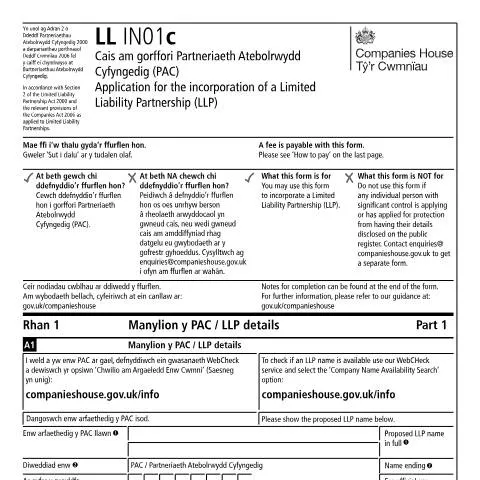
The LL IN01c form is pivotal as it serves as the official application for incorporating a Limited Liability Partnership. By submitting this document, individuals signal their intent to establish an LLP, which combines elements of both partnerships and corporations. The LLP allows for flexibility in management while providing limited liability protection to its members. Thus, the LL IN01c is not merely a formality but a critical step in formalising a business structure that offers significant financial protections.
Key Features of LLPs
- Limited Liability: Members are not personally liable for the debts of the LLP.
- Flexible Management: LLPs can be managed flexibly without strict corporate governance rules.
- Tax Transparency: Profits are typically taxed as personal income, avoiding double taxation.
Who Needs to Fill Out the LL IN01c?
The LL IN01c form is primarily for individuals or entities looking to establish an LLP. This includes:
- Existing businesses transitioning to an LLP structure.
- Professionals, such as solicitors or accountants, joining forces.
- Entrepreneurs seeking a flexible business structure with limited liability protections.
However, it is essential to note that if any individual with significant control over the LLP has applied for protection from having their details disclosed, they cannot use this form. In such cases, a different document must be secured from Companies House.
Navigating the Completion of the LL IN01c Form
Completing the LL IN01c form requires meticulous attention to detail. Here are vital sections and tips for filling out the form:
Section Breakdown
- Part 1: LLP Details
- Proposed name of the LLP: Ensure it complies with naming regulations. Use the Companies House WebCHeck service to verify name availability.
- Registered office address: This must be a physical address in the UK where official correspondence can be sent.
- Designated member information: At least two designated members are required. Ensure they are correctly identified.
- Part 2: Members’ Designation
- List all members and specify whether they are designated members. Remember that at least two designated members are mandatory.
Each entry must be clear and accurate; mistakes can lead to delays or complications in the registration process.
Document Preparation: What You Need Before Submission
Before submitting the LL IN01c, ensure you have all necessary documentation and information:
- Proposed Name Confirmation: A copy of the approval if the proposed name contains sensitive or restricted words.
- Email Address: Provide an appropriate registered email address that will receive official correspondence.
- Payment Information: Be prepared to pay the registration fee, as outlined at the end of the LL IN01c form.
Submitting the LL IN01c Form: Channels and Payment
The LL IN01c form can be submitted via various methods:
- Online Submission: The most straightforward way, ensuring faster processing times.
- By Post: If submitting via mail, make sure to send it to the correct Companies House address as indicated on their website.
Payment of Registration Fee
Payment must be made alongside the submission of the LL IN01c form. Ensure you follow the guidelines outlined regarding methods of payment, which may include options such as bank transfers or cheque payments. Always check the latest fee structures, as these can be subject to change.
What Happens After Submission?
Once the LL IN01c form is submitted, the Companies House will begin processing your application. Within a few weeks, you should expect to receive:
- Confirmation of Incorporation: Once approved, your LLP will be officially registered.
- Certificate of Incorporation: This document will serve as proof of your LLP’s legal status.
It’s essential to keep this documentation secure, as it may be requested for various business dealings or formalities in the future.
Understanding the Implications Post-Registration
After successfully registering your LLP, several obligations arise:
- Annual Compliance: LLPs are required to file an annual confirmation statement and maintain accurate records.
- Tax Responsibilities: Members will need to address tax matters, including registering for self-assessment with HMRC.
- Adherence to the LLP Agreement: Establish and maintain an LLP agreement that dictates the relationships and responsibilities among members.
Comparing LL IN01c with Similar Forms
| Form | Purpose | Key Distinctions |
|---|---|---|
| LL IN01c | Application for LLP incorporation | Specifically for forming LLPs; requires detailed member information. |
| Form A (for partnership) | Register a traditional partnership | Does not offer limited liability protection; simpler structure. |
| CIC36 (for Community Interest Companies) | Application for CIC incorporation | Focuses on social enterprise; different compliance requirements. |
Understanding these distinctions is vital for ensuring you are using the correct form for your business needs.
Final Considerations Before You Submit
Before finalising your LL IN01c submission, revisit each section. Confirm that:
- All proposed members are aware of their roles and responsibilities.
- The proposed name complies with all regulatory requirements.
- All necessary documents and approvals are gathered.
This careful attention to detail will bolster your chances of a successful application. Remember, an LLP can offer significant benefits, including limited liability and operational flexibility, making it a popular choice among professionals looking to collaborate under a formal business structure.
The journey of establishing a Limited Liability Partnership may seem daunting, but with the right information and careful preparation, it can be a straightforward process that opens new doors for your business ventures.
Understanding the Advantages of a Limited Liability Partnership
When considering the formation of a business entity in the UK, many entrepreneurs are drawn to the concept of a Limited Liability Partnership (LLP) due to its unique advantages. One of the primary benefits of an LLP is the combination of flexibility and protection it offers. Unlike traditional partnerships, where partners can be personally liable for debts incurred by the business, an LLP provides limited liability to its partners. This means that personal assets are generally safe from business creditors, which is a significant consideration for many business owners.
Additionally, LLPs offer a flexible management structure. Members of an LLP can decide how they want to manage the partnership, which can lead to more effective decision-making processes. This is particularly beneficial for professional service firms, such as solicitors or accountants, where the expertise of members can be leveraged without the rigidity often associated with other business structures. The LLP structure also allows for members to share profits without being burdened by the corporate taxation that applies to limited companies.
Moreover, an LLP must have at least two designated members who are responsible for filing and compliance with Companies House, ensuring that the partnership adheres to legal and regulatory obligations. This dual responsibility fosters a sense of accountability and can enhance operational efficiency.
Key Documentation and Compliance Requirements for LLPs
Establishing a Limited Liability Partnership requires careful attention to the documentation and compliance requirements mandated by UK law. The first critical document is the LLP agreement, which outlines the rights and responsibilities of each member, profit-sharing arrangements, and procedures for admitting new members or handling disputes. While there is no legal requirement to draft an LLP agreement, having one is strongly recommended as it provides clarity and helps prevent misunderstandings among members.
Once the LLP is formed, it is essential to register with Companies House using the LL IN01c form. This form collects crucial information about the LLP, including its name, registered office address, details of the designated members, and the nature of the business. It is important to ensure that all information provided is accurate, as any discrepancies can lead to delays in registration or non-compliance issues.
In addition to the initial registration, LLPs must file an annual confirmation statement (CS01) with Companies House, confirming that the information held is up to date. Furthermore, LLPs are required to prepare annual accounts in accordance with the requirements set forth by the Companies Act 2006. These accounts must be filed with Companies House and should provide a true and fair view of the financial position of the LLP.
Lastly, LLPs must also be aware of their tax obligations. While LLPs themselves are not taxed as separate entities, profits are taxed as personal income for each member. Each member must register for Self Assessment with HM Revenue and Customs (HMRC) and file their own tax returns annually. Understanding these obligations is crucial to maintaining compliance and avoiding potential penalties.
Potential Challenges and Considerations for LLP Formation
While there are numerous benefits to forming a Limited Liability Partnership, there are also potential challenges and considerations that prospective members should evaluate carefully. One of the primary challenges is the complexity of establishing the LLP agreement. Crafting a comprehensive agreement that covers all aspects of the partnership can be daunting, especially for those without legal expertise. It is often advisable to consult with a legal professional to ensure that the agreement addresses all necessary areas, including profit distribution, decision-making processes, and procedures for resolving disputes.
Another challenge is the responsibility of designated members. Designated members of an LLP have specific legal obligations, including the requirement to file annual accounts and confirmation statements. This may place a significant administrative burden on the members, particularly in smaller LLPs where members are often responsible for multiple roles. Members should be prepared to allocate time and resources to fulfill these compliance obligations effectively.
Furthermore, while LLPs provide limited liability protections, these protections can be compromised under certain circumstances. For instance, if a member is found to have acted negligently or unlawfully, personal liability may be imposed. It is essential for members to adhere to regulatory requirements and operate within the bounds of the law to maintain these protections.
Lastly, it is important to consider that the flexibility of an LLP structure may lead to complications in management and decision-making. Without a clear structure or defined roles, disagreements among members can arise, leading to potential fractures within the partnership. Establishing clear communication channels and defined roles from the outset can help mitigate these risks.