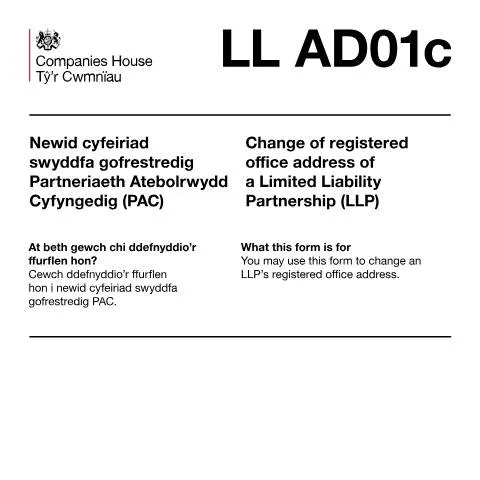
The Essential Role of Form LL AD01c in Business Operations
In the dynamic landscape of business, the registered office address of a Limited Liability Partnership (LLP) serves as a cornerstone for communication, compliance, and legal fortitude. When changes occur, filling out Form LL AD01c is imperative. This document is not merely a bureaucratic formality; it holds significant implications for legal notifications, official correspondence, and the overall operational integrity of the LLP. Understanding its importance can profoundly affect how an LLP navigates the business environment.
Triggering the Need for Change
Several circumstances may prompt an LLP to change its registered office address. These include:
- Relocation: Whether due to expansion, downsizing, or a strategic change in location, moving offices is common in business.
- Compliance with Regulations: Certain regulations may require businesses to operate from specific areas, necessitating a change.
- Financial Considerations: Cost factors, such as rent or property taxes, might influence the decision to relocate.
By proactively managing the registered office address through Form LL AD01c, LLPs ensure they remain compliant and accessible to stakeholders.
The Blueprint for Completing Form LL AD01c
Completing Form LL AD01c requires careful attention to detail. Each section of the form is crafted to collect crucial information regarding the LLP and its new registered office address.
Key Sections to Focus On:
- LLP Details: This includes the full name and registration number of the LLP, which must be accurate to avoid processing delays.
- New Registered Office Address: The new address must be appropriate, conforming to the criteria outlined in the Limited Liability Partnerships Act 2000. It needs to be somewhere that ensures effective communication, so documents sent there can reach the LLP in a timely manner.
- Confirmation of Address Appropriateness: The form requires an affirmation that the new address satisfies legal requirements.
- Authentication: The form must be authenticated by a designated member, ensuring that it bears the authority of the LLP.
Navigating the Submission Pathways
Once the form is completed, submitting it correctly is paramount to effectuate the change. The submission pathways available include:
- Online Submission: The fastest method through the Companies House website, where businesses can quickly upload their completed form.
- Postal Submission: Sending the hard copy of the form via registered post ensures delivery but may take longer for processing.
- In-person Submission: While not commonly practiced for LLPs, it is possible to deliver the form to Companies House directly.
Companies House processes these forms, and confirmation of the change will be sent once the submission is registered. It is crucial to maintain a record of the submission method used for future reference.
Understanding the Aftermath: What Happens Next?
Upon registration of the new address, there are important considerations for the LLP:
- Legal Notification: The change is effective only after the Registrar acknowledges the new address, which will then be published in the public register.
- Grace Period: There exists a 14-day period following the registration during which documents can still be served at the old address. This allows for a transition without disruption.
- Update Records: Organizations such as HMRC and other relevant authorities must also be notified of the new address to ensure compliance across various operational aspects.
Who Should Initiate the Change?
While the authority to fill out and submit Form LL AD01c lies with designated members of the LLP, the circumstances leading to this decision might originate from various stakeholders:
- Management Teams: Recognising the need for a change or relocation due to operational requirements.
- Accountants and Legal Advisors: These professionals often recommend address changes to remain compliant with various regulations.
- Members: Individual members of the LLP may also propose this change, especially if they have particular concerns regarding the current office's appropriateness.
The Implications of Non-Compliance
Failure to submit Form LL AD01c timely can lead to significant repercussions for the LLP:
- Legal Risks: Not having an updated registered office can lead to missed legal correspondences, potentially jeopardising the company’s standing.
- Financial Penalties: Companies House may impose penalties for non-compliance with updated address regulations.
- Operational Disruptions: Missing important communications could impair business operations, affecting everything from tax obligations to contractual agreements.
Comparing Form LL AD01c with Other Related Forms
Form LL AD01c is specific to Limited Liability Partnerships. However, it is often confused with other similar forms, such as the AD01c, which is intended for private and public limited companies. Understanding the distinctions is crucial:
| Form | Type of Company | Usage |
|---|---|---|
| LL AD01c | Limited Liability Partnership (LLP) | Change of registered office address for LLPs only. |
| AD01c | Private/Public Limited Company | Change of registered office address for limited companies. |
This differentiation ensures that businesses utilize the correct forms and follow through the necessary regulations without confusion.
Final Thoughts on Form LL AD01c
Filing Form LL AD01c is a vital task that should not be overlooked as it has far-reaching implications for the operational integrity of a Limited Liability Partnership. By understanding the nuances of this form, the stakeholders involved can ensure compliance with Companies House regulations, facilitate effective communication, and mitigate any legal risks associated with non-compliance. The process may seem daunting, but diligence in its completion and submission leads to smoother operations and a sound legal standing.
Understanding the Importance of a Registered Office Address
A registered office address is a legal requirement for all limited liability partnerships (LLPs) in the UK. It serves as the official address for correspondence with Companies House and other governmental bodies. Importantly, this address is publicly accessible, meaning that anyone can find out where your LLP is registered. It is critical for maintaining compliance with the Companies Act 2006, which governs how LLPs operate in the UK.
Choosing the right registered office address can have significant implications for your business. It should ideally be a physical address where you can receive official documents and any notices from HMRC or Companies House. If an LLP changes its registered office to an address where it cannot receive official correspondence, it may result in missed deadlines for filings which can lead to penalties, fines, or even the dissolution of the partnership.
Moreover, the location of your registered office can also impact your business's tax obligations and liability. Different regions in the UK may have varying regulatory frameworks or local taxes that could affect your LLP's operations.
Steps to Update Your Registered Office Address
To change your registered office address, you must complete a specific form known as the LL AD01c. The process is relatively straightforward, yet it involves several important steps that you must follow to ensure compliance.
- Complete the LL AD01c Form: The first step is to fill out the LL AD01c form. This form requires you to provide the new registered office address and some basic details about your LLP. Ensure that the new address is complete, including the postcode, and that it is a physical location where correspondence can be sent.
- Notify Your Partners: It is advisable to inform all partners of the upcoming change. This can help prevent any confusion regarding correspondence that may be sent to the former registered office address.
- Submit the Form: Once you’ve completed the form, submit it to Companies House. You can do this online through their WebFiling service or by post. Keep in mind that if you choose to submit by post, processing times may vary.
- Update Your Records: After the form is processed, be sure to update your internal records and websites. This includes any business cards, letterheads, and digital platforms to reflect the new address.
- Monitor for Confirmation: Following the submission, monitor for confirmation from Companies House. They will send you a registration confirmation once the change has been processed. This is important documentation for your records.
Pitfalls to Avoid when Changing Your Registered Office Address
While changing a registered office address may seem straightforward, there are common pitfalls that LLPs can encounter during the process. Awareness of these can save time and help avoid unnecessary complications.
- Neglecting to Inform Stakeholders: Failing to inform stakeholders such as clients, suppliers, and partners about the address change can lead to miscommunication and logistical issues. Make a comprehensive list of all parties that need to be notified and ensure that communication is clear and timely.
- Choosing an Invalid Address: Make sure that the new registered office address is a valid, physical location. Using a PO Box or an address where you cannot receive official documents can create problems, including missing important correspondence.
- Missing the Submission Deadline: If you are in the middle of other filings or financial statements, make sure that changing your registered office does not conflict with upcoming deadlines. However, it is essential to submit the LL AD01c form as soon as possible to avoid penalties associated with late updates.
- Ignoring Data Protection Laws: Ensure that any change related to your registered office address complies with the Data Protection Act 2018 and UK GDPR. For example, be cautious about how you update and share your new address in public forums or online.
- Overlooking the Tax Implications: The location of your LLP's registered office can influence tax obligations. Make sure to consult with a tax advisor to understand any implications that arise from changing your registered office, particularly if you are moving to a different jurisdiction within the UK.
Legal Consequences of Not Maintaining an Updated Registered Office Address
Failing to update your registered office address can lead to serious legal and operational consequences for your limited liability partnership. The registered office serves not only as a mailing address but also as the formal location for service of legal documents.
If your LLP is not at its registered office address, you could face the following consequences:
- Legal Notices and Correspondence: Important legal notices may be sent to the registered office. If the address is not updated, you may not receive critical documents, which can affect your legal standing.
- Penalties from Companies House: Companies House has the authority to impose penalties for not maintaining accurate records. If your LLP is found to have an incorrect registered office address, you may be subject to fines or late filing fees.
- Increased Risk of Dissolution: Failure to comply with statutory requirements, including maintaining an updated registered office address, may lead to your LLP being struck off the register. This means your business would cease to exist legally.
- Impact on Credibility: If clients or partners discover that you have not maintained an accurate registered office address, it could undermine your credibility and trustworthiness in the eyes of stakeholders.
When to Consider More Than Just an Address Change
In some situations, changing your registered office address may prompt you to consider additional changes within your LLP. Here are some scenarios where it might be wise to reassess other aspects of your business:
- Expansion into New Markets: If you are changing your registered office due to an expansion into a new geographical area, consider how this move aligns with your overall business strategy. Are there new local regulations or market conditions you should be aware of?
- Change in Business Structure: A move to a new address might coincide with a change in the LLP's structure or operational strategy. Evaluate whether new partners should be brought on board or if existing roles should be reassessed.
- Updating Internal Policies: When you change your registered office address, it may be a good opportunity to review and update internal policies, such as data protection measures or communication protocols, particularly in light of the Data Protection Act 2018.
- Rebranding Efforts: If you’ve decided to change your registered office as part of a broader rebranding effort, ensure that all aspects of your business reflect this change. This includes marketing materials, social media profiles, and other public-facing content.
Conclusion
Understanding the implications and processes involved in changing the registered office address of your limited liability partnership is essential for compliance and effective business operations. By following the steps outlined above, being aware of common pitfalls, and considering broader implications, you can ensure that your LLP remains in good standing and continues to thrive.