Navigating the REC1(Scot): A Comprehensive Guide to the Receiver’s Report for Scottish Companies
Understanding the intricacies of the Notice of Receiver's Report (REC1(Scot)) is fundamental for stakeholders involved in a Scottish company under financial distress. This document, sanctioned under the Insolvency Act 1986, serves as an official communication regarding the appointment of a receiver and provides essential insights into the company's financial status during insolvency proceedings.
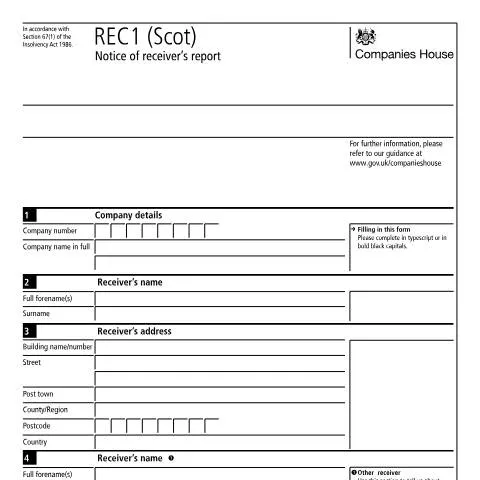
Key Components of the REC1(Scot) Document
At first glance, the REC1(Scot) may seem straightforward, but it encompasses a wealth of information crucial for a comprehensive understanding of the situation at hand. Below are the integral sections of the document:
- Company Details: This section includes the full name of the company and its registered number, ensuring the identification of the correct entity.
- Receiver’s Information: Here, the receiver's name and address are specified. The clarity provided in this section facilitates communication between parties.
- Attachments: The document may require attachments such as the receiver's report and a statement of affairs, which detail the company’s assets and liabilities.
- Signature and Date: The receiver must sign and date the document, marking its official submission to Companies House.
It is essential to fill out this document clearly and accurately, using typescript or bold black capitals. Any discrepancies could lead to delays or complications in processing.
How to Leverage the REC1(Scot) in Practice
For directors, creditors, and other stakeholders, the REC1(Scot) serves not only as a notification of the appointment of a receiver but also a crucial step in navigating the complexities of insolvency.
Step-by-Step Process
- Identify the Need for a Receiver: Determine whether the company is in a financial position that necessitates the appointment of a receiver.
- Complete the Document: Ensure that all relevant sections are filled out accurately. This includes confirming that the company name and number match the public register held by Companies House.
- Compile Required Attachments: Gather additional documents such as the receiver’s report and the statement of affairs. These documents provide a comprehensive overview of the company’s financial situation.
- Submit to Companies House: The completed REC1(Scot) should be sent to the appropriate address, ideally the one specified for expediency in processing.
Each step taken with diligence leads to a smoother transition through the insolvency process, aiding in the effective management of the company's remaining assets.
Common Misinterpretations and Pitfalls
While navigating the REC1(Scot), there are frequent misinterpretations that can hinder progress. Here are some common pitfalls to avoid:
1. Misidentifying the Company
It is critical to ensure that the company name and registration number on the REC1(Scot) align perfectly with the details on the public register. Failure to do so can result in the form being returned or rejected.
2. Incomplete Attachments
Inadequate documentation can stifle the process. Missing a receiver’s report or statement of affairs might lead to delays, so double-check that all required documents accompany the submission.
3. Lack of Clarity in Receiver’s Details
Providing insufficient details about the receiver can hinder communication. Ensure the name and address are clearly stated to avoid complications in future correspondences.
The Interrelation of the REC1(Scot) with Other Insolvency Documents
The REC1(Scot) does not exist in isolation; it is part of a broader framework of insolvency documentation. Understanding how it interrelates with other forms can enhance the efficacy of the insolvency process.
Key Related Documents
- Statement of Affairs: A vital document accompanying the REC1(Scot), it provides a candid overview of assets and liabilities, assisting the receiver in their duties.
- Receiver’s Report: This detailed report outlines the financial state of the company and the rationale behind the receiver's actions.
- Final Accounts: After the receiver has fulfilled their role, final accounts will be required to finalize the insolvency proceedings.
Understanding these interconnected documents is pivotal for all stakeholders involved, from the company directors to creditors, ensuring a more transparent and efficient insolvency process.
Who Needs to Pay Attention to the REC1(Scot)?
Numerous parties may find the REC1(Scot) indispensable, especially in moments of financial uncertainty. Here’s a breakdown of who should prioritize its consideration:
1. Company Directors
Directors must be acutely aware of their responsibilities when a receiver is appointed. Understanding the implications of the REC1(Scot) can help them navigate their positions and obligations during insolvency proceedings.
2. Creditors
Creditors should keep a close eye on the information contained within the REC1(Scot). It provides insights into how the company’s assets may be managed and how their interests may be affected during the insolvency process.
3. Potential Investors
Investors looking at distressed assets must analyze the REC1(Scot). It offers a snapshot of the company's financial health and the actions being taken to preserve or liquidate assets.
Scope and Limitations of the REC1(Scot)
While the REC1(Scot) offers important insights into a company's financial status, it is crucial to grasp its limitations. This will help stakeholders manage their expectations effectively.
Coverage of the Document
The REC1(Scot) serves to notify relevant parties about the appointment of a receiver and provides a framework for understanding the company’s financial profile. However, it does not encompass all aspects of the insolvency process.
Limitations
- Snapshot in Time: The information contained in the REC1(Scot) reflects a specific moment and may not provide a comprehensive overview of ongoing developments.
- Does Not Involve Detailed Financial Analysis: While it includes essential information, the REC1(Scot) does not delve into intricate financial details or make predictions about future performance.
- Not a Complete Legal Document: The REC1(Scot) should not be seen as a substitute for legal advice or comprehensive financial reporting.
Recognizing these limitations is vital for stakeholders, as it helps in formulating a balanced understanding of the company's financial situation during insolvency proceedings.
The Role of Companies House in the REC1(Scot) Submission
Companies House plays a pivotal role in the reception and processing of the REC1(Scot). Understanding their function can streamline the submission process.
Reception Procedures
Upon submission, Companies House ensures that the documents are reviewed for compliance with the legal requirements outlined in the Insolvency Act 1986. This includes checking for:
- Accuracy of company details
- Completeness of accompanying documents
- Proper signatures and dates
Public Record Maintenance
All information submitted in the REC1(Scot) becomes a matter of public record. This transparency fosters trust and accountability within the corporate sector, allowing interested parties to access crucial details about a company undergoing receivership.
Final Thoughts on the Importance of the REC1(Scot)
The REC1(Scot) serves as a crucial touchpoint in the insolvency process for Scottish companies. It provides a formal notification of the appointment of a receiver, guiding stakeholders through the nuances of corporate distress. By understanding its components, interrelations, and limitations, stakeholders can better navigate the challenging waters of insolvency.
Stakeholders are encouraged to approach the REC1(Scot) as a vital document guiding their strategies during insolvency, ensuring they remain informed and proactive in managing their interests in the face of financial adversity.