Understanding the Notice of Vacation of Office (AM17)
When an administrator ceases to be qualified to act, it is crucial for companies to officially notify Companies House through the Notice of Vacation of Office (AM17). This document serves as a formal declaration that an administrator's authority has ended, which is essential for maintaining accurate records and ensuring compliance with UK company law.
The Importance of Timely Notification
Failing to submit the AM17 notice promptly can have significant repercussions. Companies may face issues with regulatory compliance, potential fines, or complications in governance and administration. This document not only signifies the cessation of an administrator's role but also signals to other stakeholders, including creditors and shareholders, that the company is adhering to legal requirements.
Key Elements of the AM17 Document
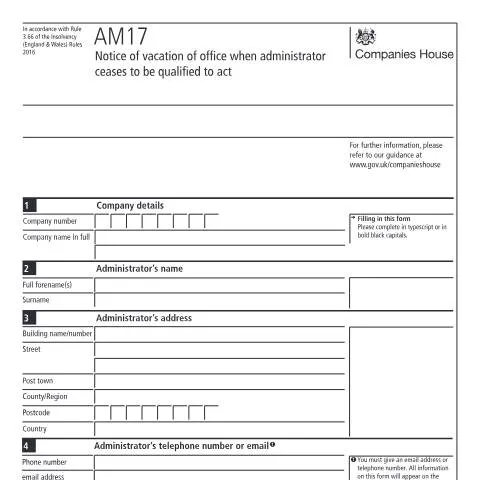
The AM17 provides a structured format for submitting key details regarding the administrator and the cessation of their role. Below are the essential components to understand:
- Company Details: This includes the full name of the company and its registration number.
- Administrator's Information: The name, address, and contact details of the administrator must be clearly stated.
- Date of Cessation: It is imperative to provide the specific date on which the administrator ceased to be qualified to act.
- Signature: The document must be signed and dated by the administrator to validate the notice.
Specifics of Information Required
To ensure a seamless submission, the following details are required:
- Company Name: Ensure that the company name matches the records in the public register.
- Company Number: This unique identifier is vital for accurate processing.
- Administrator's Full Name: Include both first name and surname.
- Contact Information: A phone number or email address must be provided for potential follow-up.
- Signature and Date: These confirm the authenticity of the document and the date it was signed.
The Process of Submission
Submitting the AM17 notice is straightforward but requires careful attention to detail to avoid unnecessary delays. Here’s a step-by-step guide:
- Gather Necessary Information: Ensure you have all required details before starting the form.
- Complete the AM17: Use typescript or bold black capitals to fill out the document, as per the guidelines.
- Review for Accuracy: Double-check that all information aligns with the public register.
- Sign and Date: The administrator must sign and date the document to verify its authenticity.
- Submit the Form: Send the completed notice to Companies House. For expediency, it is recommended to use the address specified in the guidelines:
The Registrar of Companies, Companies House, Crown Way, Cardiff, Wales, CF14 3UZ.
Understanding the Role of the Administrator
The administrator plays a pivotal role in managing a company during financial distress. Their qualifications can change due to various factors such as personal circumstances or regulatory requirements. The AM17 is a formal acknowledgment of this change and serves to maintain the integrity of the company’s administrative structure.
Identifying When to Use the AM17
The AM17 is specifically designed for instances where an administrator is no longer qualified to act. Here are some common scenarios that necessitate this notification:
- Ineligibility Due to Regulatory Changes: An administrator may lose their qualification due to changes in laws or regulations pertinent to their role.
- Professional Misconduct: If an administrator has violated ethical standards or regulations, they may need to vacate their office.
- Personal Circumstances: Illness, retirement, or resignation could result in the cessation of an administrator's duties.
Limits and Considerations
While the AM17 is an essential document, it is important to be aware of its limitations:
- This notice does not replace the need for other forms if the administrator is dismissed or resigns under specific conditions. Additional documentation may be required depending on the situation.
- The information provided in the AM17 becomes part of the public record, thus ensuring transparency but also necessitating careful handling of sensitive data.
- Companies must be aware that failure to file the AM17 can result in legal repercussions, including potential fines or penalties.
Interacting with Related Documentation
The AM17 does not exist in isolation; it is part of a broader administrative framework. Understanding its relationship with other documents is critical for effective governance:
- Insolvency Documents: Other forms may need to be submitted to Companies House if insolvency proceedings are initiated or if the administrator's role changes significantly.
- Company Resolution: In some cases, a formal resolution from company directors may be required to accompany the AM17 when notifying Companies House.
- Annual Returns and Other Filings: Companies must ensure that their annual returns and other regulatory submissions are kept up to date, reflecting the changes outlined in the AM17.
Practical Tips for Managing Notifications
To effectively manage the process surrounding the AM17, consider the following practical tips:
- Maintain Accurate Records: Keep all records related to the administrator’s qualifications and actions, as these may be needed for future reference.
- Stay Informed on Regulatory Changes: Regularly review any changes in insolvency and company laws that might affect the administrator's qualifications and responsibilities.
- Establish Clear Communication: Ensure all relevant stakeholders, including shareholders and creditors, are informed of changes in administration and know how these changes impact the company’s operations.
Conclusion on the AM17 Notice
Utilizing the Notice of Vacation of Office (AM17) effectively is fundamental for a company’s legal and administrative integrity. By understanding the document’s purpose, key elements, and submission process, companies can ensure they are compliant with legal requirements and maintain transparency in their operations. This notice is not merely a bureaucratic formality; it plays a crucial role in safeguarding the company's governance and aligning it with statutory obligations.
Understanding the Process for Giving Notice of Vacation of Office (AM17)
In the UK, the process for giving notice of vacation of office is encapsulated in the form AM17, which is utilized by directors of a company to notify Companies House when a director resigns or vacates their office. Understanding the intricacies of this form is crucial for maintaining compliance with the Companies Act 2006. When filing an AM17, it is essential to ensure that the information provided is accurate and complete to avoid any potential issues with your company's registration status.
Key Elements of Form AM17
The AM17 form requires several key pieces of information to be filled out correctly. This includes the full name of the director, their unique director identification number (if applicable), and the date on which they vacated office. Additionally, it is important to provide the reason for the vacation if it is not a straightforward resignation. For example, if the director is retiring, becomes disqualified, or passes away, this must be clearly stated.
Moreover, you must ensure that the form is signed and dated appropriately. The submission of the AM17 can be done online or via postal service, and each method has its own set of guidelines regarding the submission process. If filing online, ensure you have access to the web portal set up by Companies House, and for postal submissions, use the correct address specified on their website to avoid delays.
Common Pitfalls When Filing AM17
While the process for filing an AM17 may seem straightforward, there are common pitfalls that individuals often encounter. One of the primary mistakes is failing to submit the form in a timely manner. According to the Companies Act, directors are required to notify Companies House within 14 days of vacating their office, or there could be penalties. Therefore, it's advisable to prepare the form ahead of time and keep track of deadlines.
Incomplete Information
Another frequent issue arises from providing incomplete or incorrect information on the form. This can lead to further complications, such as the rejection of the submission or the company being marked as non-compliant with Companies House regulations. It’s recommended to double-check all entries against the company’s official records before submission. Furthermore, maintaining clear communication with the departing director to ensure all necessary details are captured can help mitigate errors.
Implications of Non-compliance
Failure to submit the AM17 form can have various implications for both the company and the individual. For the company, non-compliance may lead to fines or penalties, and it can affect the company's standing with Companies House. For the director, it may result in personal liability for any decisions made after their resignation if they are not officially recorded as having vacated their position. Therefore, ensuring compliance through proper and timely submission of the AM17 is crucial.
Post-Filing Considerations After Submitting AM17
Once you have submitted the AM17 form, it's important to keep certain considerations in mind. First, you should confirm that Companies House has processed the form correctly. You can do this by checking the public register on the Companies House website. This register should reflect the changes made, showing that the individual is no longer a director of the company.
Updating Company Records
Simultaneously, it's important to update the company’s internal records to reflect the recent changes. This includes updating the register of directors and ensuring that all company documentation is consistent with the new director information. Additionally, if the departed director held any specific roles or responsibilities, these should be reassigned to existing staff or new appointments to ensure smooth operations.
Communication with Stakeholders
Furthermore, consider communicating this change to stakeholders, such as employees, clients, and suppliers. This gesture not only fosters transparency but also helps in maintaining trust within business relationships. Stakeholders should be informed about the transition and any potential impacts it may have on the workflow or decision-making processes within the company.
Potential for Corporate Governance Issues
Finally, examine if this change in directorship may trigger any corporate governance issues. For instance, ensure that the remaining directors understand their responsibilities can alter with the departure of a key individual, especially if they were involved in critical decision-making processes. Proactively addressing such scenarios can maintain the stability and governance integrity of the business.