Understanding the Notice of a Resolution Filed with Companies House
In the United Kingdom, companies are required to adhere to the provisions set out in the Companies Act 2006. One of the key procedural requirements involves formally documenting and notifying resolutions passed by the company's members or directors. This notice of a resolution serves as an official record, ensuring transparency and legal compliance. This guide explains what a notice of a resolution is, its purpose, and how it is structured according to the official standards set by Companies House.
What Is a Notice of a Resolution?
A notice of a resolution is a formal document that records a decision made by a company's members or directors during a meeting or through written resolution. It confirms that a specific resolution—whether special, written, or ordinary—has been agreed upon and passed. Such resolutions can relate to various corporate decisions, including amendments to the articles of association, appointment or removal of directors, or approval of financial arrangements.
This document is essential for maintaining accurate corporate records and for fulfilling statutory obligations under UK company law. It ensures that all relevant parties are officially informed of significant corporate decisions, which may impact the company's governance or operations.
Scope and Application of the Notice
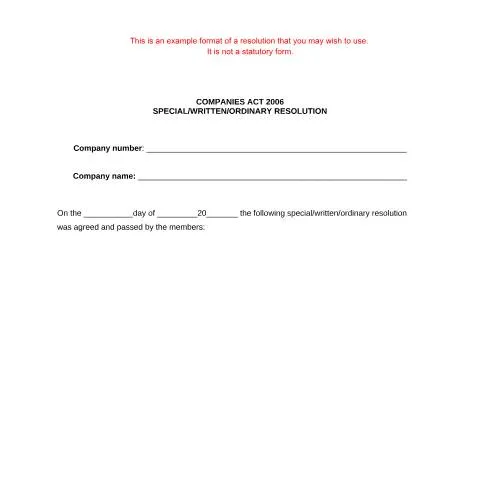
The notice of a resolution applies to all companies registered with Companies House, regardless of size or sector. It is particularly relevant when a resolution is passed outside of a formal meeting (a written resolution) or during a formal meeting that requires a specific statutory procedure. The notice must include essential details such as the company number, company name, the date of passing the resolution, and the nature of the resolution itself.
Key Elements of the Notice
The official notice of a resolution typically includes the following components:
- Company number: The unique registration number assigned by Companies House.
- Company name: The registered name of the company.
- Date of resolution: The specific day, month, and year when the resolution was agreed and passed.
- Type of resolution: Whether it is a special resolution, written resolution, or an ordinary resolution.
- Resolution details: The content of the resolution, including any specific actions or decisions approved by the members or directors.
- Signature: The document must be signed by an authorized person to confirm its authenticity.
Legal Framework and Filing Requirements
The process of giving notice of a resolution is governed by the Companies Act 2006. Once a resolution is passed, it must be documented and filed with Companies House, usually through the submission of relevant forms or resolutions, such as the SH01 (return of allotment of shares) or other applicable filings depending on the resolution type.
It is important to note that certain resolutions, especially special resolutions, require a higher threshold of approval (typically 75% of members' votes). The notice must accurately reflect these decisions and be filed within the statutory deadlines to ensure legal validity.
Implications for Company Operations and Compliance
Properly giving notice of a resolution ensures that the company's decision-making process is transparent and legally binding. It provides a clear record that can be referenced in future legal or administrative proceedings. Failure to notify or file resolutions correctly may result in penalties or legal challenges, emphasizing the importance of adhering to the prescribed procedures.
Furthermore, maintaining up-to-date records of resolutions is crucial for corporate governance, particularly in matters such as changes to the company's constitution, director appointments, or share transactions. These records are also vital during audits or when preparing annual confirmation statements submitted to Companies House.
Conclusion
The notice of a resolution is a fundamental aspect of corporate compliance in the UK. It ensures that significant decisions made by company members or directors are formally recorded and legally recognized. By understanding the required components, legal obligations, and filing procedures, companies can uphold good governance standards and avoid potential legal or administrative issues.