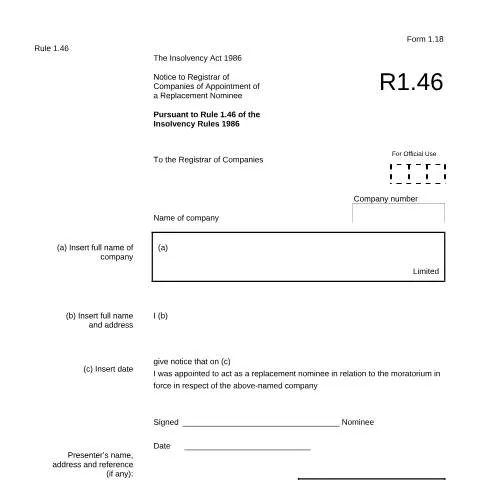
Understanding the Role of a Replacement Nominee in Company Administration
When a company enters insolvency proceedings, the role of a nominee becomes crucial. This is particularly true in the context of a moratorium, which temporarily halts creditor actions against the company. The Notice of Appointment of a Replacement Nominee (Form 1.18) serves to formally inform the Registrar of Companies about any changes in the individuals acting as nominees. This is particularly relevant under the provisions outlined in the Insolvency Act 1986, as well as the Insolvency Rules 1986.
Connecting the Dots: How Form 1.18 Interacts with Other Insolvency Documents
Form 1.18 is not an isolated document; rather, it interlinks with various other forms and processes in the insolvency framework. It is essential to understand its relevance in the broader context of company administration.
- Insolvency Practitioner Appointment: Before issuing Form 1.18, a qualified insolvency practitioner is usually appointed to oversee the moratorium. This practitioner will play a key role in advising the company and managing its financial affairs.
- Other Related Forms: Depending on the circumstances, companies may need to submit other notices, including the Notice of Intention to Appoint Administrators or Notice of Appointment of Administrators.
- Timeline Management: Proper timing in issuing Form 1.18 is critical, as it must align with the moratorium period and other related insolvency actions, ensuring that all stakeholders are kept informed.
Key Concepts: Deciphering the Legal Terminology
As with any legal documentation, understanding specific terms is vital for effective navigation of the process. Here are some key terms associated with Form 1.18:
- Replacement Nominee: This is the individual or entity appointed to take over the responsibilities of the original nominee, thereby ensuring continuity in the moratorium management.
- Moratorium: A temporary pause on the enforcement of creditors' claims, designed to give a company breathing space to restructure without the pressure of immediate financial obligations.
- Registrar of Companies: The government body responsible for maintaining the official register of companies and ensuring compliance with statutory obligations.
The Procedure: Step-by-Step Guide to Issuing Form 1.18
Issuing Form 1.18 involves a series of concrete steps. Understanding these steps can help streamline the process and mitigate potential issues:
- Confirm Eligibility: Ensure that the company is eligible for a moratorium and that a replacement nominee is necessary.
- Gather Required Information: Collect all necessary details, including the company number, the name of the company, and the full details of the replacement nominee.
- Complete the Form: Fill in Form 1.18 accurately, ensuring all fields are completed, particularly the nominee's name and address, as well as the date of appointment.
- Sign and Date: The replacement nominee must sign and date the form to validate the appointment officially.
- Submission to Companies House: Send the completed form to Companies House promptly, ensuring adherence to any deadlines related to the moratorium.
Common Misinterpretations of the Replacement Nominee Process
Misunderstandings can lead to complications in the insolvency process. Here are some common misinterpretations related to Form 1.18:
- Assuming Automatic Transfer of Duties: Just because a replacement nominee is appointed does not mean that they automatically inherit all responsibilities without due process. A formal appointment is required.
- Misunderstanding the Moratorium Duration: The moratorium period is strictly defined, and the appointment of a replacement nominee should occur within the context of this timeframe.
- Overlooking the Importance of Notification: Failure to notify the Registrar of Companies could lead to legal complications, including challenges from creditors.
The Importance of Timeliness in Submitting Form 1.18
Timeliness is a critical factor when it comes to insolvency proceedings. Here are the implications of delays in submitting Form 1.18:
- Legal Implications: Not notifying the Registrar of Companies in a timely manner can result in legal consequences for both the company and the appointed nominee.
- Increased Creditor Scrutiny: Delays could signal potential mismanagement to creditors, further complicating the company's financial situation.
- Impact on Stakeholder Confidence: Timely submissions instill confidence among stakeholders, assuring them that the company is managing its affairs responsibly.
Practical Insights: Real-World Application of Form 1.18
Understanding how to apply Form 1.18 practically can significantly aid companies in managing their insolvency scenarios.
- Case Studies: Reviewing case studies where companies effectively managed their moratoriums by properly appointing replacement nominees can provide valuable lessons.
- Consultation with Experts: Engaging with legal and financial advisors familiar with insolvency can pave the way for smoother transitions and appointments.
- Follow-Up Actions: After submitting Form 1.18, companies should remain proactive in monitoring their financial health and be prepared for subsequent steps in the insolvency process.
The Role of Regulatory Bodies in Overseeing the Process
Regulatory bodies like Companies House and the Insolvency Service play essential roles in the appointment of replacement nominees. Their oversight ensures that all actions taken during insolvency proceedings adhere to established legal standards.
- Guidance and Support: These bodies provide guidance on the obligations of all parties involved, ensuring transparency and accountability in the process.
- Enforcement of Regulations: They also enforce regulations and investigate any discrepancies that might arise during the nomination process.
- Public Records: Maintaining accurate public records is crucial for maintaining trust in the insolvency process, allowing creditors and stakeholders to access important company information.
Final Considerations: Navigating the Complexity of Company Insolvency
The process of appointing a replacement nominee through Form 1.18 is a vital aspect of managing company insolvency. It calls for careful navigation of legal expectations, timelines, and stakeholder communications.
Proactive Engagement: Companies are encouraged to engage with all stakeholders transparently, fostering trust during what can be a turbulent time.
By adhering to legal requirements and maintaining open lines of communication, companies can better manage their insolvency situations, paving the way for potential recovery and restructuring in the future.
Understanding the Role of a Nominee in UK Business Structures
In the UK, the concept of a nominee is particularly significant in various business structures. A nominee can serve multiple roles, such as a nominee director, shareholder, or trustee. Understanding these roles is crucial for compliance and effective governance.
A nominee director, for instance, is appointed to fulfill legal obligations on behalf of the actual director, often to maintain confidentiality or due to specific regulatory requirements. It’s essential to remember that even though a nominee director may be the public face of the company, the real decision-making power and responsibility typically lie with the underlying director(s) who retain control.
Moreover, the use of nominee shareholders allows for privacy in ownership, especially in situations where ownership details must be kept confidential for legal, financial, or strategic reasons. However, this arrangement must be structured correctly to comply with the Companies Act 2006 and must ensure that the true owners are accurately disclosed to relevant authorities when required.
When appointing a nominee in any capacity, businesses should pay careful attention to the legal implications and responsibilities that accompany the role. Failing to adhere to these could result in significant legal and financial repercussions, including potential sanctions from regulatory bodies such as Companies House.
Steps to Ensure Compliance When Appointing a Replacement Nominee
Replacing a nominee involves a series of steps to ensure that you remain compliant with UK regulations. The process, while straightforward, demands meticulous attention to detail to avoid any breaches of legal obligations. Below are the recommended steps to follow:
- Review the Existing Agreement: Before proceeding with the replacement, review any existing nominee agreements to understand the terms and conditions that apply. This ensures that the removal of the current nominee and the appointment of a replacement adhere to the stipulated guidelines.
- Notify the Current Nominee: Officially inform the existing nominee of the intention to appoint a replacement. This should be done in writing and may involve providing a notice period as outlined in the agreement. This step is crucial to avoid any misunderstandings or disputes.
- Select a Suitable Replacement: Choose a replacement nominee who meets all the qualifications and requirements as per the Companies Act. This includes verifying their identity and ensuring they are capable of fulfilling the responsibilities associated with the nominee role.
- Draft and Sign New Agreements: Upon selecting a new nominee, draft a new nominee agreement that outlines the roles and responsibilities clearly. Both parties must sign the agreement, and it should be dated to establish a clear timeline of the appointment.
- Update Company Records: Update the company's statutory registers to reflect the change in nominees. This includes the register of directors and the register of members, if applicable.
- Notify Companies House: Following the internal updates, notify Companies House of the change within the required timeframe. This typically involves filing the relevant forms, such as the AP01 (Appointment of Director) if the nominee is a director, or updating the register of shareholders if they are a shareholder.
- Communicate with Relevant Stakeholders: Finally, inform relevant stakeholders, including banks and clients, about the change in nomination, particularly if the nominee holds significant authority within the company.
By following these steps, companies can ensure a smooth transition when appointing a replacement nominee, thereby maintaining compliance with all relevant legislation and safeguarding their operational integrity.
Pitfalls to Avoid When Appointing a Replacement Nominee
While the process of appointing a replacement nominee may seem straightforward, there are several pitfalls that businesses should avoid to prevent legal complications and operational disruptions. Here are some common issues to be aware of:
- Neglecting Legal Documentation: One of the most significant mistakes is failing to maintain accurate and up-to-date legal documentation regarding the appointment and termination of nominees. This oversight can lead to disputes and regulatory penalties.
- Inadequate Communication: Not notifying the existing nominee properly or failing to communicate effectively with stakeholders can create confusion and mistrust. Ensure that all parties are informed and agree to the changes being made.
- Non-Compliance with Regulatory Requirements: Each nominee role has specific regulatory obligations. Inadvertently overlooking these can result in penalties from bodies like HMRC or Companies House, not to mention potential damage to your company’s reputation.
- Choosing an Inappropriate Nominee: Selecting a nominee without thoroughly vetting their qualifications and reliability can lead to issues down the line. Ensure that the new nominee is capable of fulfilling their role responsibly and is aware of the associated risks.
- Ignoring Tax Implications: The appointment of a new nominee can have tax implications, particularly regarding income tax and National Insurance contributions. Consult with a tax professional to ensure that these aspects are accounted for before finalizing the appointment.
By being aware of these pitfalls and taking proactive measures, businesses can navigate the complexities of appointing a replacement nominee with greater ease and confidence.