Understanding the Significance of the LL AD02c Form in Business Operations
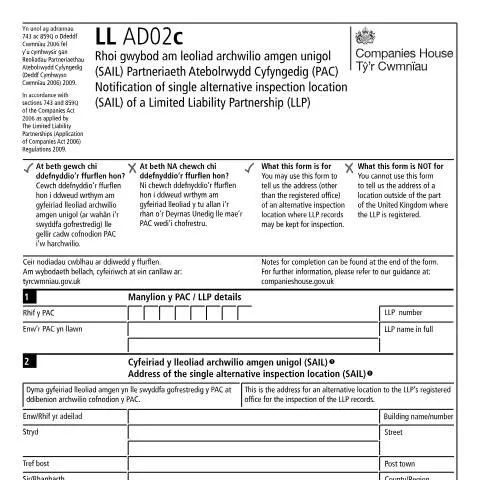
When managing a Limited Liability Partnership (LLP) in the UK, the need for compliance with regulatory requirements is paramount. One critical aspect of this compliance is related to the location where business records are maintained. The LL AD02c form serves as a notification to the Companies House regarding the establishment of a Single Alternative Inspection Location (SAIL). This document plays a pivotal role in ensuring that an LLP’s records are accessible for inspection, while also adhering to legal frameworks stipulated in the Companies Act 2006.
The Role of the LL AD02c Form in Record Management
The LL AD02c form is not merely a bureaucratic requirement; it is integral to how an LLP manages its records. By notifying Companies House of a SAIL, LLPs can specify an alternative address where their records can be inspected, aside from the registered office. This flexibility can be crucial for LLPs that operate in multiple locations or have specific record-keeping arrangements.
Here’s a breakdown of why the LL AD02c form is essential:
- Regulatory Compliance: Filing the LL AD02c ensures that the LLP adheres to sections 743 and 859Q of the Companies Act 2006.
- Accessibility: The form allows for the records to be inspected at a location that may be more convenient for stakeholders or regulators.
- Operational Efficiency: It enhances operational efficiency by allowing LLPs to manage their records in a way that aligns with their business practices.
Who is Required to File the LL AD02c?
Understanding who must file the LL AD02c form is crucial for compliance. The responsibility typically lies with:
- Designated Members: These individuals are tasked with ensuring the LLP’s compliance with statutory obligations.
- Members of the LLP: Any member can file the form if they are involved in the management of the business.
- Administrators or Receivers: In situations where an LLP is undergoing administration or receivership, these roles may also have the authority to submit the form.
It is important to note that the individual filing the form must fill in their name and authenticate the form without requiring a signature.
A Step-by-Step Guide to Completing the LL AD02c Form
Completing the LL AD02c form requires attention to detail to ensure compliance and facilitate a smooth submission process. Here’s a chronological breakdown of how to fill out this form:
- Gather Necessary Information: Before starting, ensure you have the LLP name, number, and the new address for the SAIL ready.
- Access the Form: Obtain the LL AD02c form from the Companies House website or through official channels.
- Complete the Form: Use uppercase letters or typescript to fill out all mandatory fields. It’s crucial to double-check that the LLP name and number align with the public register.
- Address Specifics: Ensure the new inspection address is within the part of the UK where the LLP is registered.
- Authenticate: The designated member or authorized individual must authenticate the form by entering their printed name.
- Submit the Form: Send the completed form to Companies House, ensuring it’s done in a timely manner to avoid any compliance issues.
Key Considerations for First-Time Filers
For those new to the process, it's essential to consider the following:
- Understanding SAIL: The SAIL must be located within the jurisdiction of the LLP's registration. It cannot be outside of the UK.
- Pre-Submission Check: Companies House may return forms that are incomplete or filled out incorrectly. Utilize the checklist included in the form to avoid common pitfalls.
- Previous Records: If records have previously been filed at a different location, ensure you submit the LL AD03c form to notify of the change of records to the new SAIL.
Consequences of Failing to File the Form
The implications of neglecting to file the LL AD02c form can be significant for an LLP. Non-compliance can lead to:
- Legal Penalties: The LLP may face penalties under the Companies Act, which could adversely affect its reputation.
- Inaccessibility of Records: Failure to notify the SAIL can result in issues with stakeholders accessing necessary records during inspections.
- Administrative Burden: Rectifying the situation may require additional time and resources that could have been avoided with timely filing.
Monitoring and Following Up on Your Submission
After submitting the LL AD02c form, it’s prudent to monitor the status of your submission:
- Confirmation Receipt: Ensure you receive a confirmation from Companies House indicating that your form has been processed.
- Record Keeping: Maintain a copy of the submitted form along with any correspondence related to the submission for your records.
- Follow-Up Queries: If you do not receive confirmation within a reasonable timeframe, don’t hesitate to contact Companies House for updates.
Distinguishing LL AD02c from Other Relevant Forms
While the LL AD02c is vital, it’s crucial to recognize how it differs from other forms related to LLP operations:
| Form Code | What it Addresses | Unique Aspects |
|---|---|---|
| LL AD02c | Notification of a single alternative inspection location | Specifies a new inspection address within the UK for record access |
| LL AD03c | Change of location of records | Addresses where the actual records are kept, not just inspection locations |
| LL AD01 | Change of LLP details | Handles updates like changes in members or registered office |
Real-World Implications and Best Practices for LLPs
For LLPs, the proper handling of the LL AD02c form can influence operational transparency and stakeholder trust. Here are some best practices:
- Regular Reviews: Conduct regular reviews of the registered information to ensure it remains current and accurate.
- Utilise Compliance Checklists: Implement a compliance checklist that includes deadlines for submitting forms like the LL AD02c to avoid last-minute rushes.
- Internal Training: Ensure that all designated members and key stakeholders are trained on the importance of these forms and the processes surrounding them.
Investing time in understanding and managing the LL AD02c form can lead to enhanced operational effectiveness and legal adherence within your LLP.
Understanding the Role of Alternative Inspection Locations
When it comes to filing a Single Alternative Inspection Location (SAIL) for a limited liability partnership (LLP) via form LL AD02c, it's crucial to understand what an alternative inspection location means within the context of UK law. Under the provisions of the Companies Act 2006, a SAIL can be defined as an address where specific statutory books of the LLP can be inspected by the public, instead of the registered office. This can be beneficial for various reasons, including privacy and practicality.
The SAIL address must be a physical location, and it cannot be a PO Box without a physical address on file. When deciding on a suitable SAIL, consider factors such as accessibility for stakeholders, compliance with local regulations, and the associated costs of maintaining a separate inspection site. This is especially important for an LLP, as the nature of its business may require privacy concerning sensitive information.
Notably, the choice of a SAIL does not absolve an LLP from the requirement to maintain proper statutory records at its registered office. Instead, it serves to provide an alternative venue where certain documents, like the register of members or the register of directors, can be accessed. This flexibility allows LLPs to operate more effectively, particularly for those that might face geographical constraints or want to keep their operational base confidential from competitors and the general public.
The Process of Filing Form LL AD02c: A Step-by-Step Guide
Filing the LL AD02c form is a straightforward process, but attention to detail is paramount to ensure compliance with HMRC regulations and to avoid penalties. Here’s a step-by-step guide to help you through the filing process.
- Gather Required Information: Before starting the application, collect all necessary information, including your LLP's registered name, registration number, and the details of the proposed SAIL. Ensure that this address is a physical location and not just a mailing address.
- Complete the LL AD02c Form: The form requires specific details about your LLP and the SAIL address you wish to register. Fill out all sections accurately, ensuring that there are no discrepancies that could lead to the rejection of your application. You can find the form on the official government website.
- Submission: Once you have completed the form, submit it to Companies House. This can be done online or via post. If you choose to submit by post, consider using a method that provides tracking to confirm delivery.
- Await Confirmation: After submission, Companies House will process your application. Typically, you will receive confirmation of the change within a few days if there are no issues. Keep this confirmation for your records, as it is proof that the change has been officially registered.
- Update Your Records: Once your SAIL has been approved, ensure that all statutory books and records reflect the new inspection location. This is vital for compliance with the Companies Act. Failure to maintain accurate records could lead to potential legal issues or fines.
Common Misconceptions About SAIL and Form LL AD02c
There are several misconceptions surrounding the SAIL process and the filing of LL AD02c that could lead to confusion among LLP members. Addressing these common myths can clarify the responsibilities and requirements involved.
Myth 1: SAIL can be any type of address. A common misunderstanding is that any address can serve as a SAIL. However, the address must be a physical location where documents can be inspected. It cannot simply be a virtual office or PO Box.
Myth 2: Filing LL AD02c is optional. Some LLPs mistakenly believe that designating a SAIL is not a requirement. However, if you wish to have an alternative inspection location, it is essential to file form LL AD02c to make this official. Not filing may restrict public access to your statutory books and could lead to compliance issues.
Myth 3: Changes to SAIL are straightforward and can be made any time. While it is possible to change your SAIL, it is not as simple as just updating your address. Each change requires a new submission of form LL AD02c, and it is important to ensure that the proposed new address meets the necessary criteria for a SAIL.
Being aware of these misconceptions can save LLP members from potential pitfalls and ensure they maintain compliance with the necessary regulations. Always consult the latest guidance from Companies House or seek professional advice to navigate these requirements effectively.