Understanding the Significance of Form LL AD02 in Limited Liability Partnerships
When managing a Limited Liability Partnership (LLP), compliance with statutory requirements is crucial for maintaining transparency and operational integrity. One of the key forms that LLPs must understand and correctly file is Form LL AD02, which serves a specific purpose in recording the Single Alternative Inspection Location (SAIL) for the partnership's records. This form is not merely bureaucratic paperwork; it plays a significant role in how and where an LLP's records can be inspected, impacting both stakeholders and the broader public.
Decoding the Regulatory Framework Surrounding Form LL AD02
The necessity for Form LL AD02 stems from the Companies Act 2006, particularly under sections 743 and 859Q, as applied by the Limited Liability Partnerships (Application of Companies Act 2006) Regulations 2009. These legislative frameworks aim to enhance the transparency of LLPs by ensuring that critical documents are accessible for inspection. By allowing an alternative inspection location, the law acknowledges the practicalities of where business operations may occur, while also safeguarding public interest.
The Evolution of LLP Transparency Regulations
The establishment of SAIL was aimed at addressing the needs of LLPs that operate across multiple locations. Before these regulations, an LLP was required to maintain its records at the registered office, which could present challenges and limitations. The introduction of the SAIL concept reflects a shift towards more flexible, accessible business practices, while still adhering to rigorous standards of accountability.
Key Dates and Deadlines: Navigating the LLP Lifecycle
Understanding when to file Form LL AD02 is essential for compliance. The submission of this form is triggered primarily when an LLP wishes to officially designate a non-registered office address for record inspection. There are no specific deadlines universally applicable; however, it must be filed promptly when a decision is made to change the inspection location.
What Happens After Filing?
- Submission Confirmation: Once the form is submitted, Companies House processes the document, and it is recorded in the public register.
- Public Record: Information provided on the form, including the SAIL address, becomes accessible to the public. This transparency is a fundamental aspect of LLP governance.
- Potential Queries: Companies House may contact the presenting member if there are issues with the form, such as incomplete fields or discrepancies.
The Practical Steps in Completing Form LL AD02
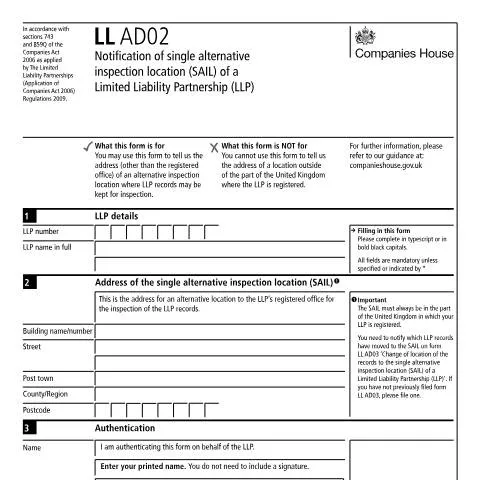
Filling out Form LL AD02 requires attention to detail. Each field is mandatory unless otherwise indicated, and errors can lead to delays or rejections. Here’s a breakdown of the key sections you will encounter:
Essential Information Required
- LLP Name: Must be the exact name as registered with Companies House.
- LLP Number: This unique identifier is crucial for verification.
- SAIL Address: A complete address must be provided, which must reside within the same part of the UK where the LLP is registered.
- Authentication: The form must be authenticated by a designated member or other authorized personnel within the LLP.
Inaccuracies in these fields can result in the entire form being returned, causing delays in your compliance efforts.
Preparing for Submission: What to Keep in Mind
Before sending the form to Companies House, it is wise to conduct a thorough checklist to ensure all requirements are met. This proactive approach can save time and avoid unnecessary complications.
Checklist for a Successful Submission
- The LLP name and number must match the public register.
- The address of the SAIL must be correct and within the prescribed area.
- Ensure the form is authenticated by the correct individuals.
- Consider including contact information for quicker resolution of potential queries, although this is not mandatory.
Implications of Choosing a Single Alternative Inspection Location
The choice of a SAIL is a crucial decision that impacts record accessibility. LLPs must carefully consider the location to facilitate ease of access for partners, members, and any stakeholders who may need to inspect the documents. It’s essential to choose a site that is not only convenient but also secure for sensitive information.
Factors to Consider When Selecting a SAIL
- Accessibility: Choose a location that is easy to reach for those who may need to access the records.
- Security: Ensure that the chosen site has appropriate measures to protect sensitive records.
- Compliance: Verify that the location does not contravene any regulatory requirements.
Engaging with Companies House: The Follow-Up Process
After submitting Form LL AD02, it is vital to stay engaged with Companies House. The processing of forms can vary in duration, and keeping track of your submission can help in addressing any complications that may arise.
Monitoring Your Submission
- Check the public register after a few weeks to confirm that your SAIL has been officially recorded.
- Maintain communication with Companies House through their provided contact details should questions arise regarding your submission.
Documentation management is a key responsibility for LLPs, and understanding the process related to Form LL AD02 is integral to maintaining operational success.
Handling Changes in LLP Structure: When to Revisit Form LL AD02
Business operations are dynamic and may necessitate changes in the SAIL, prompting a need for revisiting Form LL AD02. Understanding when to update this information is crucial for continuous compliance.
Common Circumstances Requiring an Update
- Change of Address: If the SAIL address changes, a new Form LL AD02 must be submitted.
- Change of Record Location: As mentioned earlier, you must file Form LL AD03 to notify Companies House of any records moving to the SAIL.
- Change in Designated Members: Should there be personnel changes, ensuring the correct members authenticate any revised documents is necessary.
Final Thoughts on Compliance Through Form LL AD02
The journey of filing Form LL AD02 does not end with submission; it is an ongoing responsibility that requires vigilance and adaptability as the LLP evolves. The implications of filing this form correctly cascade into how well the LLP can operate within the space of transparency and accountability.
Staying abreast of the requirements not only aids compliance but enhances the credibility of the LLP in the eyes of stakeholders and the public. By actively managing their documentation and ensuring that records are accessible at the SAIL, LLPs can fortify their operational frameworks and uphold their commitments to good governance.
Understanding the Limited Liability Partnership (LLP) Structure
The Limited Liability Partnership (LLP) is a popular business structure in the UK, accommodating a wide range of professional services. It combines the flexibility of a partnership with the benefits of limited liability. This means that the personal assets of the partners are protected in case the business incurs debts or is sued. Understanding the structure of an LLP is crucial for anyone contemplating filing an application for a Single Alternative Inspection Location (SAIL).
Key characteristics of an LLP include:
- Registered with Companies House: LLPs must register with Companies House, providing details about the members and the registered office address.
- Legal Entity: An LLP is considered a distinct legal entity, which means it can own property, enter into contracts, and be sued in its own name.
- Tax Transparency: Unlike traditional companies, an LLP is not taxed at the entity level. Instead, profits are passed through to members who are then taxed individually on their share, simplifying the tax process for many.
To file an application for a SAIL, LLPs must ensure they comply with the requirements set out by Companies House. This includes maintaining a registered office address in the UK where official documents can be served, as well as the proper filing of annual accounts and confirmation statements. Understanding these obligations can help mitigate potential legal issues and ensure compliance.
The Importance of Maintaining Accurate Records for SAIL
When filing for a Single Alternative Inspection Location (SAIL), it’s imperative to maintain accurate and up-to-date records. The SAIL address is where certain statutory records must be kept and made available for inspection by the public. This can include the register of members, register of directors, and financial records, among others.
Key records that an LLP must maintain include:
- Register of Members: This must include current members, their shareholdings, and any changes in membership.
- Minutes of Meetings: Keeping minutes of all meetings held by members is essential. These records should capture decisions made, discussions held, and any resolutions passed.
- Financial Statements: Annual accounts must be prepared in accordance with the UK Generally Accepted Accounting Principles (UK GAAP) and submitted to Companies House.
The implications of failing to maintain accurate records can be severe, including penalties, fines, or even legal action against the LLP and its members. Therefore, adopting a robust record-keeping system is not just recommended, it’s essential for compliance.
Consequences of Non-Compliance with SAIL Filing Requirements
Non-compliance with the filing requirements for a Single Alternative Inspection Location (SAIL) can lead to significant repercussions for a Limited Liability Partnership (LLP). Understanding these consequences is vital for ensuring that your LLP maintains its good standing and avoids potential legal troubles.
Some of the main consequences include:
- Fines and Penalties: Failure to comply with statutory obligations can result in fines from Companies House. These can accumulate quickly if not addressed promptly.
- Legal Disputes: Non-compliance can lead to disputes among members or between the LLP and its creditors. This might complicate the legal standing of the business and affect operations.
- Loss of Limited Liability Protection: One of the primary benefits of an LLP is the limited liability protection afforded to its members. Non-compliance can jeopardize this protection, exposing personal assets to potential claims.
Moreover, the LLP’s reputation may suffer as a result of public access to non-compliance records. Such a reputation can impact relationships with clients, suppliers, and potential investors. Therefore, it is crucial to prioritize compliance with SAIL filing requirements as part of your LLP's overall governance strategy.