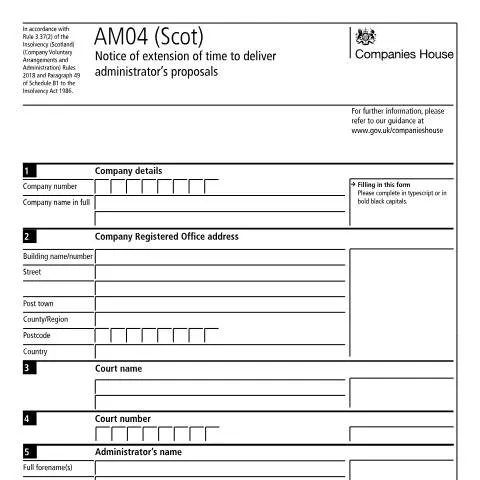
Diving into the AM04 (Scot) Notice: Understanding Its Importance in Scottish Company Administration
The AM04 (Scot) notice, officially titled 'Give notice of the extension of time to deliver administrator’s proposals for a Scottish company', plays a crucial role in the administrative procedure following insolvency in Scotland. For administrators navigating the complexities of insolvencies, understanding this document can mean the difference between compliance and potential legal pitfalls. This article explores the nuances of the AM04 notice, its practical uses, and the intricacies surrounding its application.
Who Needs the AM04 Notice? Unpacking the Target Audience
While the AM04 (Scot) notice seems straightforward, it is specifically tailored for a select audience within the broader landscape of Scottish company administration. Primarily, it is utilized by appointed administrators of companies facing financial distress, particularly those undergoing the administration process as outlined in the Insolvency Act 1986.
Key Profiles Requiring the Notice
- Company Administrators: Individuals or entities appointed to oversee the administration process and propose solutions for the company's financial difficulties.
- Insolvency Practitioners: Professionals who are often involved in the administration process, advising and assisting administrators in compliance and strategic management during insolvency.
- Company Directors: While not directly using the AM04 notice, directors of companies in administration should be aware of its implications and the timelines affecting their obligations.
Common Scenarios for Use
The AM04 notice is pertinent in various scenarios, primarily when an administrator requires additional time to formulate their proposals. Some common situations include:
- Complex Financial Situations: In cases where a company's financial status is complicated, requiring an in-depth analysis before drafting proposals.
- Negotiations with Creditors: When negotiations with creditors demand more time for effective resolution and proposal crafting.
- Regulatory Compliance: Ensuring compliance with legal timelines can necessitate the use of the AM04 notice.
Navigating Procedural Requirements: The Step-by-Step Process
Comprehending the procedural requirements surrounding the AM04 notice is paramount for administrators. This involves understanding not only how to complete the notice but also when and where to submit it.
Preparation for Notice Submission
Before submitting the AM04 notice, administrators should consider the following:
- Check Company Details: Ensure that the company name and number on the notice match the information held on the public register.
- Date of Extension: Clearly state the new deadline for delivering the administrator’s proposals.
- Signature Requirement: The notice must be signed and dated by the administrator, confirming its legitimacy.
Submission Process
Once the AM04 notice is prepared, it should be submitted to Companies House. While administrators can send the notice to any Companies House address, expedience suggests using:
The Registrar of Companies, Companies House, Fourth floor, Edinburgh Quay 2, 139 Fountainbridge, Edinburgh, Scotland, EH3 9FF.
For those unsure of their submission method, referring to the Companies House guidelines is recommended.
Interconnections with Other Documentation in the Administration Process
The AM04 notice does not exist in isolation; it is part of a broader administrative framework surrounding insolvency procedures. Understanding its connection with other documents is essential for effective management.
Key Related Documents
- Administrator's Proposals: This document outlines the planned course of action to address the company's financial situation. The AM04 notice extends the time to submit these proposals.
- Insolvency (Scotland) Rules 2018: The AM04 notice must adhere to the guidelines set forth in these rules, specifically Rule 3.37(2) as referenced within the notice.
- Insolvency Act 1986: The legal framework governing insolvency in Scotland, of which the AM04 notice is an integral part.
Ensuring Compliance Across Documentation
As administrators navigate these interconnected documents, maintaining consistency across submissions is crucial. Misalignment between dates, details, and compliance could lead to complications or delays in the administration process.
What the AM04 Notice Covers: Scope and Limitations
Understanding the scope of the AM04 notice is essential for effective use. It is imperative to recognize what the notice entails and what it does not cover.
Scope of the Notice
The AM04 notice focuses on:
- Extending the time permitted for delivering proposals to creditors.
- Providing necessary details related to the administrator's contact information and company specifics.
- Ensuring records at Companies House reflect necessary updates concerning the administration timeframe.
Limitations and Considerations
While the AM04 notice is a vital document in extending deadlines, it does not:
- Alter the fundamental obligations of the administrator to act in the best interest of creditors.
- Impact other regulations or statutory requirements outside of the specific context of extending proposal submission timelines.
- Guarantee creditor approval of the proposals once submitted; it merely extends the timeframe for preparation.
Common Misinterpretations: Avoiding Pitfalls
As with any administrative process, misinterpretations of the AM04 notice can lead to challenges. Being aware of these common misunderstandings helps in mitigating potential issues.
Common Misinterpretations
- Assuming Automatic Approval: Some administrators may mistakenly believe that an extension leads to automatic acceptance of proposals, which is not the case.
- Misunderstanding the Deadline Extension: Confusion around the new deadline can lead to missed submissions if not clearly communicated and documented.
- Underestimating the Importance of Accurate Details: Any inconsistencies in company details may result in the notice being rejected by Companies House.
Practical Strategies to Avoid Misinterpretations
To mitigate these risks, administrators can:
- Double-check Information: Before submission, verify all company details, dates, and signatures.
- Maintain Clear Communication: Inform all stakeholders about the new timelines and expectations following the extension.
- Consult with Peers or Legal Advisors: When in doubt, seeking advice from experienced colleagues or legal professionals can clarify roles and obligations.
Real-World Implications: Case Studies and Examples
Examining practical applications of the AM04 notice provides valuable insight into its impact on administrators and companies in distress.
Case Study: Company Facing Financial Distress
Consider a Scottish manufacturing company nearing insolvency, facing complex negotiations with multiple creditors. The appointed administrator realizes that the proposed course of action requires a detailed analysis of assets and liabilities, which necessitates additional time. By effectively utilising the AM04 notice, the administrator was able to extend the deadline for proposal submission by an additional 30 days, allowing for thorough preparation and improved stakeholder communication. This extension ultimately led to a successful proposal acceptance by creditors, reflecting the importance of timely and accurate documentation.
Lessons Learned from Implementation
From this example, it is clear that:
- Proper use of the AM04 notice can facilitate better preparation and stakeholder engagement.
- Clear documentation and adherence to procedural guidelines are critical for successful administration outcomes.
Conclusion: The AM04 Notice as a Strategic Tool for Administrators
Ultimately, the AM04 (Scot) notice serves as a strategic tool for administrators navigating the complexities of insolvency in Scotland. By understanding its purpose, procedural requirements, and interconnections with other documentation, administrators can effectively manage their obligations and enhance the administration process. The practical implications of utilizing the AM04 notice are profound, showcasing its potential to aid in successful recoveries and stakeholder satisfaction.
Administrators are encouraged to approach the AM04 notice with diligence, ensuring that all necessary steps are taken to uphold the integrity of the insolvency process. With an informed approach, the extension of time can contribute significantly to the formulation of robust proposals that align with the interests of creditors and stakeholders alike.
Understanding the Notice of Extension for Administrator's Proposals
When a Scottish company enters administration, an administrator is appointed to manage the company's affairs. One critical step in this process involves the submission of proposals that outline the administrator's plans for the company. Under certain circumstances, the administrator may require additional time to prepare these proposals. In such cases, the administrator can give notice of an extension of time to deliver the proposals using form AM04 (Scot).
It's important to note that this notice must be filed with the court and communicated to all creditors and interested parties. The notice provides transparency regarding the administrator's intentions and updates stakeholders on the timeline for the proposals. Failure to issue the notice within the stipulated time frame can have serious repercussions, including potential challenges to the administrator's decisions and strategies.
Typically, the administrator can apply for an extension if unforeseen circumstances arise that impede their ability to finalize the proposals. These circumstances might include delays in obtaining necessary information, complexities in negotiations with creditors, or other factors affecting the company’s financial situation. If the extension is granted, the administrator must ensure that all parties are informed promptly, adhering to the legal requirements outlined in the Insolvency Act 1986 and the associated regulations.
Best Practices for Completing Form AM04 (Scot)
Completing form AM04 (Scot) may seem straightforward, but there are several best practices that administrators should follow to ensure compliance with the legal framework governing insolvency in Scotland.
First, accuracy is paramount. All sections of the form must be filled out thoroughly, providing detailed information about the reasons for the extension and any relevant developments since the initial appointment of the administrator. This includes a clear explanation of the circumstances that necessitate the delay.
Second, it’s advisable to maintain open communication with both creditors and the court throughout this process. While the notice must be formally submitted, keeping creditors informed of the developments can foster goodwill and prevent potential disputes later on. This includes updating them on progress and anticipated timelines whenever possible.
Third, ensure that you keep records of all correspondence and decisions related to the extension. This documentation can be invaluable in case questions arise regarding the administrator's actions or if challenges to the proposals occur. It demonstrates due diligence and adherence to the regulatory framework.
Finally, consider seeking legal advice or consultation when drafting your notice. The complexities of insolvency law can be daunting, and professional insight can help mitigate risks associated with the process. A legal expert can provide guidance tailored to your specific situation, helping to ensure that the extension notice is robust and compliant with all legal requirements.
Potential Consequences of Failing to Notify of an Extension
Failing to properly notify stakeholders of an extension of time for delivering the administrator’s proposals can lead to severe consequences for both the administrator and the company involved. Under the Insolvency Act 1986, there are clear statutory obligations that administrators must adhere to, and neglecting these can result in legal ramifications.
One of the most immediate consequences is that creditors may lose confidence in the administration process. Transparency is key in insolvency, and any failure to provide timely information might trigger skepticism among creditors regarding the administrator's capabilities. This could lead to increased scrutiny or even challenges to the administrator’s conduct, potentially resulting in calls for their removal.
Moreover, if creditors feel inadequately informed, they may file claims or objections that could delay the administration process further. This could create a cascading effect, where the lack of communication leads to disputes that prolong the process unnecessarily, ultimately harming the prospects of the company’s recovery.
From a legal standpoint, administrators who fail to comply with notice requirements risk being held liable for any resulting damages. Creditors may seek redress through the courts, arguing that they have been placed at a disadvantage due to the lack of timely information. In the worst-case scenario, failure to notify could result in personal liability for the administrator if negligence is proven.
In conclusion, the importance of properly executing form AM04 (Scot) and ensuring that all stakeholders are informed cannot be understated. It is not merely a procedural step but a vital aspect of maintaining the integrity and efficacy of the administration process.