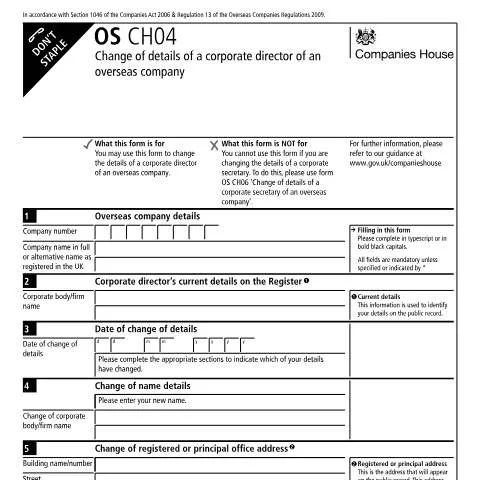
Navigating the OS CH04: Changing Details of a Corporate Director for Overseas Companies
When managing an overseas company with a corporate director in the UK, maintaining accurate and up-to-date records is vital. The OS CH04 form serves as a crucial tool for facilitating changes related to corporate directors. Whether a change involves a new address, a modification in authority, or an update to the corporate body’s legal structure, understanding the intricacies of this form is essential for compliance.
Understanding the Impact of the OS CH04 on Corporate Governance
The OS CH04 is specifically designed for overseas companies registered in the UK, allowing them to formally notify Companies House of changes pertaining to their corporate directors. This notification is not just a bureaucratic requirement; it has real implications for legal accountability and transparency. Here are some key reasons why submitting this form is critical:
- Legal Compliance: Under the Companies Act 2006, maintaining accurate records is not optional. Failure to submit the OS CH04 can lead to fines or penalties.
- Public Record Integrity: Companies House relies on accurate filings to maintain an updated public record, ensuring that stakeholders have access to the latest information about corporate governance.
- Trust and Credibility: Keeping your corporate information current helps build trust with stakeholders, investors, and the general public.
When to Submit the OS CH04: Key Timelines and Deadlines
Timing is crucial when it comes to submitting the OS CH04. Typically, changes should be reported as soon as they occur to avoid any lapses in compliance. Here’s a structured approach to managing your timelines:
- Immediate Submission: Whenever there is a change in the details of a corporate director, complete and send the OS CH04 immediately.
- Deadline Awareness: There is no specific deadline for submitting the OS CH04; however, it is advisable to act promptly to mitigate potential legal issues.
- Post-Submission Confirmation: After filing, it is good practice to confirm receipt with Companies House, thereby ensuring that your submission has been correctly processed.
Addressing Challenges: What to Do If Your Application Is Rejected
Receiving a rejection or query from Companies House can be disheartening, but understanding how to address these challenges is key. If your OS CH04 is not accepted, consider the following steps:
- Review the Feedback: Companies House will usually provide a reason for rejection. Carefully review this feedback to identify what needs to be corrected.
- Gather Additional Information: If the rejection was due to missing information or documents, promptly gather the necessary details to support your resubmission.
- Contact Companies House: If you are unclear about the rejection or need guidance, don’t hesitate to reach out to Companies House for assistance.
Comparing OS CH04 with Other Relevant Forms: What Sets It Apart
It’s essential to understand how the OS CH04 differs from similar forms, such as the OS CH06, which pertains to changing details of a corporate secretary. Here’s a comparison of the key distinctions:
| Form | Purpose | Applicable Changes |
|---|---|---|
| OS CH04 | Change details of a corporate director | Name, Address, Authority, Legal Structure |
| OS CH06 | Change details of a corporate secretary | Name, Address |
This distinction is critical to ensure that the correct form is used for the specific changes being reported. Using the wrong form can lead to delays and complications in the registration process.
What Happens After Submission? The Journey of Your OS CH04
Once you’ve completed and submitted the OS CH04, it enters a review process. Understanding what occurs afterward will help you manage expectations:
- Acknowledgment: Companies House will send you an acknowledgment upon receiving your form.
- Review Timeline: While there is no set timeline for review, most submissions are processed within a few weeks. Delays may occur during busy periods or if further information is required.
- Public Record Update: Once processed, the changes will be reflected in the public register, which stakeholders can access.
The Practicalities of Form Completion: Step-by-Step Guide
Filling out the OS CH04 requires attention to detail. Here’s a breakdown of the sections you will encounter and their specific requirements:
- Company Information: Enter the full company name and registration number as they appear in the UK register. Ensure accuracy here to prevent any rejections.
- Current Details of the Corporate Director: Provide the existing details of the director. This section is critical for identifying what needs to be updated.
- Changes Being Made: Clearly indicate what details are changing. This includes new addresses, names, or any changes in the authority of the director.
- Signature Section: Ensure the form is signed by an authorized individual, such as a director or secretary. Unsigned forms will be automatically rejected.
Understanding the Role of Compliance: Why Remaining Informed Matters
Compliance extends beyond just filing the OS CH04. As an overseas company operating in the UK, it’s vital to keep abreast of developments in regulations and best practices. Here are some proactive measures to consider:
- Regular Training: Ensure that all individuals responsible for compliance are adequately trained in the requirements set out by Companies House.
- Checklists and Reminders: Develop checklists for submitting forms like the OS CH04, including reminders for upcoming deadlines for other compliance-related tasks.
- Engage Professionals: Consulting with legal or accounting professionals familiar with corporate governance can provide additional layers of assurance and compliance.
In Review: The Importance of Accurate Reporting for Overseas Companies
The OS CH04 not only facilitates necessary changes in corporate director details but also reinforces the integrity of the public record in the UK. Adhering to the requirements outlined in this guide ensures that your overseas company remains compliant and operationally sound. By understanding the nuances of this form and actively engaging with the process, you are taking significant steps to uphold good corporate governance.
Understanding the Role and Responsibilities of Corporate Directors
In the UK, a corporate director can significantly influence a company's governance and strategic direction. Understanding the role and responsibilities of a corporate director is essential for compliance with UK regulations, particularly when it comes to changing their details.
Corporate directors are typically appointed by shareholders or other directors and must act in the best interest of the company. Their responsibilities may include financial decision-making, policy setting, and ensuring legal compliance with Companies House filings. It’s important to note that corporate directors must have a registered address in the UK and are subject to the same legal obligations as individual directors, including duties under the Companies Act 2006.
Additionally, corporate directors often have the authority to sign documents on behalf of the company, which can have significant legal implications. Thus, ensuring accurate and up-to-date information on their identity and address is not just a matter of compliance; it is crucial for effective management and legal protection of the company.
It’s worth highlighting that the introduction of new regulations governing corporate directors aims to increase transparency and accountability in corporate governance. Therefore, organizations must ensure that they are familiar with the latest legislation impacting corporate governance.
Implications of Data Protection Regulations on Changing Corporate Details
The Data Protection Act 2018 and UK GDPR set forth guidelines concerning the handling of personal information of individuals involved in corporate governance, including corporate directors. When changing the details of a corporate director, firms must consider how this may affect personal data processing.
For starters, any request to change a corporate director’s details must be processed in accordance with data protection laws. This means that companies should have a lawful basis for processing any personal data and ensure that data is kept accurate and up to date. The ‘right to rectification’ under GDPR allows individuals to request the correction of their personal information if it is inaccurate or incomplete.
Moreover, companies must also consider the implications of disclosing personal data related to corporate directors. For instance, when submitting the OS CH04 form, sensitive information may need to be altered or withheld to protect personal privacy while still adhering to the transparency obligations required by Companies House.
Companies should establish clear policies on how personal data will be managed when undergoing changes to directorship and should regularly train staff involved in these processes to ensure compliance with data protection regulations. This not only protects the company from potential data breaches but also instills confidence among stakeholders regarding the company’s commitment to safeguarding personal information.
Common Challenges Faced When Updating Corporate Director Details
Updating the details of a corporate director can present a variety of challenges that companies must navigate. One of the most notable challenges is ensuring that all relevant parties are informed about the change in a timely manner. This includes notifying Companies House, stakeholders, and any regulatory bodies relevant to the industry in which the company operates.
Another challenge is the gathering of accurate and complete information required for the OS CH04 form. Companies often face difficulties in obtaining the necessary signatures or documentation from corporate directors, especially if they are based overseas. It is advisable for companies to establish clear communication channels with corporate directors to facilitate swift updates.
Moreover, companies must be vigilant about maintaining compliance with legal deadlines when submitting changes. Failure to update Companies House within the required timeframe can result in penalties, public scrutiny, or potential legal action. Companies should maintain a compliance calendar to track all important deadlines related to director changes, filings, and other corporate governance matters.
Lastly, corporate directors may also face challenges in confirming their identity when changes are being processed, especially if the director is not physically present in the UK. Companies might need to employ identification verification processes to ensure compliance while safeguarding against fraudulent activities.