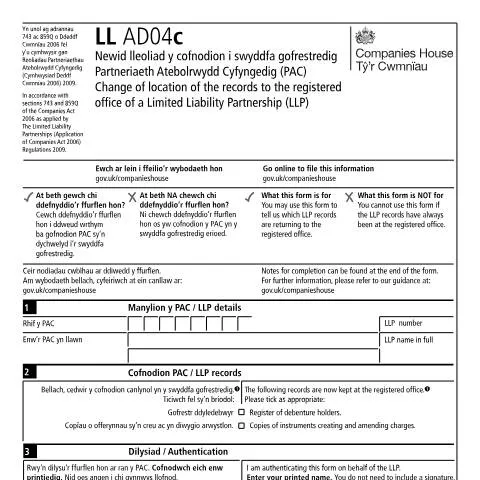
Navigating the LL AD04c: A Guide to Changing Records Location
Imagine running a Limited Liability Partnership (LLP) and suddenly finding out that the records need to be relocated to your registered office. This scenario is not uncommon, and handling it appropriately is crucial for maintaining compliance with Companies House. The LL AD04c form facilitates that transition, ensuring your records are in the correct location as required by law. Understanding this process can save you time, prevent complications, and help you keep your business operations smooth.
Understanding the Role of the LL AD04c Form
The LL AD04c form is specifically designed for LLPs wishing to announce a change in the location of their records. This is not merely a formality; it represents a legal requirement under sections 743 and 859Q of the Companies Act 2006. These sections establish protocols for maintaining accurate and accessible records, which are essential for transparency and accountability in business operations.
When LLPs update their records' location, there are specific instances when this form is applicable:
- The LLP's records are being moved to the registered office for the first time.
- Previous filings regarding record locations do not include these changes.
However, this form cannot be used if the records have always been maintained at the registered office. It is essential to clarify your LLP's situation before completing the form to ensure compliance.
Completing the LL AD04c: Step-by-Step
Completing the LL AD04c form may seem daunting, but breaking it down into manageable steps can simplify the process. Each section of the form requires precise information that must align with what is on the public register.
Key Sections of the LL AD04c Form
Here’s a detailed look at the essential elements you will need to complete on the form:
- LLP Name and Number: Ensure that the LLP name and its registration number match exactly with the information held on the public register.
- Records to be moved: Indicate the records being transferred to the registered office. You must check the appropriate boxes for the records being returned.
- Confirmation of Authenticity: The form requires you to authenticate it, but a signature is not necessary. You will need to print your name and designate your role within the LLP.
Make sure that every section is filled out completely. Missing any crucial information can result in your form being returned, leading to delays.
Important Tips for Completion
While filling out the LL AD04c form, consider the following:
- Use typescript or bold black capitals to avoid any misinterpretation.
- All fields are mandatory unless otherwise indicated, so double-check before submission.
- Keep a copy of the completed form for your records.
Timing and Deadline Considerations
The timing of your submission is critical. Once the decision to relocate records is made, it’s essential to act promptly. The process of submitting the LL AD04c form requires careful planning to avoid interruptions in compliance with regulatory requirements.
Submission Timeline
After submitting the LL AD04c form, Companies House generally processes forms promptly. Nevertheless, it is advisable to allow a window of several weeks for processing. If you have upcoming audits or inspections, plan your submission accordingly to ensure that the records are in the proper location by those dates.
What Happens After Submission?
Once filed, the information provided on the LL AD04c form will become part of the public record. This is crucial for stakeholders, clients, and anyone else who may need to verify the LLP's operational transparency. You will not receive a physical confirmation, but you can check the public register to ensure your records reflect the changes.
Dealing with Errors or Refusals
Despite the best intentions, mistakes can happen. If your LL AD04c form is returned or rejected, understanding the reasons behind it can help resolve issues swiftly.
Common Reasons for Rejection
- Incorrect LLP Name or Number: Any discrepancies between the form and the public register will lead to a rejection.
- Incomplete Sections: Ensure all mandatory fields are filled out; otherwise, Companies House may reject your submission.
- Mismatched Records: If the records you indicate do not match what is on file with Companies House, your form will not be accepted.
Steps to Take Upon Rejection
If your LL AD04c form is returned, take the following steps:
- Review the feedback provided by Companies House carefully.
- Make the necessary corrections based on their comments.
- Re-submit the corrected form promptly to ensure compliance timelines are met.
Legal Implications and Historical Context
The LL AD04c form is rooted in UK law, designed to maintain public transparency in business operations. As mentioned earlier, it is governed by sections 743 and 859Q of the Companies Act 2006, which were enacted to ensure that LLPs adhere to strict guidelines regarding record-keeping.
Historically, the need for such forms arose out of the necessity for public accountability in business practices. These regulations are intended to protect investors and the public by ensuring that they have access to accurate information about LLPs. This form is just one part of a broader regulatory framework that governs business operations in the UK.
Exploring Cases with Specific Considerations
While the LL AD04c form is straightforward for many, there are unique circumstances that may complicate its submission. Here are some scenarios that may require special attention.
Foreign LLPs and the LL AD04c
For foreign LLPs operating in the UK, the guidelines regarding record relocation can vary. If an LLP is registered outside the UK but has records that need to be moved to a registered office in the UK, additional verification may be required. This could include:
- Providing proof of foreign registration.
- Ensuring compliance with local laws relevant to the LLP's original country.
Complex Situations and Urgency
In urgent situations, such as mergers or acquisitions, the need to relocate records quickly may arise. It is advisable to consult legal counsel to navigate these complexities, ensuring that all steps comply with regulatory requirements and that your LLP's interests are protected.
Final Thoughts on the LL AD04c Form
Navigating the administrative waters of LLP record management can be challenging. The LL AD04c form serves a vital role in maintaining compliance and ensuring that your business operations continue seamlessly. Proper preparation, attentive completion, and awareness of the legal framework surrounding this form are crucial for success.
By understanding the nuances of the LL AD04c form, LLPs can ensure that their records are accurately maintained and legally compliant, ultimately contributing to their business's integrity and transparency. For further assistance, the official guidance available at the Companies House website can provide invaluable resources.
| Step | Action | Notes |
|---|---|---|
| 1 | Complete the LL AD04c form | Ensure accurate LLP name and number. |
| 2 | Submit the form | Allow several weeks for processing. |
| 3 | Check public register | Confirm that changes are reflected. |
| 4 | Address any issues | Correct and re-submit if the form is returned. |
Understanding the Importance of a Registered Office for Limited Liability Partnerships
In the realm of limited liability partnerships (LLPs) in the UK, the registered office serves as a critical point of contact and legal address. This is where official communications are sent and where statutory records must be maintained. Understanding the implications of the registered office location is crucial for compliance and operational efficiency. If a partnership needs to change the location of its records to the registered office, it is essential to grasp why this is necessary and beneficial.
The registered office must be located in the same jurisdiction as the LLP, which is typically within England, Wales, Scotland, or Northern Ireland. This ensures that the partnership adheres to local laws and regulations, particularly in areas such as taxation and annual reporting. Furthermore, having a registered office enhances the legitimacy of the LLP, fostering confidence among clients and stakeholders who may seek to verify the partnership's standing. This address must be a physical location, not just a PO Box, and it must be openly available to both the public and regulatory authorities.
Additionally, the registered office address is published on the Companies House register, making it accessible to anyone wishing to inspect the partnership's details. Therefore, selecting an appropriate location that reflects the LLP's business activities and image is vital. This can also have tax implications, particularly if the partnership operates in multiple regions or countries.
Navigating the Legal Requirements for Changing the Registered Office Location
Transitioning the registered office location of an LLP is not just a matter of relocating to a different physical space; it involves a series of legal requirements that must be adhered to in order to maintain compliance with the Companies Act 2006. The primary legal framework governing LLPs stipulates that any change in the registered office must be formally recorded and reported to Companies House.
The process begins with completing the relevant form, specifically the LL AD04c form for changing the registered office address. This form requires details such as the current registered office address, the new address, and the date from which the change takes effect. It's important to ensure that the new address aligns with the LLP's operational needs and remains within the same jurisdiction in which the LLP is registered.
Once the LL AD04c form is completed, it must be signed by a designated member of the LLP and submitted to Companies House. The submission can typically be accomplished electronically or by post, although it is advisable to check the latest guidance from Companies House regarding submission methods and processing times. Be mindful that the change of address becomes effective only upon acceptance by Companies House, so ensure that this is done in a timely manner to avoid any administrative complications.
Moreover, partners within the LLP must be aware that changing the registered office may affect other operational aspects, such as tax registrations, correspondence arrangements, and even the partnership's branding. Therefore, it is prudent to review and update any necessary records and notify relevant stakeholders, including banks, insurance providers, and clients, of the new registered office address.
Potential Challenges and Considerations When Changing the Registered Office
While the process of changing the location of records to the registered office through the LL AD04c form may seem straightforward, several challenges may arise. One common issue involves ensuring that the new registered office meets the statutory requirements laid out by Companies House. For example, the address must be a physical office location where documents can be served during normal business hours.
Another consideration is the impact on the LLP’s reputation. A registered office located in a prestigious area may enhance the firm's image, whereas relocating to a less favorable location could potentially raise concerns among clients and partners regarding the firm's stability and professionalism. Therefore, conducting a thorough assessment of potential locations is essential before making a final decision on the new registered office address.
Furthermore, partners should consider the logistical aspects of the move. This includes updating all official documentation, such as business cards, websites, and marketing materials, to reflect the new address. It’s also vital to inform HM Revenue and Customs (HMRC) and any other relevant government agencies to ensure seamless transitions in tax matters and compliance reporting.
Finally, it is advisable to keep meticulous records of all correspondence and submissions made during the transition. This provides an audit trail that can be crucial if any disputes or queries arise in the future regarding the LLP’s registered office location or compliance status.