Understanding the AM20 (Scot) Notice: Key Insights
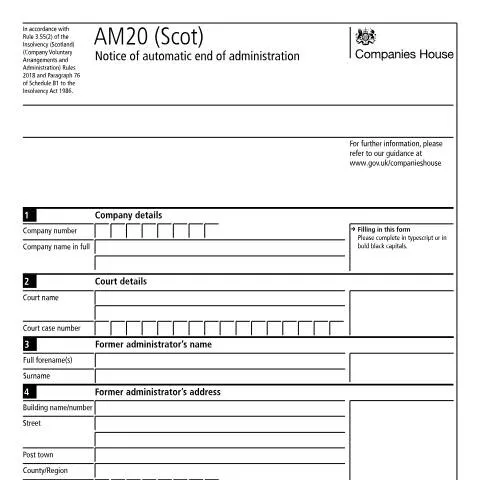
The AM20 (Scot) document is a crucial notice used to declare the automatic end of administration for a Scottish company. Though it may appear straightforward, this document is embedded within a larger legal framework surrounding corporate administration in Scotland. Understanding its content is fundamental for anyone involved in company insolvency or administration processes.
Contextual Framework: The Role of Companies House
Before delving into the specifics of the AM20 (Scot), it’s essential to appreciate the role of Companies House in the UK. As the official register of companies, Companies House oversees the registration, regulation, and dissolution of companies across England, Scotland, Wales, and Northern Ireland. Their mandate also includes managing insolvency proceedings, such as company voluntary arrangements and administrations. This makes the AM20 (Scot) not just a form, but a vital part of regulatory compliance for Scottish companies exiting administration.
The Legal Underpinnings of the AM20 (Scot)
This notice is rooted in specific legislation, namely the Insolvency (Scotland) (Company Voluntary Arrangements and Administration) Rules 2018 and the Insolvency Act 1986. Particularly, it adheres to Rule 3.55(2) and Paragraph 76 of Schedule B1, which stipulate the process for notifying the cessation of an administrator's role. Understanding these legal references is crucial for administrators, as any failure to comply could lead to legal repercussions.
The Automatic Nature of the End of Administration
One of the document's key features is its automatic application. The AM20 (Scot) indicates that a company's administration has come to an end automatically, often due to the completion of the administration period or fulfilment of financial obligations. This feature streamlines the process, removing the need for lengthy court proceedings to declare the end of administration.
Components of the AM20 (Scot): What You Need to Know
The AM20 (Scot) consists of several mandatory components that must be filled accurately:
- Company Details: This section requires the full name and registration number of the company involved, ensuring that the information matches what is on the public register.
- Administrator's Details: The former administrator must provide their name and address, signalling their formal exit from the position.
- Date of Cessation: A specific date when the administrator's role officially ended must be indicated. This date is critical for maintaining accurate records.
- Final Progress Report: An accompanying document that summarises the administration process and outcomes. This report is indispensable for transparency.
Situations Requiring the AM20 (Scot)
Understanding when to use the AM20 (Scot) is crucial for administrators, especially in the context of Scottish company law. Here are some scenarios where this document becomes essential:
- Conclusion of Administration: When a company has effectively completed its administration and complied with all necessary financial settlements, the AM20 (Scot) should be filed to update Companies House.
- Change in Circumstances: If a company's financial situation improves significantly during administration, the need to declare the end of administration arises, requiring the AM20 (Scot) notice.
- Legal Compliance: Failure to submit the AM20 (Scot) can leave a company's status ambiguous, potentially leading to legal issues or complications in future transactions.
Navigating the Submission Process
The submission process for the AM20 (Scot) involves a few critical steps that administrators must adhere to ensure compliance:
- Prepare the Document: Ensure all sections of the AM20 (Scot) are completed in typescript or bold black capitals. Clarity is key in avoiding misunderstandings.
- Attach Necessary Documents: Include a final progress report detailing the administration's outcome; this adds a layer of transparency that is often required by Companies House.
- Choose the Right Submission Address: While the document can be sent to any Companies House address, for expediency, it is advisable to send it to the Edinburgh office—the central hub for Scottish companies.
- Keep Records: Maintain copies of the submitted AM20 (Scot) and any attached documents for your records, as these may be requested by Companies House in future inquiries.
Common Misinterpretations and Challenges
While the AM20 (Scot) may seem straightforward, misunderstandings can arise, particularly regarding its implications:
- Misunderstanding Automatic End: Some may confuse an automatic end with an arbitrary one; administrators must adhere to legal definitions and processes to avoid complications.
- Failure to Include Required Documentation: Excluding the final progress report can lead to delays or rejection of the notice. Always double-check requirements.
- Incorrect Dates: Specifying the wrong cessation date can confuse the timeline of administration and complicate future proceedings.
Who Should Be Involved in the Process?
While primarily the responsibility of the administrator, the process surrounding the AM20 (Scot) often involves multiple stakeholders:
- Former Administrators: They must understand their obligations and ensure that the AM20 (Scot) is submitted in a timely fashion.
- Shareholders and Directors: Awareness of the administration's conclusion is vital for company governance and planning future ventures.
- Legal Advisors: Engaging with legal professionals can clarify any ambiguities in the process and assist in compliance matters.
Conclusion: The Importance of Properly Managing the AM20 (Scot)
The AM20 (Scot) is more than a mere administrative form; it embodies a critical step in the lifecycle of a company transitioning out of administration. Ensuring the accurate completion and timely submission of this document is essential not only for legal compliance but also for the ongoing reputation and operational viability of the company involved. By understanding its implications and navigating the process diligently, administrators can mitigate potential pitfalls and facilitate a smooth transition toward a new chapter for the company.
Understanding the AM20 (Scot) Form: A Comprehensive Overview
The AM20 (Scot) form is pivotal in the administrative process for Scottish companies that are transitioning into automatic end of administration. When a company enters administration under the Insolvency Act 1986, it effectively safeguards the business from creditor actions and provides a structured method for resolving its financial difficulties. However, when the administration process is concluded, it is vital to formally notify the relevant authorities.
This form, specifically designed for use in Scotland, acts as a crucial notification to Companies House, signalling the intended end of the administration period. Completing the AM20 (Scot) form accurately is essential not just for compliance but also for ensuring that the company's status is correctly updated in public records. Failure to submit this notice may result in ongoing administrative burdens and potential legal implications for administrators and directors.
It's important to note that the AM20 (Scot) form must be filed by an insolvency practitioner (IP) who has been appointed to oversee the company during its administration. The IP's professional judgment will guide the completion of the form, and they will ensure that all necessary information is included, such as details of the administration period, any outcomes of the administration process, and the financial situation of the company at the time of conclusion.
Implications of Automatic End of Administration on Directors and Creditors
The automatic end of administration has several implications for both the directors of the company and its creditors. For directors, the conclusion of administration generally restores their authority to manage the company again, provided they have adhered to the legal duties and obligations throughout the administration period. However, if the administration has ended due to the company's failure to meet obligations, directors must be cautious about their personal liability for the company’s debts, especially if the business continues to trade in a financially precarious manner.
On the creditors' side, the end of administration may signal the beginning of a different phase in the recovery of debts owed to them. Depending on the success of the administration process, creditors may receive dividend payments or nothing if the company has insufficient assets. Communication from the IP regarding the finalisation of the administration process via the AM20 (Scot) form is crucial as it sets expectations regarding potential recoveries.
Moreover, creditors should be vigilant following the conclusion of the administration period, as this can lead to the possibility of insolvent liquidation if the company remains unable to meet its obligations. This aspect highlights the need for continued engagement and awareness of the company’s status post-administration.
Critical Steps for Completing and Submitting the AM20 (Scot) Form
Completing the AM20 (Scot) form accurately is a multi-step process that demands attention to detail. Here’s a breakdown of critical steps to ensure compliance:
- Gather Required Information: Before initiating the completion of the AM20 (Scot) form, it’s essential to collect all necessary documentation. This includes the administration order, details of the administrators, the company's financial records, and any correspondence with creditors.
- Complete the Form: The form requests information about the administration, including the start and end dates, reasons for the administration, and details about any proposals made to creditors. Ensure all sections are filled out accurately, as incomplete information could lead to delays.
- Ensure Compliance with Data Protection Regulations: Given that the processing of personal data is governed by the Data Protection Act 2018 and UK GDPR, it is vital to ensure that any personal data included in the form is handled appropriately. This includes anonymising sensitive information where possible and securing consent when required.
- Submit the Form to Companies House: The final step in this process is to submit the completed AM20 (Scot) form to Companies House within the specified timeframe. Continuous monitoring of the submission’s status can aid in confirming that the notification has been received and processed.
Each step in this process is essential to ensuring that both the company’s affairs and the interests of its creditors are managed appropriately, minimizing the risk of future disputes or complications.