The Foundation of British Cattle Traceability: Understanding Your Legal Obligations as a Keeper
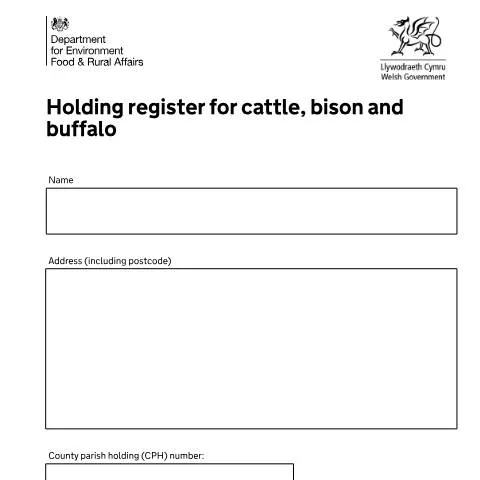
Every cattle keeper in Great Britain operates within a complex web of animal health regulations designed to prevent disease outbreaks and maintain public safety. At the heart of this system lies a deceptively simple document: the holding register for cattle, bison and buffalo. This template, provided by the British Cattle Movement Service through the Rural Payments Agency, represents far more than administrative paperwork—it serves as your legal lifeline in an industry where accurate record-keeping can mean the difference between operational freedom and devastating movement restrictions.
The consequences of inadequate record-keeping extend well beyond bureaucratic inconvenience. Keepers who fail to maintain accurate registers face a cascade of penalties: movement restrictions that can paralyse farm operations, reduced subsidy payments that directly impact profitability, and in severe cases, criminal prosecution. This holding register template provides the framework to avoid these pitfalls whilst fulfilling your statutory obligations under British cattle movement legislation.
The Legal Framework Behind Your Record-Keeping Duties
The requirement to maintain a holding register stems from decades of hard-learned lessons in animal disease control. Each entry you make contributes to a national traceability system that enables rapid response to disease outbreaks, protecting both animal welfare and public health. The British Cattle Movement Service relies on these individual records to track cattle movements across the country, creating an interconnected database that can trace any animal's history within hours of an emergency.
Your register must remain accessible for inspection by field officers at all times, and the law mandates retention for 10 years from 31 December in the year you last made an entry. This extended retention period reflects the long-term nature of cattle farming and the potential need to investigate disease patterns or breeding histories years after animals have left your holding.
Decoding the Template: A Column-by-Column Analysis of Critical Information
The holding register template organises cattle information into twelve distinct columns, each serving a specific purpose in the national traceability system. Understanding what information belongs in each column—and why—prevents costly errors and ensures compliance with reporting requirements.
Primary Identification and Birth Records
Column 1 captures the official ear tag number, the unique identifier that follows each animal throughout its life. However, this seemingly straightforward requirement contains important exceptions. Cattle born or imported to Great Britain before 1 January 1998 may require retagging, as do animals imported from outside the European Union. In these cases, you must record both the original identifier and the new UK ear tag number using the designated 'RT' (retagged) row.
Column 2 requires the exact date of birth in dd/mm/yy format. This precision matters because birth date affects numerous regulatory requirements, from vaccination schedules to movement restrictions. For imported animals, you must use the birth date recorded in the animal's original documentation, not an estimated date.
The registration checkbox in Column 3 applies only to animals born on your holding and confirms that you've properly notified the British Cattle Movement Service of the birth. This seemingly minor tick box carries significant weight—failure to register births within the required timeframe can trigger penalties and complicate future movements.
Genetic Information and Movement Documentation
Columns 4 through 6 capture breeding information essential for genetic traceability. The official cattle breed code system, accessible through government guidance, ensures standardised breed identification across all holdings. Sex designation follows a simple M/F system, but remember that steers are classified as male regardless of their castrated status.
Dam identification proves particularly important for animals born on your holding. You must record the genetic dam's ear tag number, and if a surrogate dam gave birth to the calf, both animals' identifications must be captured. While sire identification remains optional, many keepers find this information valuable for breeding programme management.
| Movement Type | Required Information | Source Document | Update Deadline |
|---|---|---|---|
| Animal arriving | Date, origin CPH number | Cattle passport | 36 hours |
| Animal departing | Date, destination CPH | Movement documentation | 36 hours |
| Birth registration | Dam details, breed, sex | On-farm observation | 7 days (dairy), 30 days (other) |
| Death on holding | Date, disposal method, haulier | Disposal records | 7 days |
Critical Timing Requirements: When Every Hour Counts
The holding register operates under strict timing requirements that reflect the urgent nature of disease control. These deadlines aren't arbitrary bureaucratic requirements—they're designed to ensure that animal health authorities can respond rapidly to emerging threats.
Movement-Related Updates
All movements on or off your holding must be recorded within 36 hours. This tight deadline applies whether you're receiving cattle from another keeper or dispatching animals to market, abattoir, or another holding. The 36-hour rule also governs ear tag replacements when the tag number changes, recognising that altered identification can disrupt traceability if not promptly recorded.
For cattle imported from outside the European Union, the 36-hour deadline becomes particularly challenging because these animals receive new UK ear tag numbers upon arrival. You must update your register to reflect both the original identification and the new UK number within the specified timeframe, often while managing the logistics of newly arrived livestock.
Birth and Death Registration Deadlines
Birth registrations follow a tiered timing system that recognises different management intensities across cattle enterprises. Dairy cattle births must be recorded within 7 days, reflecting the closer monitoring typical of dairy operations. All other cattle births allow a 30-day window, acknowledging that extensive beef operations may not observe animals as frequently.
Deaths on your holding require registration within 7 days, but the register must capture more than just the date of death. You must record disposal methods, carcass movement dates, haulier information, and destination details. This comprehensive death recording enables authorities to track potential disease vectors and ensures proper carcass disposal verification.
Multi-Holding Operations: Managing Complexity Across Multiple Sites
Keepers operating across multiple holdings face additional complexity in register management. The law requires separate registers for each County Parish Holding (CPH) number, preventing the consolidation of records that might simplify administration but compromise traceability.
Inter-Holding Movements
When moving cattle between your own holdings, each location must record the movement as both an off-movement and an on-movement. The animal's journey from your Holding A to your Holding B generates entries in both registers within the standard 36-hour deadline. This dual recording ensures complete traceability even within single ownership structures.
The complexity multiplies when managing seasonal grazing arrangements or temporary holdings. Each location where cattle spend time requires register entries, regardless of the duration or purpose of the stay. Short-term movements for breeding, veterinary treatment, or seasonal grazing all trigger recording obligations.
CPH Number Management
County Parish Holding numbers serve as the geographical anchors in your register entries. These unique identifiers, found on cattle passports and movement documents, must be recorded accurately for all incoming and outgoing movements. Incorrect CPH numbers can break traceability chains and trigger investigation by animal health authorities.
For keepers unfamiliar with CPH number systems, these identifiers follow a structured format that indicates county, parish, and individual holding information. Understanding this structure helps verify the accuracy of CPH numbers recorded in movement documents and prevents transcription errors in your register.
Practical Implementation: From Template to Working Register
The template holding register transforms from government document to working farm record through careful implementation and consistent maintenance. The British Cattle Movement Service recommends printing the template at A3 size in landscape orientation to ensure adequate space for detailed entries, though A4 printing remains acceptable if pages are properly bound and stored together.
Physical Register Management
Hand-written entries using ink provide the most reliable long-term record, avoiding the degradation issues associated with pencil or the potential data loss risks of purely digital systems. The template's design accommodates handwritten entries while maintaining legibility for official inspections.
Storage location proves crucial for register accessibility. Field officers conducting inspections must be able to examine your register immediately upon request, making farmhouse or office storage more practical than remote field locations. However, the register must remain secure from weather damage, theft, or accidental destruction that could compromise your legal compliance.
Integration with BCMS Reporting
Column 11 serves as your verification checkpoint, confirming that movements recorded in your register have been properly reported to the British Cattle Movement Service. This dual system—register recording plus BCMS notification—ensures redundancy in the traceability system while providing you with clear documentation of compliance.
The timing relationship between register entries and BCMS reporting creates potential confusion for new keepers. While both must occur within 36 hours of a movement, they represent separate obligations. Register updates document the movement for your holding records, while BCMS reporting enters the movement into the national database.
Beyond Basic Compliance: Leveraging Your Register for Farm Management
Column 12's designation as a "free box for your own notes" offers opportunities to enhance the register's value beyond legal compliance. Strategic use of this space can transform your holding register into a comprehensive management tool that supports breeding decisions, health monitoring, and financial planning.
Breeding Programme Documentation
Recording sire information, though optional under regulations, provides valuable breeding history for genetic management. Calving ease scores, birth weights, or dam milking ability noted in the free-use column create a breeding database that improves selection decisions and genetic progress.
Veterinary treatment records, vaccination dates, and health observations documented in Column 12 create a health history that supports veterinary consultations and helps identify patterns in animal performance or disease susceptibility. This additional documentation proves particularly valuable for pedigree operations or commercial herds focused on genetic improvement.
Financial and Performance Tracking
Purchase prices, sale values, and performance metrics recorded alongside mandatory information transform your register into a financial tracking system. Weight gains, feed conversion data, or market performance notes provide the foundation for enterprise analysis and improvement planning.
The 10-year retention requirement means your register becomes a historical database of farm performance, enabling long-term trend analysis and supporting business development decisions. This extended perspective proves particularly valuable for assessing genetic progress, market timing strategies, or production system effectiveness.
Enforcement Realities: What Happens When Registers Fall Short
Animal health authorities possess significant powers to enforce register requirements, with consequences that can devastate farming operations. Understanding these enforcement mechanisms helps appreciate why meticulous record-keeping represents essential business protection rather than bureaucratic burden.
Movement Restrictions and Operational Impact
Movement restrictions imposed for inadequate record-keeping can paralyse farm operations within hours of discovery. These restrictions prevent all cattle movements on or off the affected holding until register deficiencies are corrected and authorities confirm compliance. For commercial operations dependent on regular throughput, such restrictions can generate losses far exceeding any administrative costs of proper register maintenance.
The scope of movement restrictions often surprises keepers who assume that minor record-keeping errors warrant only modest penalties. In practice, authorities apply restrictions comprehensively, affecting breeding programmes, market sales, and even emergency movements for animal welfare reasons. Only veterinary emergencies typically receive exemption from movement restrictions.
Financial Penalties and Subsidy Reductions
Subsidy payment reductions linked to poor record-keeping can persist across multiple years, compounding the financial impact of non-compliance. The Rural Payments Agency cross-references register quality with subsidy applications, identifying patterns of poor record-keeping that trigger enhanced scrutiny and potential payment reductions.
Prosecution for serious register failures represents the ultimate enforcement tool, reserved for cases involving repeated non-compliance or deliberate obstruction of animal health measures. Criminal proceedings carry reputational damage that extends beyond immediate financial penalties, potentially affecting business relationships and future regulatory approvals.
The template holding register for cattle keepers embodies the intersection of animal health protection, regulatory compliance, and practical farm management. Success with this document requires understanding both its immediate legal requirements and its broader role in supporting effective livestock operations. Through careful implementation and consistent maintenance, your holding register becomes not just a compliance document but a valuable management tool that supports informed decision-making and business success in British cattle farming.