Starting Your Journey as a Registered Cattle Keeper
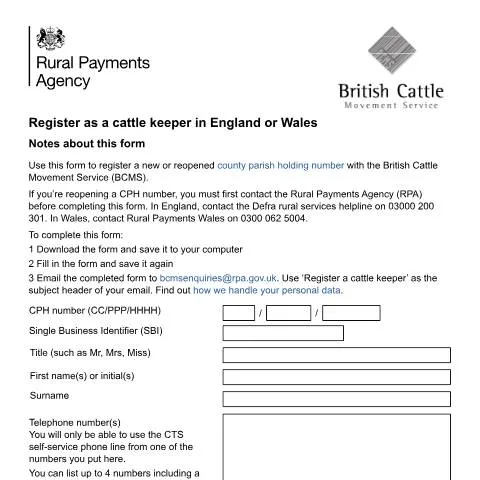
The moment you decide to keep cattle, bison, or buffalo on your land in England or Wales, you're stepping into a carefully regulated agricultural landscape where every animal must be traceable from birth to death. The British Cattle Movement Service (BCMS) sits at the heart of this system, and your first formal contact with them begins with form CTSO14 – your gateway to obtaining or reopening a County Parish Holding (CPH) number.
This registration isn't merely a bureaucratic formality. Your CPH number becomes your unique identifier within the cattle traceability system, linking your holding to every bovine that passes through your gates. Without it, you simply cannot legally keep cattle, move animals, or participate in any cattle-related business activities. The Rural Payments Agency, through BCMS, maintains this central register to support disease control, food safety, and agricultural policy implementation across England and Wales.
Whether you're establishing a new livestock enterprise, taking over an existing farm, or reopening a previously registered holding after a period of inactivity, the CTSO14 form captures the essential details that transform your land into a recognised cattle-keeping operation within the national system.
Who Needs to Complete This Registration
The requirement to register extends far beyond traditional farmers. Anyone who will have cattle, bison, or buffalo on their land – even temporarily – must hold a valid CPH number for that specific location. This encompasses a surprisingly diverse range of cattle keepers, each with distinct circumstances that affect their registration approach.
New agricultural enterprises represent the most straightforward category. First-time farmers purchasing or leasing land to establish a cattle operation must register from scratch, providing full details about their intended activities and the physical location where animals will be kept.
Existing farmers expanding operations face a more complex scenario. If you already hold CPH numbers for other locations but are acquiring additional land for cattle keeping, each separate geographic holding requires its own CPH number. The system doesn't allow one number to cover multiple distinct locations, regardless of common ownership.
Lifestyle farmers and smallholders often underestimate their registration obligations. Keeping just two cattle for personal consumption still triggers the requirement for full BCMS registration. The system makes no distinction based on scale – commercial herds and hobby operations follow identical registration procedures.
Agricultural contractors and dealers present unique cases. If you regularly bring cattle onto your premises for services like AI, veterinary treatment, or temporary housing, you'll need registration even if you don't own the animals. The key factor is physical presence of cattle on your land, not ownership.
Reopening registrations involve additional complexity. If you're returning to cattle keeping after a period when your CPH was inactive, you cannot simply reactivate the old number. The Rural Payments Agency must first verify the holding's current status and suitability before processing your CTSO14 application.
Essential Information and Documentation Framework
The CTSO14 form demands precision in every field, as errors can delay registration for weeks or even months. Understanding what information you need before starting prevents frustrating back-and-forth correspondence with BCMS.
Your Single Business Identifier (SBI) forms the foundation of your registration. If you don't yet have an SBI, you must obtain one from the Rural Payments Agency before proceeding with cattle registration. This nine-digit number links all your agricultural activities across different schemes and services.
The CPH number format follows a strict pattern: CC/PPP/HHHH, where CC represents the county code, PPP the parish code, and HHHH your unique holding number. For new registrations, you'll receive this number upon successful processing – don't attempt to create your own.
| Information Category | Required Details | Special Considerations |
|---|---|---|
| Personal Details | Full name, title, contact numbers | Up to 4 phone numbers accepted for CTS access |
| Correspondence Address | Complete postal address and postcode | Must be current and regularly monitored |
| Holding Location | Physical address where cattle kept | Can differ from correspondence address |
| Trading Information | Business name, commencement date | Date affects compliance obligations |
| Existing Cattle | Ear tag numbers and movement dates | Required if animals already on holding |
Telephone numbers deserve particular attention. The Cattle Traceability System (CTS) self-service phone line restricts access to numbers you register on this form. Choose carefully – you can list up to four numbers, including mobile phones, but changing them later requires formal notification to BCMS.
The email address you provide becomes BCMS's primary communication channel. They'll use it for routine correspondence, urgent notifications about disease outbreaks, and system updates. Ensure it's an address you monitor regularly and expect to use long-term.
If you already have cattle on your land – perhaps inherited animals or those moved before registration completion – you must list every animal's official ear tag number and the date they arrived. This retrospective recording ensures the traceability chain remains intact from the moment animals entered your holding.
Digital Submission Process and Technical Requirements
BCMS has moved decisively toward digital processing, making electronic submission via email the primary channel for CTSO14 forms. This approach offers speed and convenience but requires careful attention to technical details that can make or break your application.
The process begins with downloading the form directly from the gov.uk website. Always use the current version – BCMS regularly updates forms, and submitting an outdated version can result in automatic rejection. The form comes as a fillable PDF that must be saved to your computer before completion.
Completing the digital form requires methodical approach. Fill in each field completely, then save the document again before proceeding to email submission. This double-save process prevents data loss and ensures all your information remains intact when BCMS opens the file.
Email submission demands precise adherence to BCMS specifications. Send your completed form to [email protected] with the exact subject line 'Register a cattle keeper'. Deviation from this format can delay processing as automated systems may not correctly categorise your submission.
File size considerations rarely pose problems with CTSO14 forms, but if you're including additional documentation or have a particularly large number of existing cattle to list, consider the recipient's email limitations. BCMS systems typically handle attachments up to 10MB without issue.
The confirmation you receive depends on your email provider and BCMS system status. Don't expect immediate automated acknowledgment – BCMS processes submissions in batches rather than providing instant responses. If you haven't received any communication within five working days, contact the helpline to confirm receipt.
Farm Software Integration Considerations
The form asks whether you'll use farm software programmes – a decision that affects how BCMS provides access to their systems. Answering 'yes' triggers automatic password generation for electronic interfaces with the Cattle Traceability System.
Popular farm management software packages integrate directly with BCMS databases, allowing automatic synchronisation of movement records, birth registrations, and death notifications. If you're planning to use such systems, confirm with your software provider that they support current BCMS interfaces before indicating 'yes' on the form.
Understanding Processing Timescales and Administrative Workflow
BCMS processing times vary significantly based on application complexity, seasonal demand, and whether you're establishing a new registration or reopening an existing CPH. Understanding these variations helps set realistic expectations and plan your cattle-keeping activities accordingly.
New registrations typically take 10-15 working days from receipt of a complete, accurate application. This timeframe covers initial processing, system checks against existing databases, and generation of your unique CPH number. However, applications submitted during peak periods – particularly spring when many new enterprises start – may experience longer delays.
Reopening registrations involve additional verification steps that can extend processing to 20-25 working days. BCMS must confirm the holding's previous status, check for any outstanding compliance issues, and verify that the physical location remains suitable for cattle keeping. If your previous registration ended due to disease restrictions or other regulatory issues, expect more detailed scrutiny.
The verification process includes cross-referencing your application against multiple databases. BCMS checks your SBI against Rural Payments Agency records, confirms your identity against previous registrations, and validates the holding location against Ordnance Survey mapping data. Inconsistencies in any of these areas trigger manual review, adding time to the process.
Seasonal variations affect processing speed. Applications submitted between February and May often face delays as this period coincides with peak calving season, new enterprise startups, and the beginning of the grazing season when many temporary holdings become active.
What Happens During Processing
Your application enters a structured workflow designed to ensure accuracy and compliance with bovine identification regulations. Initial processing involves data validation – BCMS systems check that all required fields are complete and that the information follows correct formats.
Geographic validation comes next. BCMS confirms that your holding address corresponds to a legitimate location capable of keeping cattle. This process may identify issues with rural addresses that don't appear in standard postal databases or properties that have changed use since previous agricultural applications.
If you've listed existing cattle on your holding, BCMS cross-references each ear tag number against the national database. This verification ensures no animals are double-registered and that all movement records align with your reported dates. Discrepancies here commonly cause processing delays.
Navigating Complications and Resolution Procedures
Despite careful preparation, various complications can arise during the registration process. Understanding common issues and their resolution procedures helps you respond quickly and effectively when problems emerge.
Incomplete applications represent the most frequent complication. Missing information in any field can halt processing entirely. BCMS will typically email requesting the missing data, but this adds 5-10 working days to your overall timeline. Double-check every field before submission, paying particular attention to contact numbers and postcode accuracy.
Address verification problems often affect rural holdings with non-standard postal addresses. If BCMS cannot verify your holding location against their mapping systems, they'll request additional documentation such as Ordnance Survey grid references or detailed location descriptions. Preparing this information in advance can prevent delays.
Ear tag number discrepancies create complex resolution scenarios. If the cattle you've listed don't appear in BCMS records or show conflicting location data, you'll need to provide movement documentation proving legitimate ownership or custody. This might include purchase receipts, transport documents, or previous keeper declarations.
SBI-related issues require coordination between multiple agencies. If your Single Business Identifier doesn't validate against Rural Payments Agency records, you cannot proceed with cattle registration until this fundamental issue resolves. Contact the RPA helpline immediately if BCMS reports SBI problems.
| Complication Type | Typical Resolution Time | Required Action |
|---|---|---|
| Missing information | 5-10 working days | Provide complete details via email |
| Address verification | 10-15 working days | Submit location evidence |
| Ear tag discrepancies | 15-20 working days | Provide movement documentation |
| SBI validation failure | 20-30 working days | Resolve with RPA first |
Reopening complications often involve historical issues that weren't apparent when you submitted your application. Previous compliance problems, outstanding movement notifications, or unresolved disease restrictions can block reactivation. BCMS will provide specific details about what must be resolved before processing can continue.
Escalation Procedures and Alternative Contacts
When standard resolution procedures don't resolve your issue within reasonable timeframes, escalation options provide additional support. The Defra rural services helpline (03000 200 301) handles complex cases that exceed normal BCMS processing capabilities.
In Wales, Rural Payments Wales (0300 062 5004) provides equivalent support with specific understanding of Welsh agricultural regulations and local holding characteristics. They can often resolve address verification issues more quickly due to their detailed knowledge of Welsh rural geography.
Post-Registration Responsibilities and Ongoing Compliance
Receiving your CPH number marks the beginning, not the end, of your regulatory relationship with BCMS. Understanding your ongoing obligations prevents future compliance problems and ensures smooth operation of your cattle-keeping enterprise.
Barcode label management forms your first ongoing responsibility. The labels you requested on your CTSO14 form serve multiple purposes – they identify your holding on movement documents, veterinary records, and official correspondence. Order additional labels well before your current supply runs low, as delivery can take 10-15 working days.
Movement notification requirements begin immediately once your registration becomes active. Every cattle movement on or off your holding must be reported to BCMS within specified timeframes. Births must be registered within 27 days, while movements require notification within 3 days of occurrence.
Your contact information updates require prompt notification to BCMS. Changes to telephone numbers affect your CTS access, while address changes may require holding re-verification. Email address updates ensure you continue receiving important communications about disease outbreaks, regulatory changes, and system maintenance.
Annual holding reviews help maintain accurate records. BCMS periodically requests confirmation that your holding details remain current and that you're still actively keeping cattle. Failing to respond to these reviews can result in CPH suspension, requiring full re-registration to restore your status.
The farm software integration you selected during registration requires ongoing maintenance. If you change software providers or decide to stop using electronic systems, notify BCMS to prevent access issues and ensure your movement reporting methods remain compliant.
Integration with Broader Agricultural Schemes
Your cattle registration connects with numerous other agricultural programmes and requirements. Understanding these connections helps you navigate the broader regulatory landscape more effectively.
Basic Payment Scheme eligibility often depends on maintaining current cattle registrations. If your CPH becomes inactive due to non-compliance or administrative issues, it can affect your ability to claim agricultural subsidies and participate in environmental schemes.
Cross-compliance requirements link your cattle registration to broader environmental and animal welfare standards. Inspections of your holding may verify that your actual cattle-keeping activities match the details provided in your CTSO14 registration.
Disease control measures can override normal registration procedures during outbreak situations. Your registered contact details ensure you receive immediate notifications about movement restrictions, testing requirements, and other emergency measures affecting your area.
Maximising System Benefits and Advanced Features
Beyond basic compliance, your cattle registration opens access to sophisticated systems and services that can significantly improve your operational efficiency. Understanding these advanced features helps you extract maximum value from your relationship with BCMS.
The Cattle Traceability System online portal provides comprehensive holding management capabilities once your registration processes. You can view complete movement histories, download compliance reports, and access real-time information about regulatory changes affecting your operations.
Electronic identification systems integration becomes possible once your registration includes appropriate software connections. Modern EID readers can automatically populate movement forms with animal details, reducing paperwork and minimising reporting errors.
Data analysis capabilities within BCMS systems can provide valuable insights into your herd performance and compliance patterns. Regular review of your movement data helps identify trends that might indicate management improvements or potential problems requiring attention.
The passport ordering system links directly to your cattle registration, enabling automatic generation of cattle passports for animals born on your holding. This integration eliminates manual passport applications for most routine births, saving significant administrative time.
Emergency contact systems ensure you receive priority notifications during disease outbreaks or other urgent situations. Your registered telephone numbers receive automated calls about movement restrictions, testing requirements, and other time-critical information affecting your holding.
Understanding these system capabilities transforms cattle registration from a regulatory burden into a valuable business tool. The initial effort invested in accurate CTSO14 completion pays dividends through years of streamlined operations and enhanced compliance management.