Understanding the Official Form for Garnishee Declaration in Québec
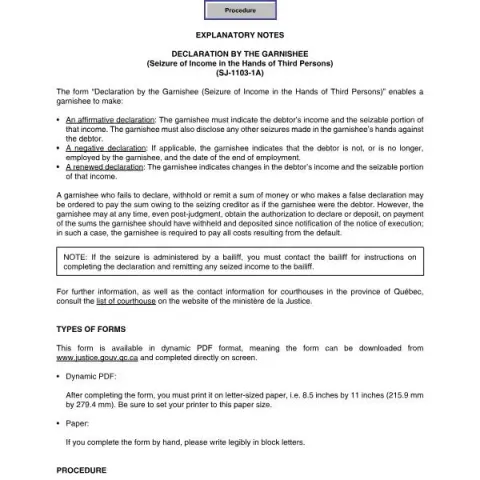
The Declaration by the Garnishee (form SJ-1103-1A) is a critical legal document used within the Province of Québec’s civil justice system. Managed by the Canada Court of Québec, this form facilitates the process of income seizure from third parties, typically in the context of debt recovery or enforcement of court judgments. If you are a garnishee—meaning a person or entity holding income owed to a debtor—knowing how to properly complete and submit this form is essential to comply with legal obligations and avoid penalties.
When and Why to Use the Form
This form is employed in situations where a court has ordered the seizure of income in the hands of a third person or entity. The garnishee, often an employer or other income holder, must declare the income details of the debtor to the court and the creditor. The declaration ensures that the creditor receives the amount legally seized from the debtor’s income, aligning with the court’s enforcement orders.
The form supports three types of declarations:
- Affirmative declaration: Confirms the debtor’s employment status, income amount, and seizable portion.
- Negative declaration: Indicates the debtor is no longer employed by the garnishee or was never employed.
- Renewed declaration: Updates previously declared income or employment status, reflecting changes since the last declaration.
Key Information Required on the Form
Completing the SJ-1103-1A accurately is vital. Here are the primary details you need to provide:
Affirmative Declaration
- The name of the garnishee and the debtor.
- The employment status of the debtor, including the gross income and payment frequency.
- The seizable portion of the income, based on the court’s order.
- Any other seizures against the debtor, including the bailiff’s name if applicable.
Negative Declaration
- Statement confirming the debtor’s unemployment status.
- The date when employment ended, if applicable.
Renewed Declaration
- Updated income details, including the new gross income and seizable amount.
- Any changes in employment status or other relevant information since the last declaration.
Filing and Submission Procedures
Once completed, the garnishee must:
- Remit the declaration to the court clerk within 10 days of service of the notice of execution. This can be done by submitting the form directly or by other appropriate methods (e.g., registered mail, courier).
- Notify the creditor (seizor) of the declaration using a method that provides proof of delivery.
- Withhold and remit the seizable income portion to the court, typically via cheque or postal/bank money order made payable to the Minister of Finance, indicating the court’s file number.
Additionally, the garnishee must immediately declare any significant changes in the debtor’s income or employment status, including the end of employment. This ensures the court and creditor have up-to-date information for proper enforcement.
Fill in your form directly online
No printing: type your details into the boxes of the official form, tick, then download the PDF ready to send.
- 1Type into the form boxes
- 2Tick in one click
- 3Save and download the PDF
Important Points and Legal Considerations
- Failure to declare, withhold, or remit the correct amount can lead to legal penalties, including being ordered to pay the owed sums as if you were the debtor.
- If a seizure is administered by a bailiff, contact the bailiff for specific instructions regarding completing the declaration and remitting seized income.
- The form is available as a dynamic PDF on the official website of the Québec Ministry of Justice, which allows for easy completion and printing on letter-sized paper.
- Handwritten forms must be written legibly in block letters to ensure clarity and legal validity.
Additional Resources and Contact Information
For further guidance, you can consult the list of courthouses in Québec available on the Ministry of Justice’s website. This ensures you can identify the correct court clerk to file your declaration and adhere to local procedures.
Understanding and correctly completing the Declaration by the Garnishee form is essential for lawful compliance in income seizure cases. Proper handling of this process helps maintain the integrity of legal enforcement and protects the rights of all parties involved.