Understanding the N13 Notice: How to End a Tenancy Due to Landlord's Plans for Demolition, Repairs, or Conversion
If you are a landlord in Ontario planning to end a tenancy because you want to demolish the rental unit, carry out extensive repairs or renovations, or convert the property for another use, you will need to serve your tenant(s) with a formal notice known as the N13. This official document, issued by the King's Printer for Ontario, is a crucial step in the legal process of ending a tenancy under specific circumstances. Here’s what you need to know about the purpose, completion, and legal requirements of the N13 notice.
When to Use the N13 Notice
The N13 notice is applicable in three main situations:
- Demolition: You plan to demolish the rental unit or the entire residential complex.
- Repairs or Renovations: You require the unit to be vacant to undertake extensive repairs or renovations that necessitate a building permit and cannot be performed while tenants are living in the unit.
- Conversion: You intend to convert the rental unit or complex to a non-residential use.
This notice is essential for landlords who need to legally end a tenancy for these specific reasons, ensuring that the process respects tenants' rights and complies with Ontario’s Residential Tenancies Act.
Key Elements to Complete on the N13 Form
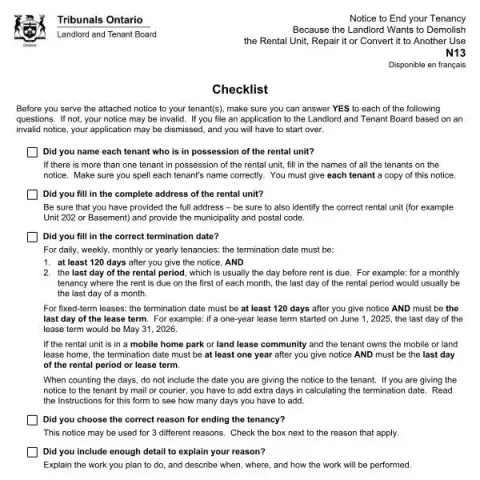
Before serving the notice, landlords must carefully fill out the form, ensuring that all information is accurate and complete. Here are critical points to verify:
1. Correct Tenant and Property Details
- Tenant Names: List all tenants currently in possession of the rental unit, spelling each name correctly. Each tenant must receive a copy of the notice.
- Property Address: Provide the full address, including street number, street name, unit or apartment number, municipality, province, and postal code.
2. Appropriate Termination Date
The termination date must be at least 120 days after the notice is given. For periodic tenancies (monthly, weekly, daily, or yearly), the date should align with the last day of the rental period, usually the day before rent is due. For fixed-term leases, the date must be the last day of the lease. If the rental unit is in a mobile home park or land lease community, the notice period extends to at least one year.
3. Clear Reason for Ending the Tenancy
Check the box that corresponds to your reason: demolition, repairs, or conversion. You should also provide detailed information about the planned work, including when, where, and how it will be carried out.
4. Permits and Authorization
Indicate whether all necessary permits or authorizations for the work have been obtained. The Landlord and Tenant Board (LTB) will only process the eviction if all required permits are in place or if the landlord commits to obtaining them.
5. Compensation to Tenants
In most cases, landlords must offer compensation or an acceptable alternative unit to the tenant(s). The amount and type of compensation, if applicable, must be paid by the termination date specified in the notice.
Fill in your form directly online
No printing: type your details into the boxes of the official form, tick, then download the PDF ready to send.
- 1Type into the form boxes
- 2Tick in one click
- 3Save and download the PDF
Legal and Practical Considerations
Servicing an invalid or incomplete N13 notice can lead to delays or dismissal of your application to end the tenancy. It’s crucial to double-check that all information is correct, that the reason is properly selected, and that all procedures regarding permits and compensation are followed.
Remember, the landlord must sign and date the notice for it to be valid. The notice must be served in accordance with Ontario’s legal requirements, whether in person, by mail, or courier, with appropriate consideration for mailing times.
Conclusion
The N13 form is a formal and legal document that allows landlords to end a tenancy for specific reasons related to demolition, extensive repairs, or conversion. Proper completion and adherence to legal requirements are essential to ensure the notice is valid and that the process proceeds smoothly. If you are unsure about any step or need assistance, consulting legal advice or the Landlord and Tenant Board can help clarify your obligations and rights.