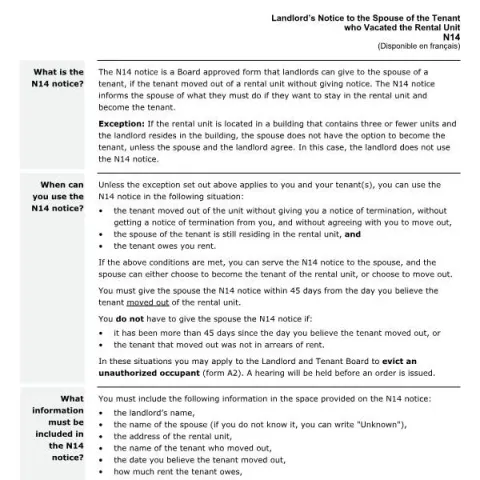
Understanding the N14 Form: Landlord’s Notice to the Spouse of a Tenant Who Vacated the Rental Unit
The N14 form is an official document used by landlords in Ontario to notify the spouse of a tenant who has moved out of a rental property without giving proper notice. This form is issued by the Landlord and Tenant Board and plays a crucial role in addressing situations where the tenant has left, but their spouse remains residing in the rental unit. It informs the spouse of their options and the process to either become the new tenant or move out.
Purpose and When to Use the N14 Form
The primary purpose of the N14 notice is to communicate with the spouse of a tenant who has vacated the rental unit without prior notice, especially when rent is owed. It serves as a formal notification that allows the spouse to decide whether they want to become the new tenant or to leave the property.
This form can be used when:
- The tenant moved out without giving a notice of termination or an agreement to vacate.
- The spouse of the tenant is still residing in the rental unit.
- The tenant owed rent at the time of moving out.
It is important to note that in buildings containing three or fewer units where the landlord resides, the spouse does not have the option to become the tenant unless both parties agree. In such cases, the landlord does not need to serve the N14 form.
How to Complete the N14 Form
Essential Information to Include
When filling out the N14 form, the landlord must provide specific details:
- The landlord’s full name and contact information.
- The name of the spouse of the tenant (if unknown, write "Unknown").
- The address of the rental unit.
- The name of the tenant who moved out.
- The date the landlord believes the tenant vacated the unit.
- The amount of rent owed by the tenant.
- The current rent amount for the unit.
- The due date for the next rent payment.
- The landlord’s address and phone number.
The form must be signed and dated by the landlord or their representative. If a representative completes the form, their contact details should also be included.
Timing of Service
The landlord must serve the N14 notice to the spouse within 45 days of believing the tenant moved out. Serving the notice after this period may limit the spouse’s ability to respond or take action through the Landlord and Tenant Board.
Options Available to the Spouse After Receiving the N14
Becoming the Tenant
If the spouse wishes to stay in the rental unit, they must:
- Inform the landlord of their intention to remain.
- Agree in writing to pay any rent owed for the unit.
The spouse can do this by signing the attached "Notice to Landlord and Agreement to Pay the Rent Owing" form and returning it within 15 days of receiving the N14. If the form is signed and returned, the spouse becomes the new tenant under the same tenancy agreement, with the same rent and conditions.
Failure to Respond
If the spouse does not return the signed agreement within 15 days or refuses to move out, the landlord can apply to the Landlord and Tenant Board for an eviction order using the appropriate application form. A hearing will be scheduled to determine the outcome.
Fill in your form directly online
No printing: type your details into the boxes of the official form, tick, then download the PDF ready to send.
- 1Type into the form boxes
- 2Tick in one click
- 3Save and download the PDF
What Happens if the Spouse Does Not Want to Become the Tenant?
If the spouse chooses not to become the tenant or does not respond within the specified time, they are required to vacate the rental unit. Failing to do so may lead the landlord to file an application for eviction of an unauthorized occupant.
Additional Considerations
If the landlord is unsure whether the current occupant is the spouse of the tenant who moved out, they can file an application to evict an unauthorized occupant without serving the N14. The Landlord and Tenant Board will hold a hearing to determine the status of the occupant, and if it is the spouse, they may still become the tenant by following the legal process.
Understanding the N14 process helps ensure that both landlords and spouses are aware of their rights and responsibilities when a tenant moves out without notice. Proper use of this form facilitates a clear transition of tenancy and helps prevent potential disputes.