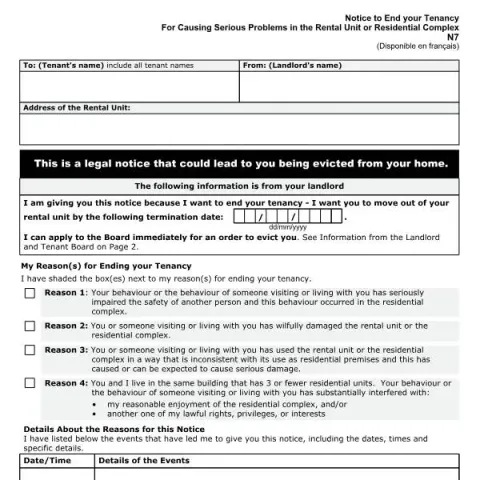
Understanding the N7 Notice: Ending a Tenancy Due to Serious Problems
The N7 Notice is an official document issued by the Landlord and Tenant Board (LTB) in Ontario, Canada. It serves as a formal warning from a landlord to a tenant, indicating the intention to end the tenancy because of serious issues that affect the safety, integrity, or peaceful enjoyment of the residential complex. This notice is part of the legal process to address severe problems caused by tenants or their visitors.
Purpose and Common Use Cases of the N7 Form
The N7 form is used primarily when a landlord believes that a tenant or someone living or visiting with the tenant has engaged in behaviour that significantly disrupts the residential environment. Examples include:
- Serious safety concerns due to tenant or visitor conduct
- Willful damage to the rental unit or the residential complex
- Use of the rental unit in a manner that causes or may cause serious damage
- Interference with the landlord’s reasonable enjoyment or lawful rights in buildings with three or fewer units
This notice is a critical step before applying for an eviction order through the Landlord and Tenant Board, especially in cases involving serious problems that cannot be resolved informally.
Eligibility and Conditions for Issuing an N7 Notice
The N7 notice can be issued by a landlord when specific conditions are met:
- The issues are severe enough to warrant eviction, such as safety hazards or damage
- The landlord has documented instances of problematic behaviour with details and dates
- The problem persists despite previous warnings or attempts at resolution
It’s important to note that this notice is only valid if the landlord has sufficient evidence of the issues and has followed the proper legal procedures.
Step-by-Step Procedure for Completing the N7 Form
Filling out the N7 form correctly is essential for its legal validity. Here are the key steps:
- Identify the Tenant: Include all tenant names exactly as they appear on the lease.
- Provide the Rental Address: Clearly specify the address of the rental unit.
- Specify the Termination Date: Indicate the date by which the tenant must vacate, which must be at least 10 days after the notice is served.
- Select the Reason(s): Check the box(es) that correspond to the reasons for ending the tenancy, such as safety concerns, damage, or interference with rights.
- Describe the Incidents: Detail specific events, including dates and times, that led to the decision to issue this notice.
- Sign and Date: The landlord or authorized representative must sign and date the form.
Ensure all information is accurate and complete, as incomplete or incorrect forms may delay legal proceedings.
Important Legal Considerations and Timelines
The termination date specified on the N7 must be at least 10 days after the notice is given to the tenant. If the tenant disagrees with the notice, they are not required to move out immediately. Instead, they can challenge the notice by requesting a hearing before the Landlord and Tenant Board. The Board will then schedule a hearing where both parties can present their case.
Fill in your form directly online
No printing: type your details into the boxes of the official form, tick, then download the PDF ready to send.
- 1Type into the form boxes
- 2Tick in one click
- 3Save and download the PDF
If the tenant moves out voluntarily by the specified date, the tenancy ends, but the landlord may still seek compensation for damages caused by the tenant. Conversely, if the landlord applies to the Board for an eviction order, a formal hearing will be scheduled, and the tenant will receive notice of the hearing details.
Additional Resources and Support
For further guidance on completing the N7 form or understanding your rights and obligations, you can contact the Landlord and Tenant Board directly. They provide assistance via phone at 416-645-8080 or 1-888-332-3234. The Board’s website, tribunalsontario.ca/ltb, offers detailed information, downloadable forms, and procedural guidance to ensure your process aligns with legal requirements.