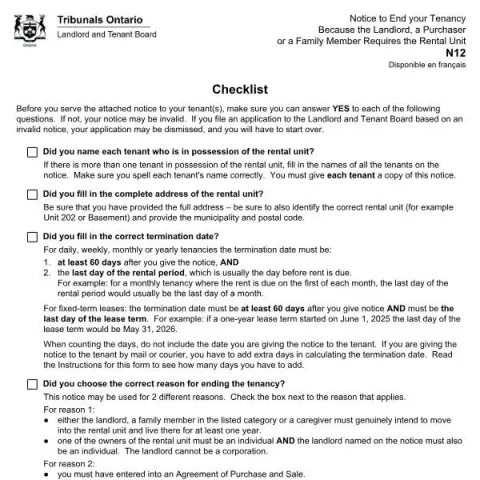
Understanding the N12 Notice: When and How to Use It
The N12 form is an official legal document used in Ontario's rental housing sector to notify tenants that their tenancy will be ending because the landlord, a purchaser, or a family member requires the rental unit for personal use. This notice is issued by landlords under specific circumstances, and understanding its proper use is essential to ensure compliance with the Residential Tenancies Act, 2006.
Situations When the N12 Form Is Applicable
The N12 notice serves two primary reasons for ending a tenancy:
- Reason 1: The landlord, a family member, or a caregiver intends to move into the rental unit and occupy it for at least one year. The landlord must be an individual, not a corporation, and the intended occupant must be named on the notice.
- Reason 2: The property has been sold, and the new owner, a family member, or a caregiver plans to move into the unit. This reason applies when an Agreement of Purchase and Sale has been entered into, and the purchaser or their family intends to occupy the unit for at least one year.
It is important to note that the residential complex must meet certain criteria: it should have no more than three residential units, and it must not be subject to conversion to a condominium or other restrictions under the Planning Act.
Preparing and Completing the N12 Notice
Step 1: Verify All Tenant Details
Before serving the notice, ensure that you have correctly identified all tenants currently in possession of the rental unit. You must include the full names of each tenant and provide a copy of the notice for each individual.
Step 2: Complete the Address Accurately
The notice must specify the complete address of the rental unit, including the unit or apartment number, municipality, and postal code. Precise information helps avoid disputes and invalid notices.
Step 3: Set the Correct Termination Date
The termination date should be at least 60 days after the notice is served and must align with the end of a rental period. For fixed-term leases, the date must coincide with the lease's end date. When calculating, do not include the day the notice is served, and add extra days if served by mail or courier as per the instructions.
Step 4: Specify the Reason and Intended Occupant
Check the appropriate box indicating whether the reason relates to the landlord or purchaser moving in. Then, identify the person who will occupy the unit, their relationship to the landlord or purchaser, and whether they will provide care services. The intended occupant must also complete a declaration confirming their need for the unit for personal use.
Fill in your form directly online
No printing: type your details into the boxes of the official form, tick, then download the PDF ready to send.
- 1Type into the form boxes
- 2Tick in one click
- 3Save and download the PDF
Step 5: Compensation and Signature
For reasons related to sale or purchase, you are required to offer the tenant compensation equivalent to one month's rent or provide an acceptable alternative unit. The notice must be signed and dated by the landlord; unsigned notices may be deemed invalid.
Points of Attention and Practical Tips
- Timing: Serve the notice at least 60 days before the intended move-out date, and ensure it falls at the end of a rental period or lease term.
- Accuracy: Double-check all information, including tenant names, addresses, and dates, to prevent invalidation of the notice.
- Legal Compliance: The landlord must genuinely intend to occupy the unit and must meet all legal criteria outlined in the Residential Tenancies Act.
- Communication: Provide tenants with a clear explanation of the reason for eviction and the compensation offered, maintaining transparency and professionalism.
Conclusion
The N12 form is a critical tool for landlords in Ontario when they or their family members need to occupy a rental unit. Proper completion and timely service of this notice help ensure legal compliance and reduce disputes. If you are a landlord planning to use the N12, carefully review the checklist and legal requirements to avoid invalid notices and potential legal challenges.